


Positioning
A symposium on curatorial learning in the Nordic-Baltic region and beyond 2026.
Programme
- 09.30 – Coffee and registration
- 10.00 – Welcome from Professor Michael Birchall (Auditorium 1, Kookos)
- 10.10 – Workshops:
- Stina Högkvist (K-219–220, Mylly)
- Binna Choi (K-218, Mylly)
- Monica Narula (Dance hall KO-522, Kookos)
- 12.45 – 14.00 – Lunch break
- 14.00- 15.30 – Sharing moment and wrap up
Workshops
Stina Högkvist: Think Small
Stina Högkvist, Director, Nordnorsk Kunstmuseum
This workshop explores the transition from working within large museums and cultural institutions to smaller, decentralized organizations.
Drawing on personal experience, it considers how scale shapes not only decision-making and public engagement, but also the pace at which institutions operate. Size and speed are deeply entangled: smaller organizations often work with fewer resources and greater uncertainty, yet their proximity to communities can allow for more responsive, collaborative, and adaptive forms of practice.
Rather than viewing these conditions as limitations, the workshop asks how they can become a strength—creating space to actively shape institutional identity, experiment with alternative structures, and remain attentive to the urgencies and possibilities of the present.
About Stina Högkvist
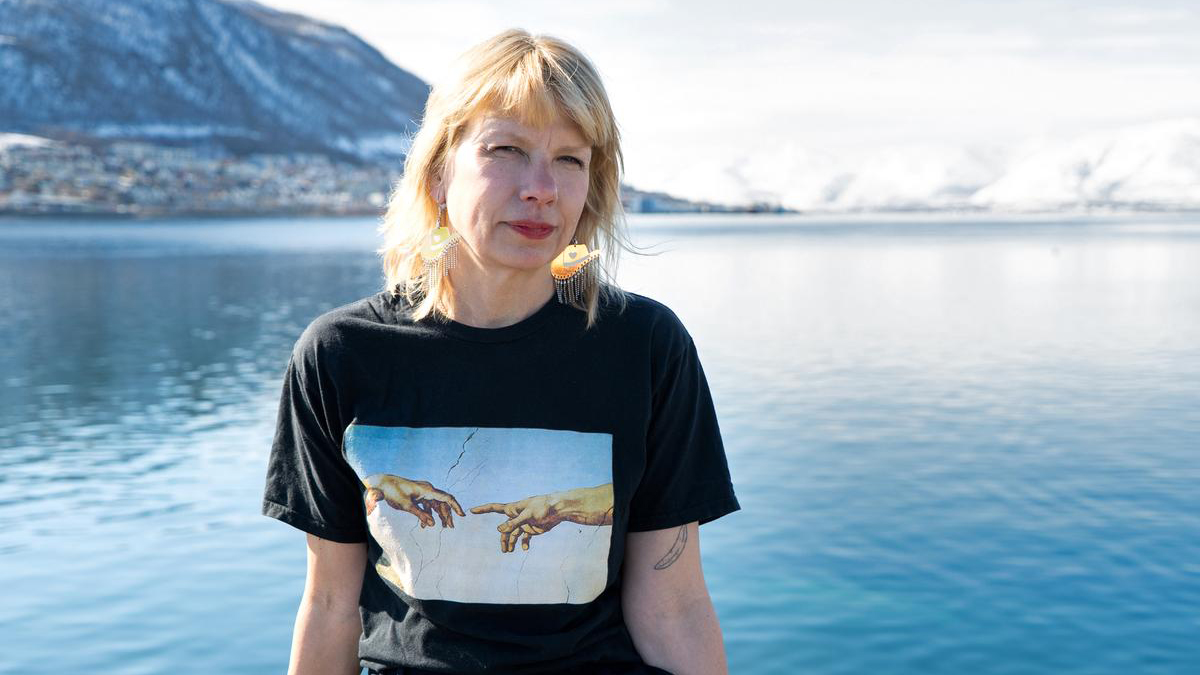
Stina Högkvist is a Swedish curator, writer and an art historian. Together with Norwegian curator Marianne Zamecznik, she founded the Simon Says curatorial platform in Stockholm, Sweden, and ran it between 2001 and 2003.
She has been working at the National Museum in Oslo, Norway, since 2006, where she was Director of Collections and Exhibitions from 2018-2025. She was also part of the managerial team that planned the new National Museum that opened in Oslo in 2022.
Högkvist is now the Director of the Northern Norwegian Art museum, with loacations in Tromsø, Bodø and Longyearbyen.
Binna Choi: Business not-as-usual?: An art startup exercise beyond profit versus free
Binna Choi, Curator for the Korean Pavilion of La Biennale di Venezia 2026
The field of art, unlike other fields, operates largely through a binary system of the private and the public. On the one hand, there are galleries, fairs, consulting firms, individual art advisors, and private foundations. On the other, there are public institutions of different scales, governed by public authorities, such as museums, art centers, and public agencies. Overwhelming and often stifling, these existing models do not always seem particularly life-affirming.
One might then ask: is there nothing in between? There are, of course, familiar models of small, independent initiatives, often taking the form of independent art spaces or bookstores.
I would like to propose that we imagine something else within this in-between space: entrepreneurial platforms that are run by and for the commons, operating according to the logic of the commons.
By “the commons,” I want to emphasize collective re/sourcing—which includes production without extraction and circularity rather than focusing primarily on re/distribution—alongside a shared ethics of relationality and difference, without reducing these to horizontalist politics, and a shared vision of ways of living.
The questions to be asked include: What is lacking, marginalized, or needed in our field of art? What values do these things create? How can they be used and maintained? What mechanisms, systems, and cultures can facilitate their use and maintenance? How might we work with or without the existing private and public sectors? What kind of economy, governance, and cultural practices might support this?
A warning: Please know that I am not experienced in this. I am proposing this out of a huge thirst for it, and from a conviction that we need it, alongside some knowledge of people who are already modeling alternative ways of working. With this in mind, I am proposing a workshop to imagine a start-up art company by and for the commons.
While I will prepare a participatory method, I ask you to come and join me with your imagination: to imagine running a company together, drawing from your most satisfying and dissatisfying experiences of art and life that have led you to this workshop and its questions.
Please feel free to bring any references, examples, or other materials that you find helpful.
About Binna Choi
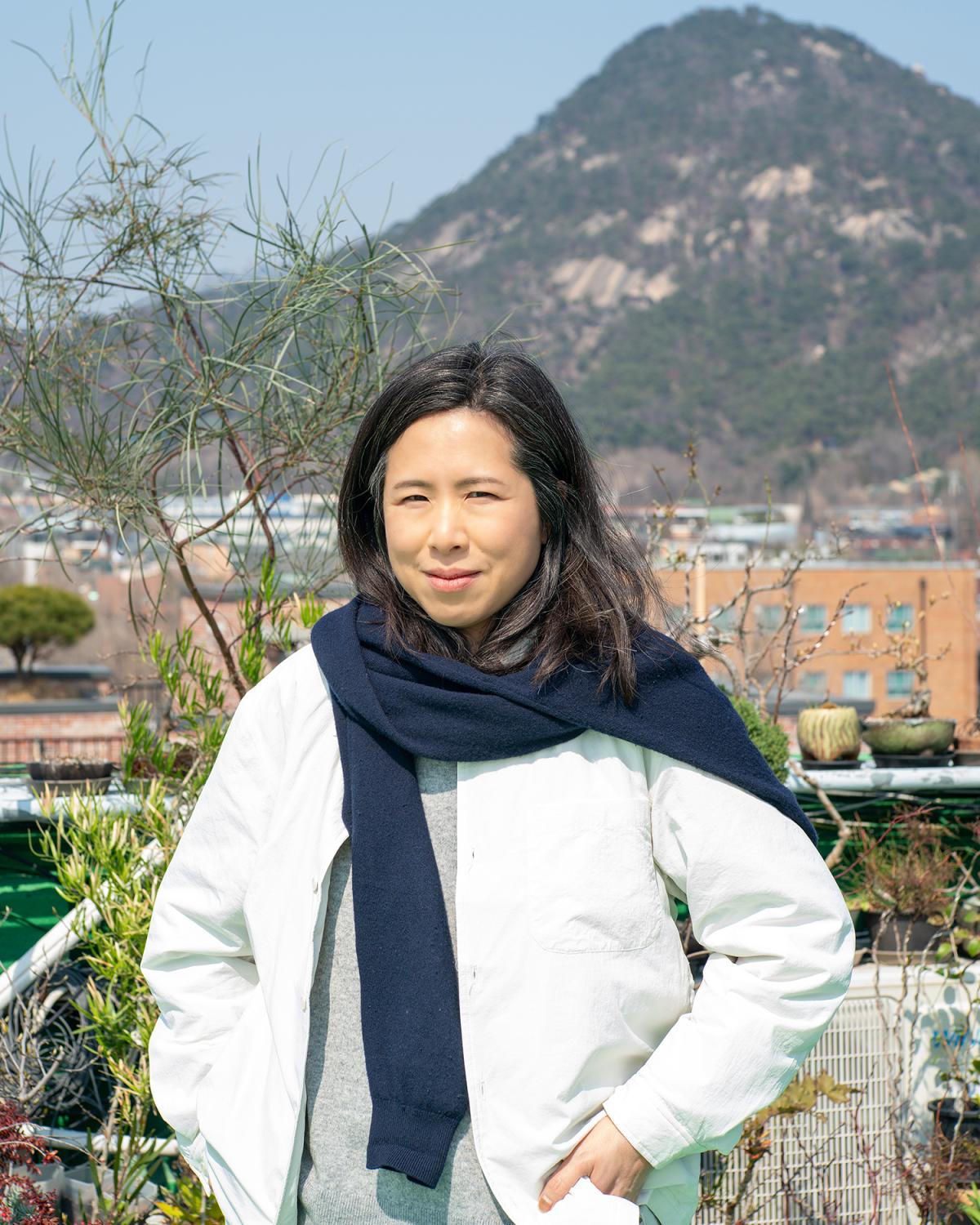
Binna Choi is a South Korean curator working across art, cultural and social practices and different institutional strata. She served as the director for Casco Art Institute: Working for the Commons (www.casco.art) in the Utrecht, the Netherlands over a decade where she commissioned numerous travelling works along with collective experimental researches. Her recent curatorial projects in the biennale context include the 2025 Hawai’i Triennial, titled ALOHA NÔ, and the 2022 Singapore Biennale, named Natasha. In the educational context, Choi has also worked with the Doosan Curator Workshop (2024-ongoing), Gwangju Biennale International Curator Course (2025), and Dutch Art Institute (2008-2022). Currently she curators the Korean Pavilion of La Biennale di Venezia 2026 entitled “Liberation Space: Fortress/Nest”.
Monica Nerula: Becoming Personae
Monica Nerula, Raqs Media Collective
A place will answer whatever question is put to it. If we ask what is significant, the answers are already on the map. If, instead, we ask what is being practised here, the answers arrive in forms that do not resemble each other at all. There is a panoply of personae that can be seen: a person with a craft; a form of labour that has organised its own hours; the intelligence of a plant, or of an animal that knows the city better than its residents; a group who have decided together that toffee wrappers are worth keeping; a group that gathers and sings near a cemetery, year after year; a flow of money or water or permits, read off a street until it shows its politics.
Since 2016, Raqs Media Collective has been putting this question to cities — 51 Personae in Shanghai, 21 Personae in Barcelona, 18 Personae in Bangkok. In each, a group of participants quested to find and invite a set of figures, and audiences were asked to seek them out and meet them on their own ground. What makes any of these a persona is the decision to treat it as singular: to approach it on its own terms and acknowledge a way of knowing something through a singular practice.
The workshop looks at how these projects were made — how figures were found, how invitations were extended, what an encounter asks of both parties — and then turns to the work of making personae. Attention given sideways finds more world. Once a place has been read this way, it is difficult to walk through it again as though it were empty.
About Monica Narula
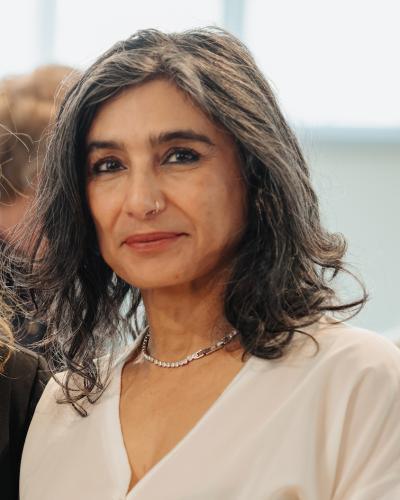
Monica Narula is an artist and curator based between Zurich and New Delhi. She holds a BA in English Literature, and her postgraduate training is in cinematography and filmmaking has led to a deep interest in the fantasy of the image. Alongside Jeebesh Bagchi and Shuddhabrata Sengupta, Narula is co-founder and member of the Raqs Media Collective. Found in 1992, the word “raqs” in several languages denotes an intensification of awareness and presence attained by whirling, turning, being in a state of revolution. Raqs take this sense to mean ‘kinetic contemplation’ and a restless and energetic entanglement with the world, and with time. The collective makes art, curates exhibitions, makes films, edits books, stages situations, and has collaborated with architects, computer programmers, writers, curators, and theatre directors. www.raqsmediacollective.net
Positioning is a symposium organised by Publics and co-organised in Helsinki and Espoo with Uniarts Helsinki’s Academy of FIne Arts, as well as EMMA – Espoo Museum of Modern Art and Architecture & Design Museum Finland. Read more: https://positioningsymposium.com/
Programme
- 09.30 – Coffee and registration
- 10.00 – Welcome from Professor Michael Birchall (Auditorium 1, Kookos)
- 10.10 – Workshops:
- Stina Högkvist (K-219–220, Mylly)
- Binna Choi (K-218, Mylly)
- Monica Narula (Dance hall KO-522, Kookos)
- 12.45 – 14.00 – Lunch break
- 14.00- 15.30 – Sharing moment and wrap up
Workshops
Stina Högkvist: Think Small
Stina Högkvist, Director, Nordnorsk Kunstmuseum
This workshop explores the transition from working within large museums and cultural institutions to smaller, decentralized organizations.
Drawing on personal experience, it considers how scale shapes not only decision-making and public engagement, but also the pace at which institutions operate. Size and speed are deeply entangled: smaller organizations often work with fewer resources and greater uncertainty, yet their proximity to communities can allow for more responsive, collaborative, and adaptive forms of practice.
Rather than viewing these conditions as limitations, the workshop asks how they can become a strength—creating space to actively shape institutional identity, experiment with alternative structures, and remain attentive to the urgencies and possibilities of the present.
About Stina Högkvist
Stina Högkvist is a Swedish curator, writer and an art historian. Together with Norwegian curator Marianne Zamecznik, she founded the Simon Says curatorial platform in Stockholm, Sweden, and ran it between 2001 and 2003.
She has been working at the National Museum in Oslo, Norway, since 2006, where she was Director of Collections and Exhibitions from 2018-2025. She was also part of the managerial team that planned the new National Museum that opened in Oslo in 2022.
Högkvist is now the Director of the Northern Norwegian Art museum, with loacations in Tromsø, Bodø and Longyearbyen.
Binna Choi: Business not-as-usual?: An art startup exercise beyond profit versus free
Binna Choi, Curator for the Korean Pavilion of La Biennale di Venezia 2026
The field of art, unlike other fields, operates largely through a binary system of the private and the public. On the one hand, there are galleries, fairs, consulting firms, individual art advisors, and private foundations. On the other, there are public institutions of different scales, governed by public authorities, such as museums, art centers, and public agencies. Overwhelming and often stifling, these existing models do not always seem particularly life-affirming.
One might then ask: is there nothing in between? There are, of course, familiar models of small, independent initiatives, often taking the form of independent art spaces or bookstores.
I would like to propose that we imagine something else within this in-between space: entrepreneurial platforms that are run by and for the commons, operating according to the logic of the commons.
By “the commons,” I want to emphasize collective re/sourcing—which includes production without extraction and circularity rather than focusing primarily on re/distribution—alongside a shared ethics of relationality and difference, without reducing these to horizontalist politics, and a shared vision of ways of living.
The questions to be asked include: What is lacking, marginalized, or needed in our field of art? What values do these things create? How can they be used and maintained? What mechanisms, systems, and cultures can facilitate their use and maintenance? How might we work with or without the existing private and public sectors? What kind of economy, governance, and cultural practices might support this?
A warning: Please know that I am not experienced in this. I am proposing this out of a huge thirst for it, and from a conviction that we need it, alongside some knowledge of people who are already modeling alternative ways of working. With this in mind, I am proposing a workshop to imagine a start-up art company by and for the commons.
While I will prepare a participatory method, I ask you to come and join me with your imagination: to imagine running a company together, drawing from your most satisfying and dissatisfying experiences of art and life that have led you to this workshop and its questions.
Please feel free to bring any references, examples, or other materials that you find helpful.
About Binna Choi
Binna Choi is a South Korean curator working across art, cultural and social practices and different institutional strata. She served as the director for Casco Art Institute: Working for the Commons (www.casco.art) in the Utrecht, the Netherlands over a decade where she commissioned numerous travelling works along with collective experimental researches. Her recent curatorial projects in the biennale context include the 2025 Hawai’i Triennial, titled ALOHA NÔ, and the 2022 Singapore Biennale, named Natasha. In the educational context, Choi has also worked with the Doosan Curator Workshop (2024-ongoing), Gwangju Biennale International Curator Course (2025), and Dutch Art Institute (2008-2022). Currently she curators the Korean Pavilion of La Biennale di Venezia 2026 entitled “Liberation Space: Fortress/Nest”.
Monica Nerula: Becoming Personae
Monica Nerula, Raqs Media Collective
A place will answer whatever question is put to it. If we ask what is significant, the answers are already on the map. If, instead, we ask what is being practised here, the answers arrive in forms that do not resemble each other at all. There is a panoply of personae that can be seen: a person with a craft; a form of labour that has organised its own hours; the intelligence of a plant, or of an animal that knows the city better than its residents; a group who have decided together that toffee wrappers are worth keeping; a group that gathers and sings near a cemetery, year after year; a flow of money or water or permits, read off a street until it shows its politics.
Since 2016, Raqs Media Collective has been putting this question to cities — 51 Personae in Shanghai, 21 Personae in Barcelona, 18 Personae in Bangkok. In each, a group of participants quested to find and invite a set of figures, and audiences were asked to seek them out and meet them on their own ground. What makes any of these a persona is the decision to treat it as singular: to approach it on its own terms and acknowledge a way of knowing something through a singular practice.
The workshop looks at how these projects were made — how figures were found, how invitations were extended, what an encounter asks of both parties — and then turns to the work of making personae. Attention given sideways finds more world. Once a place has been read this way, it is difficult to walk through it again as though it were empty.
About Monica Narula
Monica Narula is an artist and curator based between Zurich and New Delhi. She holds a BA in English Literature, and her postgraduate training is in cinematography and filmmaking has led to a deep interest in the fantasy of the image. Alongside Jeebesh Bagchi and Shuddhabrata Sengupta, Narula is co-founder and member of the Raqs Media Collective. Found in 1992, the word “raqs” in several languages denotes an intensification of awareness and presence attained by whirling, turning, being in a state of revolution. Raqs take this sense to mean ‘kinetic contemplation’ and a restless and energetic entanglement with the world, and with time. The collective makes art, curates exhibitions, makes films, edits books, stages situations, and has collaborated with architects, computer programmers, writers, curators, and theatre directors. www.raqsmediacollective.net
Positioning is a symposium organised by Publics and co-organised in Helsinki and Espoo with Uniarts Helsinki’s Academy of FIne Arts, as well as EMMA – Espoo Museum of Modern Art and Architecture & Design Museum Finland. Read more: https://positioningsymposium.com/