


Choreography, master
Refine your artistic voice and articulate your research to be able to contribute to society and work as an artist of the future.
Why study here?
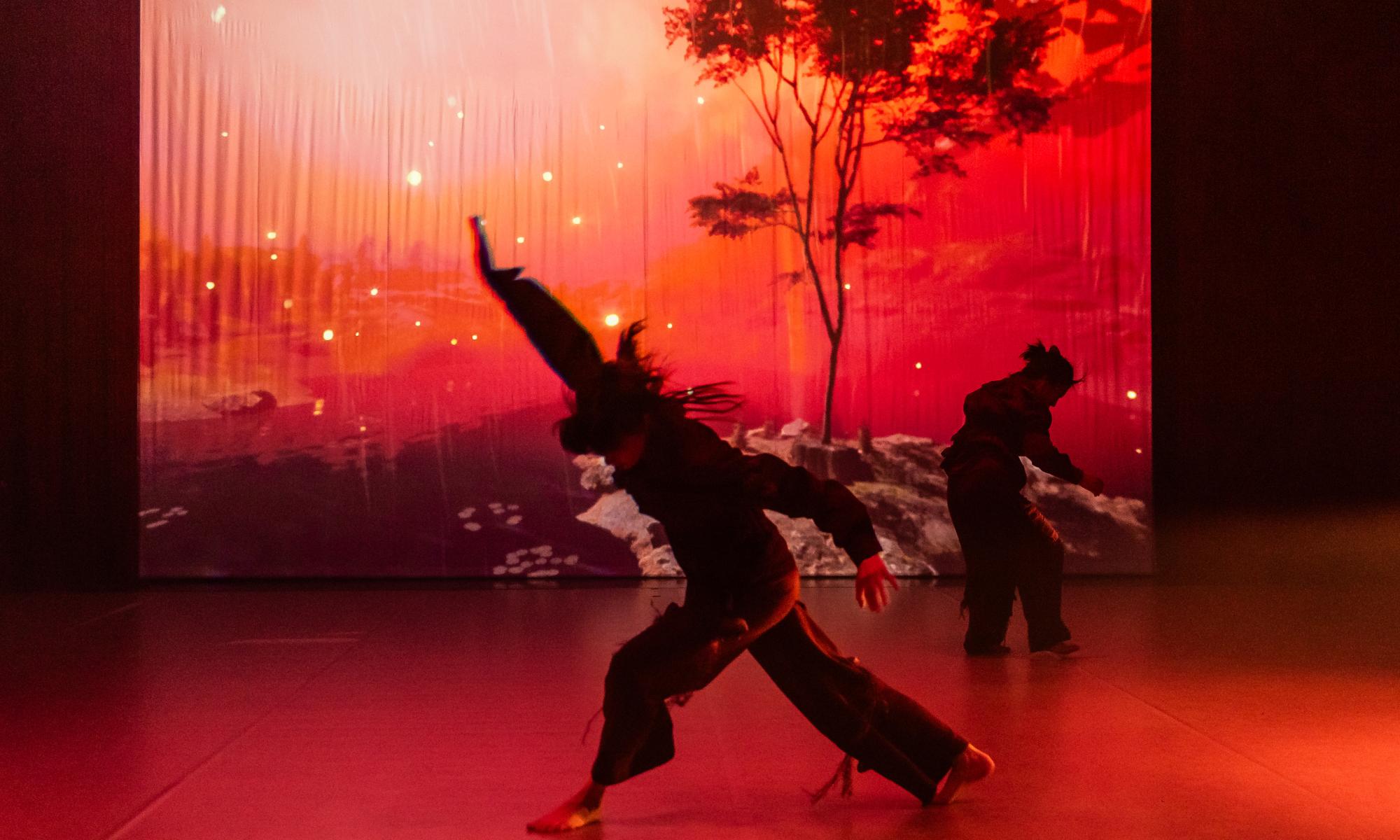
The programme consists of two years of full-time studies that will help you develop your artistic and research skills and knowledge. You will grow your critical awareness and understanding of contemporary choreography, its practices, strategies and discourses, as well as the interactive relationship between art and society.
In the 2027 intake we have two different study options for studies in choreography:
- Artistic practice and research
- Theoretical research.
Is this for you?
Artistic practice and research in choreography option
This programme is designed for individuals who already have skills and experience in artistic practices within contemporary choreography and who want to deepen and expand them. It is for those who are eager to explore how choreographic ideas take form, and who wish to develop those ideas into performance through process based, practice-led work. We warmly welcome individuals from diverse cultural and social backgrounds and value the perspectives and artistic approaches they bring.
We invite students who bring curiosity about how practice and theory inform each other — how artistic choices relate to broader choreographic contexts and concepts, performance practices, and societal concerns. The programme supports students who want to investigate these connections while advancing their own artistic voice.
The ability to participate in discussions, collaborate with peers, and communicate in different study situations is essential, as these skills form a core part of the learning process. The programme is well suited for mature, dedicated students who are ready to engage deeply with contemporary choreographic practice and to develop their ideas into thoughtful, research driven performance work.
Commitment to fulltime studies is essential.
Theoretical research in choreography option
This programme is designed for individuals who are eager to engage deeply with theoretical discourses related to choreography, dance and performance, and their wider societal contexts. It suits for those who are curious about how ideas, histories, and critical perspectives intersect with artistic practices, and who wish to explore these connections in an academic environment with proximity of and in collaboration with artistic practice students. We warmly welcome individuals from diverse cultural and social backgrounds and value the perspectives and artistic approaches they bring.
The programme is well-suited for those who want to frame and develop a research theme and articulate it in various formats, such as written texts or digital expositions. Students should be motivated to refine their questions, explore relevant literature and methodologies, and position their thinking within broader discussions in the field. The ability to participate in discussions, collaborate with peers, and communicate in different study situations is essential, as these skills form a core part of the learning process.
We welcome mature, dedicated students who are committed to sustained study, have the ability to manage independent research work, and are ready to develop their ideas into thoughtful, research driven work.
Commitment to fulltime studies is essential.
Content and objective of the programme
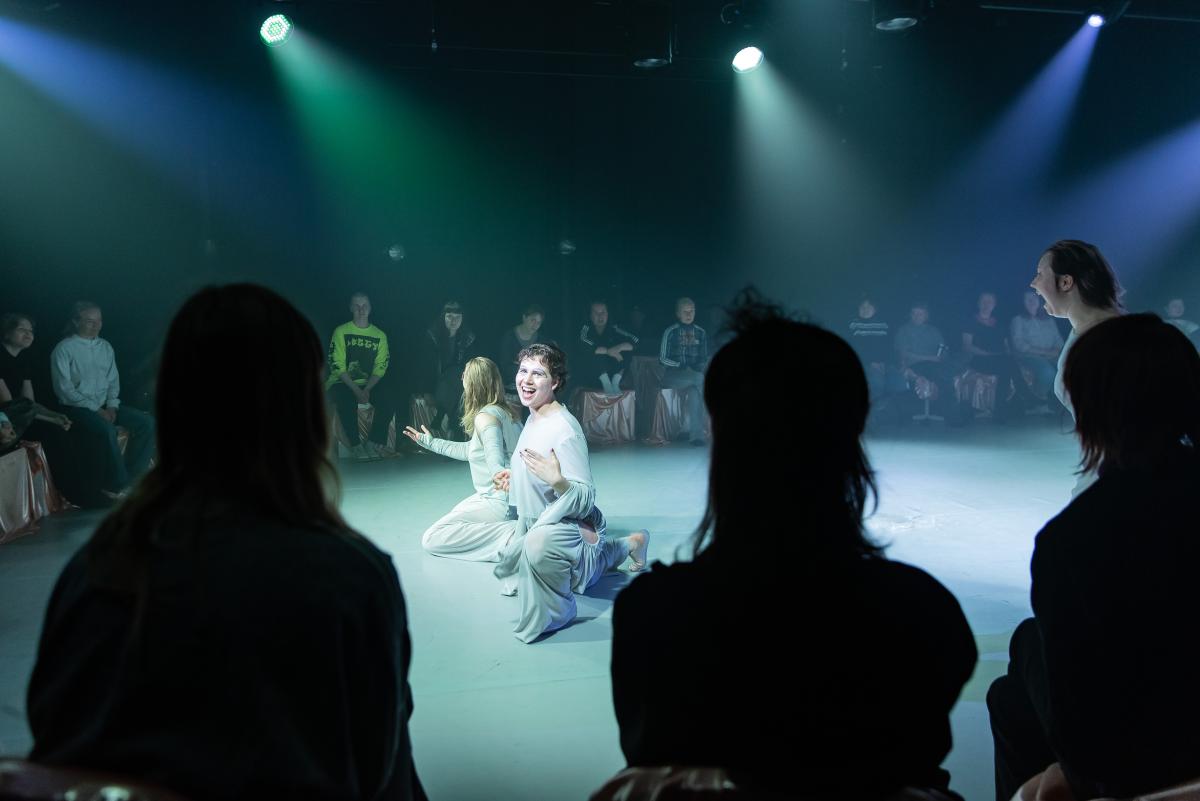
The choreography programme leads to a Master of Arts (Dance) degree after two years of full-time studies. The programme (120 cr) includes studies in choreography, personal artistic projects, contextual and theoretical studies, joint studies with other master’s programmes, optional studies and a master’s thesis. Our focus is on current approaches and methodological questions in choreography and performance, discourses on society and art, as well as on the work environment of an artist. Your own artistic projects and research questions play an important role, as well as collaborations with students from other degree programmes.
Our prevailing mode of study is research-oriented. The overall pedagogy emphasises the thematic trajectory of each student, supported by critical, reflective, analytical and explorative discussions with peers and teachers.
Collaborations and international mobility
We collaborate with other degree programmes of Uniarts Helsinki as well as with the Performing Arts Research Centre (Tutke). We also have an active relationship with professionals and alumni: we welcome visiting artists and researchers.
We are an active member of the Nordic Choreographic Platform (NCP), a network of master’s degree studies in choreography at Danish National School of Performing Arts (DASPA), Oslo National Academy of the Arts (KHIO) and Stockholm University of the Arts (SKH). An Erasmus exchange is also available for students and staff.
New study option: Theoretical research in choreography
Students of the theoretical research option will deepen their analytical understanding of choreographic premises, potentialities and various discourses while working alongside the artist-practitioner students. Our graduates may work as dance dramaturges, researchers, curators, journalists or facilitators in art-based community projects or continue on to pursue doctoral studies.
In the theoretical research in choreography option, students complete studies according to their personal study plan (PSP) compiled at the beginning of their studies. They also work alongside artist practitioners in joint courses and participate in artistic productions and workshops.
If a student has been admitted to the study option focusing on theoretical research in choreography, their study path will differ as follows:
1) During the Approaches to Choreography and Artistic Practices instead of producing a self-performed solo, these students will write a research essay or have a live presentation of their research project.
2) The courses Orientation to Artistic Collaboration and Artistic Collaboration Project will be completed as an alternative project (see details in the curriculum).
3) There is no assessed artistic component in the master’s thesis, but the student will complete the thesis as an assessed written theoretical study or a media–based artistic research project (see details in the curriculum).
Study option: Artistic practice and research
Studies in Artistic practice and research option include individual artistic projects that focus on different approaches to choreography, artistic research, and collaboration.
Solo work
The studies in the first year’s autumn focus on different methodological and theoretical approaches to choreography and composition. During the course Approaches to choreography and artistic practices the students will explore and develop their own choreographic practice, their ability to research the framed subject or approach and share their artistic research processes in a rehearsal studio environment at the end of the semester.
Artistic Collaboration Project (ACO)
In Artistic Collaboration Project (ACO) the students will work in a multidisciplinary artistic collaboration with students from several different degree programmes: BA in Dance, MA students in Lighting Design, Sound Design, Scenography, Dramaturgy, and Dance Performance from the Theatre Academy, and Costume Design from Aalto University. ACO performances will be presented at the very end of the first year studies in the end of May. Read more about ACO.
Artistic part of the master’s thesis
In the artistic part of the master’s thesis students show that they can perform independent artistic work that covers all the stages of a choreographic process and gives a picture of the student’s ability to work as a professional choreographer and of their potential to discover their quality as artists. Please see more details in the study guide master’s thesis.
Theoretical framework for both study options
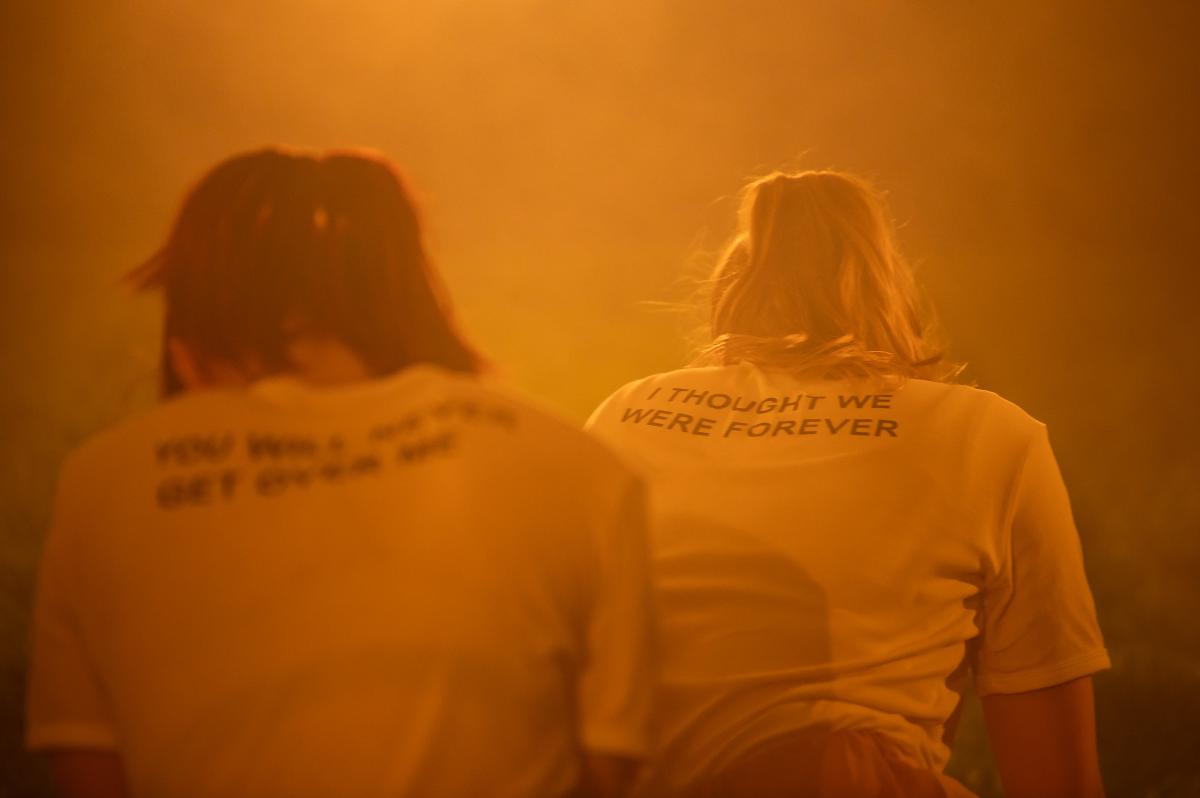
Theoretical studies provide a place to reflect on, explore and research topical discourses, methodologies, and conceptual tools within choreography and performance and in relation to larger societal and philosophical contexts. In the theoretical studies we acknowledge art as a significant historical, cultural, contextual and situated practice that reflects and promotes diverse societies. In the studies we focus on investigating the multiple ways choreography, dance and performance operate and create meaning as well as the conditions and environmental frameworks in which choreographers are working. One particular research focus is on the complex relationships between the conceptual frameworks and the material, performative actualisation of choreographic propositions.
The studies consist of modules Perspectives on history and theory of choreography and performance, Artistic research and Art and society.
Teachers
Our teachers are experienced experts in their field. In addition to the permanent teaching staff, the programme welcomes guest teachers and artists from both Finland and abroad.
Doctoral studies
A master’s degree gives eligibility to complete a Doctor of Arts (Dance) degree, for example, as a third-cycle degree. Doctoral studies in dance are offered by the Performing Arts Research Centre (Tutke).
Find out more

Admissions guide
Application instructions for this programme haven't been published yet.
Target degree and length of study
Master of Arts (Dance)
2 years
Application period
Next possible time to apply is in January 2027. Studies begin in August 2027.
Degree language
English
Read about our language skill requirements
Tuition fee
From August 2026, the annual tuition fee is € 28,000 for students who are studying in English and come from outside the EU and EEA countries.
Supervising teacher
Kirsi Monni
Professor
Jana Unmüssig
Lecturer
Unit
Ask about applying
teak.admissions@uniarts.fi
Max catalogue: students and alumniWhy study here?
The programme consists of two years of full-time studies that will help you develop your artistic and research skills and knowledge. You will grow your critical awareness and understanding of contemporary choreography, its practices, strategies and discourses, as well as the interactive relationship between art and society.
In the 2027 intake we have two different study options for studies in choreography:
- Artistic practice and research
- Theoretical research.
Is this for you?
Artistic practice and research in choreography option
This programme is designed for individuals who already have skills and experience in artistic practices within contemporary choreography and who want to deepen and expand them. It is for those who are eager to explore how choreographic ideas take form, and who wish to develop those ideas into performance through process based, practice-led work. We warmly welcome individuals from diverse cultural and social backgrounds and value the perspectives and artistic approaches they bring.
We invite students who bring curiosity about how practice and theory inform each other — how artistic choices relate to broader choreographic contexts and concepts, performance practices, and societal concerns. The programme supports students who want to investigate these connections while advancing their own artistic voice.
The ability to participate in discussions, collaborate with peers, and communicate in different study situations is essential, as these skills form a core part of the learning process. The programme is well suited for mature, dedicated students who are ready to engage deeply with contemporary choreographic practice and to develop their ideas into thoughtful, research driven performance work.
Commitment to fulltime studies is essential.
Theoretical research in choreography option
This programme is designed for individuals who are eager to engage deeply with theoretical discourses related to choreography, dance and performance, and their wider societal contexts. It suits for those who are curious about how ideas, histories, and critical perspectives intersect with artistic practices, and who wish to explore these connections in an academic environment with proximity of and in collaboration with artistic practice students. We warmly welcome individuals from diverse cultural and social backgrounds and value the perspectives and artistic approaches they bring.
The programme is well-suited for those who want to frame and develop a research theme and articulate it in various formats, such as written texts or digital expositions. Students should be motivated to refine their questions, explore relevant literature and methodologies, and position their thinking within broader discussions in the field. The ability to participate in discussions, collaborate with peers, and communicate in different study situations is essential, as these skills form a core part of the learning process.
We welcome mature, dedicated students who are committed to sustained study, have the ability to manage independent research work, and are ready to develop their ideas into thoughtful, research driven work.
Commitment to fulltime studies is essential.
Content and objective of the programme
The choreography programme leads to a Master of Arts (Dance) degree after two years of full-time studies. The programme (120 cr) includes studies in choreography, personal artistic projects, contextual and theoretical studies, joint studies with other master’s programmes, optional studies and a master’s thesis. Our focus is on current approaches and methodological questions in choreography and performance, discourses on society and art, as well as on the work environment of an artist. Your own artistic projects and research questions play an important role, as well as collaborations with students from other degree programmes.
Our prevailing mode of study is research-oriented. The overall pedagogy emphasises the thematic trajectory of each student, supported by critical, reflective, analytical and explorative discussions with peers and teachers.
Collaborations and international mobility
We collaborate with other degree programmes of Uniarts Helsinki as well as with the Performing Arts Research Centre (Tutke). We also have an active relationship with professionals and alumni: we welcome visiting artists and researchers.
We are an active member of the Nordic Choreographic Platform (NCP), a network of master’s degree studies in choreography at Danish National School of Performing Arts (DASPA), Oslo National Academy of the Arts (KHIO) and Stockholm University of the Arts (SKH). An Erasmus exchange is also available for students and staff.
New study option: Theoretical research in choreography
Students of the theoretical research option will deepen their analytical understanding of choreographic premises, potentialities and various discourses while working alongside the artist-practitioner students. Our graduates may work as dance dramaturges, researchers, curators, journalists or facilitators in art-based community projects or continue on to pursue doctoral studies.
In the theoretical research in choreography option, students complete studies according to their personal study plan (PSP) compiled at the beginning of their studies. They also work alongside artist practitioners in joint courses and participate in artistic productions and workshops.
If a student has been admitted to the study option focusing on theoretical research in choreography, their study path will differ as follows:
1) During the Approaches to Choreography and Artistic Practices instead of producing a self-performed solo, these students will write a research essay or have a live presentation of their research project.
2) The courses Orientation to Artistic Collaboration and Artistic Collaboration Project will be completed as an alternative project (see details in the curriculum).
3) There is no assessed artistic component in the master’s thesis, but the student will complete the thesis as an assessed written theoretical study or a media–based artistic research project (see details in the curriculum).
Study option: Artistic practice and research
Studies in Artistic practice and research option include individual artistic projects that focus on different approaches to choreography, artistic research, and collaboration.
Solo work
The studies in the first year’s autumn focus on different methodological and theoretical approaches to choreography and composition. During the course Approaches to choreography and artistic practices the students will explore and develop their own choreographic practice, their ability to research the framed subject or approach and share their artistic research processes in a rehearsal studio environment at the end of the semester.
Artistic Collaboration Project (ACO)
In Artistic Collaboration Project (ACO) the students will work in a multidisciplinary artistic collaboration with students from several different degree programmes: BA in Dance, MA students in Lighting Design, Sound Design, Scenography, Dramaturgy, and Dance Performance from the Theatre Academy, and Costume Design from Aalto University. ACO performances will be presented at the very end of the first year studies in the end of May. Read more about ACO.
Artistic part of the master’s thesis
In the artistic part of the master’s thesis students show that they can perform independent artistic work that covers all the stages of a choreographic process and gives a picture of the student’s ability to work as a professional choreographer and of their potential to discover their quality as artists. Please see more details in the study guide master’s thesis.
Theoretical framework for both study options
Theoretical studies provide a place to reflect on, explore and research topical discourses, methodologies, and conceptual tools within choreography and performance and in relation to larger societal and philosophical contexts. In the theoretical studies we acknowledge art as a significant historical, cultural, contextual and situated practice that reflects and promotes diverse societies. In the studies we focus on investigating the multiple ways choreography, dance and performance operate and create meaning as well as the conditions and environmental frameworks in which choreographers are working. One particular research focus is on the complex relationships between the conceptual frameworks and the material, performative actualisation of choreographic propositions.
The studies consist of modules Perspectives on history and theory of choreography and performance, Artistic research and Art and society.
Teachers
Our teachers are experienced experts in their field. In addition to the permanent teaching staff, the programme welcomes guest teachers and artists from both Finland and abroad.
Doctoral studies
A master’s degree gives eligibility to complete a Doctor of Arts (Dance) degree, for example, as a third-cycle degree. Doctoral studies in dance are offered by the Performing Arts Research Centre (Tutke).