


Tom Ackers traces the hidden material life of art and environment
Artist-turned-researcher Tom Ackers moves across disciplines to investigate the material systems that shape both ecological change and cultural production.
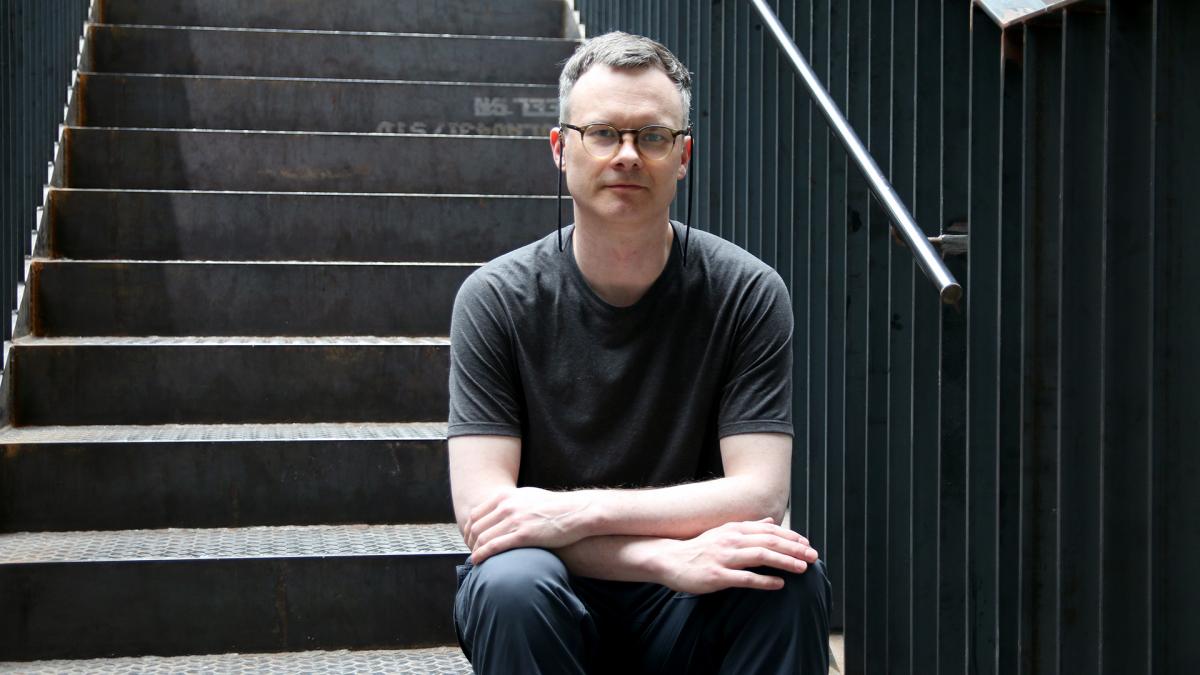
As a postdoctoral researcher at the Academy of Fine Arts, Tom Ackers explores the infrastructures that underpin contemporary life – from construction materials and land use to technology and the institutions of contemporary art. His work connects environmental politics to philosophy and art, asking how material systems influence the ways we live, create, and understand the world.
“My research focuses on the material systems that drive ecological degradation and social violence, and on possible pathways to a more equitable, sustainable future,” Ackers explains.
Ackers is currently investigating material flows in contemporary art. His project examines the environmental impacts of art materials, as well as the use of buildings, travel, and digital technologies across the arts sector. The goal is to situate the environmental and social impacts of the contemporary art world within a broader historical and global context.
His current postdoctoral research builds on doctoral work that explored environmental degradation as a form of violence. Several peer-reviewed articles and a book are currently in development.
From artist to researcher
Ackers originally trained as a visual artist at the Slade School of Fine Art in London and spent years working in galleries as both an artist and technician. Over time, however, his interests shifted.
“Increasingly I was making work that was very research-led, and artistic output became less important to me,” he says.
This transition led him toward philosophy and eventually to doctoral studies at New York University, where he completed a PhD in Comparative Literature. His research there crossed the boundaries of environmental studies, political theory, and cultural analysis.
His move to Finland was also shaped by personal circumstances.
“I had been doing a PhD at NYU in the United States, and I had already moved to Finland because my partner is Finnish,” he says.
Environmental violence and inequality
A central concept in Ackers’ research is environmental violence, through which he examines how ecological degradation is entangled with social inequality and histories of domination.
While environmental violence can involve direct and immediately visible forms of harm – such as aerial bombardments of the built environment or farmland – Ackers is particularly interested in how direct forms of violence accumulate into, or parallel, more structural processes of harm, for instance through pollution, destruction of ecosystems, or climate change.
Slower forms of environmental degradation that unfold gradually can also be difficult to recognize through conventional understandings of violence.
“Climate change impacts people’s relationship to the environment in a multitude of ways that you can argue are structurally violent,” he explains.
Moreover, environmental degradation rarely affects everyone equally. Instead, it often reinforces existing inequalities, disproportionately impacting those who depend most directly on local environments or have the fewest resources to adapt.
For Ackers, environmental violence offers a framework for understanding ecological crises not simply as technical challenges but as issues deeply ingrained in histories of colonialism and capitalist development, and the resulting inequalities in power and wellbeing.
Material flows in contemporary art
Ackers’ current research turns to the often-overlooked infrastructures that support contemporary art. His project examines the systems that make artistic production possible: buildings, storage facilities, transportation networks, energy consumption, and digital technologies.
The research asks how contemporary art functions at the level of production and material consumption, even when artworks themselves appear conceptual or immaterial.
International exhibitions, biennials, and museum networks rely on the large-scale movement of people, objects, and resources across the globe.
“These are the material conditions that make contemporary art possible, in its present form,” he explains.
Rather than reducing art to its environmental footprint, Ackers seeks to understand how cultural meaning is produced within material systems that extend far beyond galleries and studios.
“It is about the material world that surrounds and underpins art,” he says.
A common question runs through all of Ackers’ work: what becomes visible when we begin tracing the material conditions that shape both environmental degradation and cultural production?
By Susanna Bono