


Katalin Trencsényi believes in dramaturgy’s power to change society – and we need it now more than ever
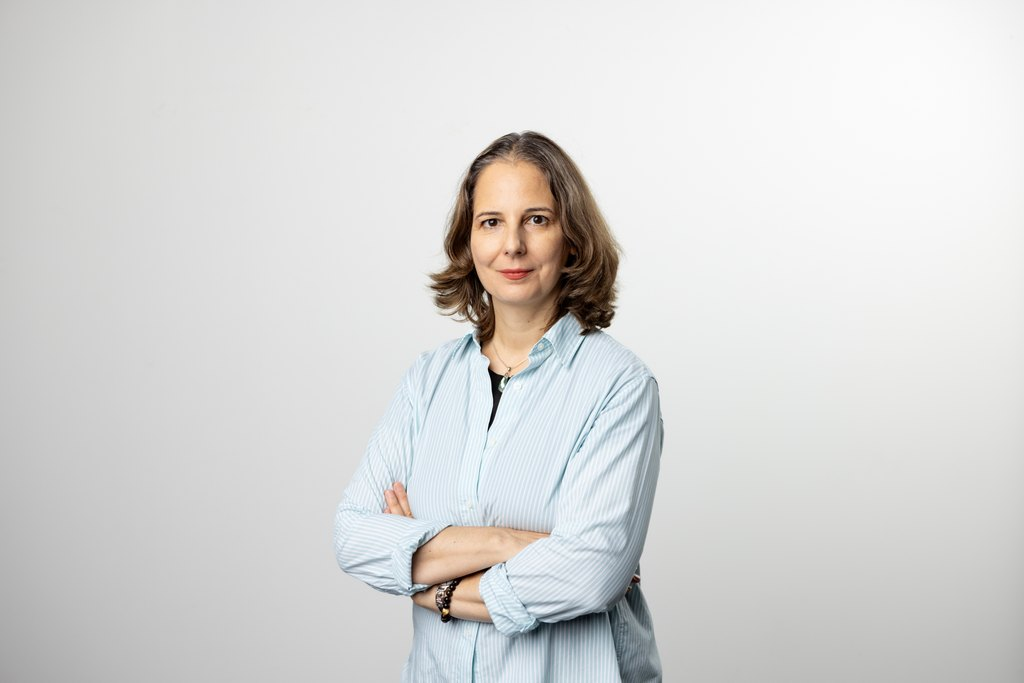
Katalin Trencsényi finds dialogue, listening and questioning as central to dramaturgical thinking. These elements are also at the heart of the master’s programme she leads, which is now celebrating its fifth anniversary at Uniarts Helsinki. One of the highlights of the anniversary year is the newly published Gestures of Attention, an edited volume that sheds light on European performance traditions and the emerging field of comparative dramaturgy.
Performance cultures can vary considerably from one country to another. Did you know that in Hong Kong, the enormous bouquets sent to actors for a premiere are put on display at the entrance to the auditorium? Or that the highest honour a living actor in German-language theatre can receive is a diamond-studded ring? On Broadway, meanwhile, a so-called ghost light is kept lit in the middle of the stage even when nobody is in the theatre.
Dr Katalin Trencsényi, a lecturer at Uniarts Helsinki, reels off these examples – and points out that they represent only relatively minor differences.
“If you tell me what you think about time, space, culture and history, I immediately get a sense of your dramaturgy,” Trencsényi explains.
These kinds of nuances are explored in the Comparative Dramaturgy and Performance Research Master’s Programme, a collaboration between five European universities that Uniarts Helsinki joined in 2021. The programme encourages students to engage with different performance traditions and to make this diversity a starting point for their own work. Trencsényi points out that the very idea of a single, unified “European dramaturgy” is a myth.
“Contemporary dramaturgy in Europe is a diverse, dynamic constellation of many ‘worlds’,” she says.
A theatre-maker’s path across cultures
When Trencsényi arrived in Helsinki to teach five years ago, she had already built a long career in theatre. She trained as a dramaturg in Hungary around the turn of the 1990s and recalls that opportunities for women in the field were limited at the time. A traineeship in Britain opened new perspectives, so she settled there. One of her role models was director Phyllida Lloyd, whose example showed her that a woman could succeed in a male-dominated field without adopting macho ways of working.
Trencsényi initially pursued a career as a director herself in London. But she grew tired of the struggle for funding and realised the limitations of her skills. When she eventually put directing on hold and turned her attention elsewhere, something unexpected happened:
“Dramaturgy found me, even though I had tried to escape it.”
Before long, Trencsényi and her colleague Hanna Slättne had founded the Dramaturgs’ Network in Britain, bringing professionals in the field together, and Trencsényi had written and edited several books on dramaturgy. What continues to draw her back to the world of theatre, year after year, is its sense of community, social importance, playfulness and ritual.
“So many things I am passionate about come together there in a unique way.”
Today, she no longer sees an insurmountable difference between working as a dramaturg, researcher, teacher or playwright, for example. They all express different facets of the same creativity.
“Today I am a seasoned enough theatre-maker to dare to choose the right form, role and way of expression that would suit the question that I want to explore.”
We need dialogues between different ways of thinking
Today, a project particularly close to Trencsényi’s heart is the CDPR programme, a joint initiative of five universities which she leads at Uniarts Helsinki. The programme has a distinctive feature: during their studies, students spend an entire year at a partner university in another European country. Trencsényi compares the idea to medieval craft guilds, where practitioners first learned their trade in a master’s workshop and then set out into the world to acquire new skills.
“After their travels, they would return home to create their masterpiece.”
But why is this kind of international approach particularly important now? According to Trencsényi, Europe faces an enormous challenge that it has so far failed: decolonising its institutions and ways of thinking. In the performing arts, one of the ways of accomplishing this is by recognising different theatre cultures and making space for them. In the master’s programme, students take part in this work by travelling abroad to learn from other traditions.
“They are like pollinators, carrying knowledge, practices and their own theatre culture with them and sharing them as they go.”
The effects of this cross-pollination may reach far into the future. The hope is that the programme will produce future directors of international festivals and influential professionals across fields ranging from theatre and dance to contemporary circus. By learning about dramaturgical cultures and their differences, these future talents are able to create art across borders and disciplines and dismantle old power structures. Alumni of the programme are already working around the world, from Norway to Hong Kong, Trencsényi says.
“I’m immensely proud of them.”
The book takes readers on a journey through five European cities and beyond
The collaboration between students and teachers has also resulted in the first comprehensive volume in the field: Gestures of Attention: A Reader in Comparative Dramaturgy. The book takes readers from Frankfurt via Paris, Brussels and Oslo to Helsinki, presenting the dramaturgical approaches of each city. It is not, however, intended to establish a canon.
“If our programme has one dogma, it is diversity,” Trencsényi says.
The volume brings together key texts on contemporary dramaturgy, with contributors representing 15 countries and cultures. One of its notable achievements is making nine essays on dramaturgy available in English for the first time. They include texts by Bernard Dort, who introduced Brechtian practices to France, and Ulla Ryum, whose work challenged linear dramaturgy. Trencsényi hopes the book will illuminate blind spots in European thinking and inspire new works and translations.
“This is an opening for discussion,” she sums up.
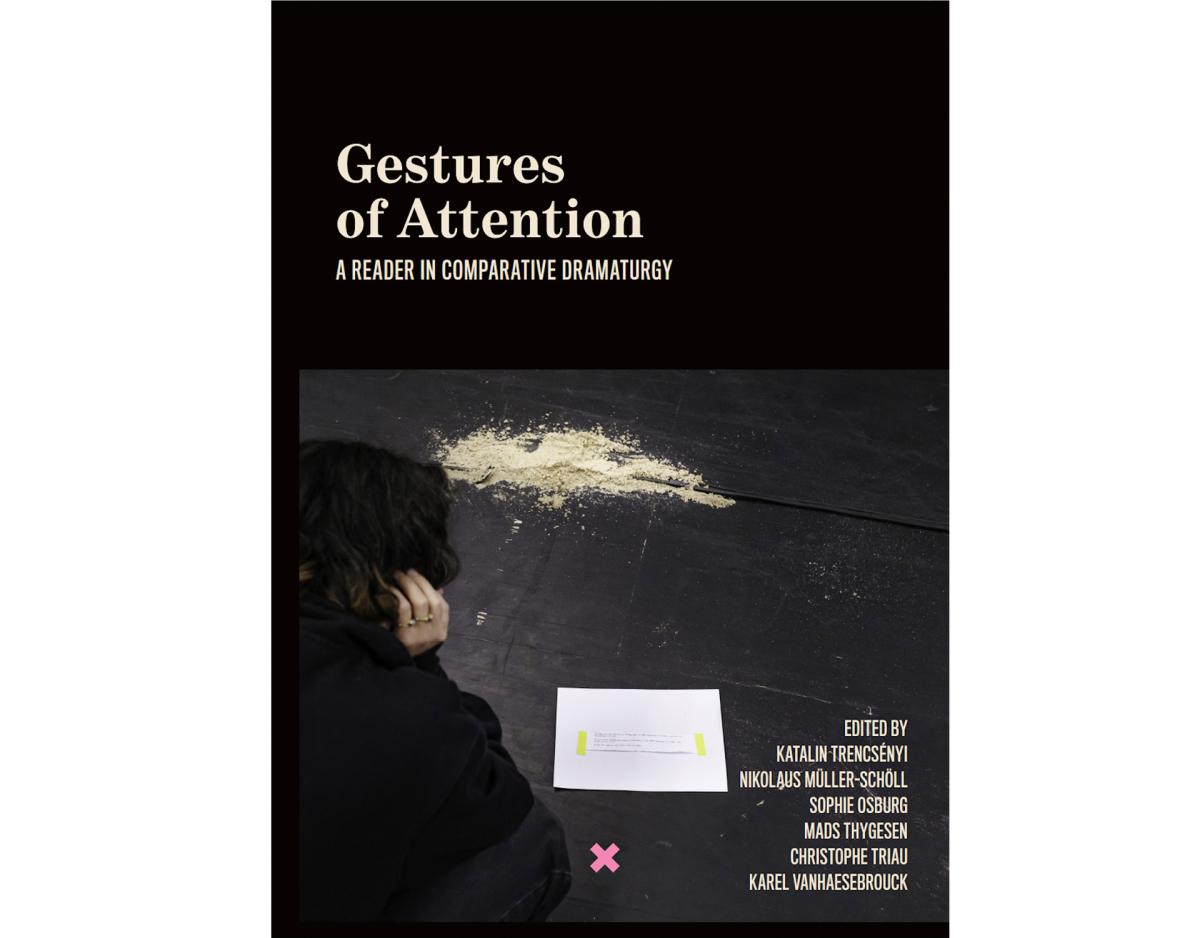
The book release will take place in Helsinki. Trencsényi has learned about the city’s dramaturgical culture for years now – what has she observed so far? She says she has been delighted by the ecodramaturgical practices she has encountered in the city and by the diversity of its small independent theatres. In the mainstream, however, she feels that this diversity is still far less visible – despite the fact that more than 20 per cent of Helsinki residents have a first language other than Finnish, Swedish or Sámi.
Dramaturgical thinking can serve society
Trencsényi believes dramaturgy has much to offer beyond the theatre. Its tools – deep listening, working through dialogue, questioning what is taken for granted and navigating complex processes – are precisely the skills we urgently need today. So even if the profession of dramaturg were one day to become extinct, just as the job of gas lamplighters did, one thing is certain:
“Dramaturgical thinking will never disappear.”
Trencsényi also believes strongly in art’s capacity to change societies. Comparative dramaturgy, too, can play an important role in the world today, at a time marked by increasing polarisation and fear of the unfamiliar.
“Intercultural dialogue gives us the opportunity to understand one another better and prevents us from sleepwalking towards very dark times.”
CDPR master’s programme in brief
- The Comparative Dramaturgy and Performance Research (CDPR) master’s programme promotes the exchange of knowledge, expertise and artistic practices across cultures. It strengthens international networks in the performing arts and fosters cross-border collaboration.
- The programme was established in 2017 and currently involves five universities: Goethe University Frankfurt, Oslo National Academy of the Arts, Université Libre de Bruxelles, Université Paris Nanterre and Uniarts Helsinki.
- The next application period for the CDPR master’s programme, which leads to a double degree, begins in January 2027.