


Fine Arts student: I’ve taken full advantage of the opportunities that Uniarts Helsinki offers for international mobility
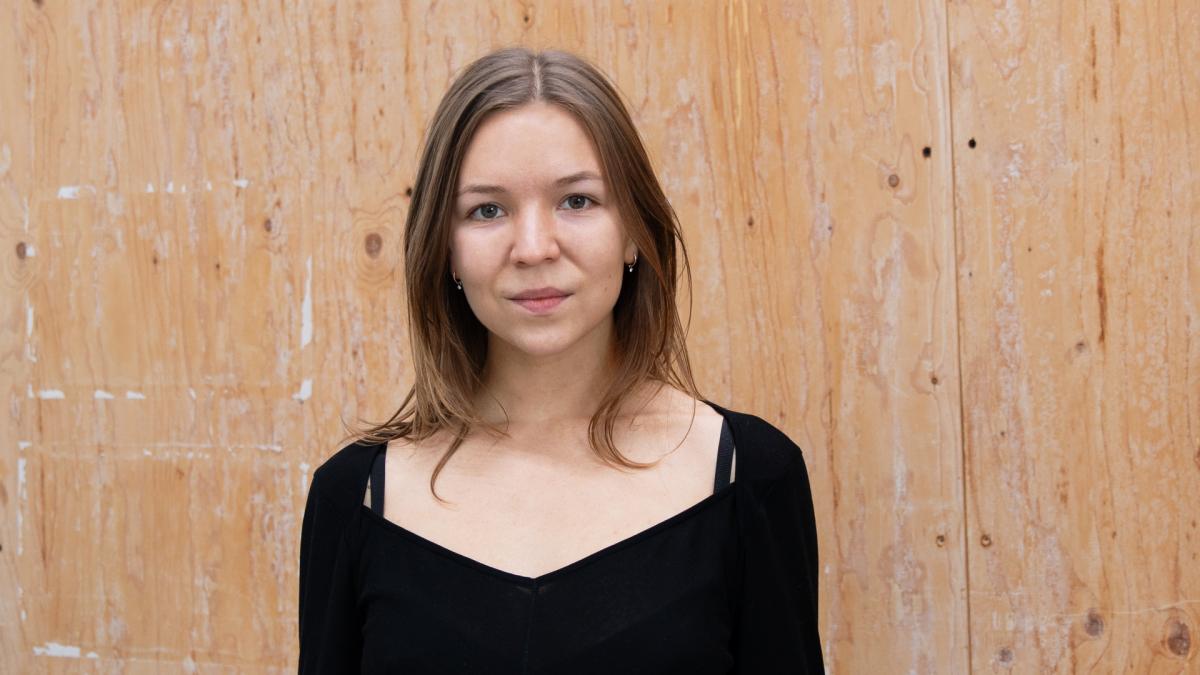
Ida Tomminen studies time and space arts on the Degree Programme in Fine Arts. Read her interview.
Who are you and how did you know that you wanted to study at Uniarts Helsinki?
I’m Ida Tomminen, a fourth-year bachelor’s student studying in the subject area of time and space arts in the Degree Programme in Fine Arts. I have previously studied at two very different types of art schools in Finland, namely Art School Maa and Arts Academy of Turku University of Applied Sciences. Those experiences boosted my motivation to apply to Uniarts Helsinki, because I feel that having well-rounded studies in the field is a great advantage moving forward. The time spent on studying art is valuable and fun, and I haven’t rushed to enter the post-graduation stage of my life.
What do you remember about the application process or the entrance exam?
I have really warm memories of the Academy of Fine Arts entrance exam. People on the entrance exam course were motivated and created a really friendly atmosphere. After the exam, I remember thinking that I won’t feel bad if I don’t get accepted this time, because I would happily come back for another entrance exam.
What is the best thing about your studies?
The Degree Programme in Fine Arts has a diverse selection of courses and the structure is fairly loose, which gives students the chance to make individual choices and focus on their own interests. The personal workspace and the facilities, tools and equipment offered by the academy are really great. The academy hosts interesting guests, and I’ve enjoyed the wide range of teaching offered and the chance to meet artists whose ideas and views have taught me a lot.
What has been the most challenging aspect about studying?
The most challenging thing has maybe been operating as part of the institution itself. Students feel the need to make their study environment more socially just and be politically active within the context of the university. This has been complicated by the university’s restrictions concerning communication channels and activism on campus. During my studies, students have been worried about education budget cuts, the increase in tuition fees for non-EU students and whether Uniarts Helsinki has affiliations with Israel (read more about the topic). What I find the most frustrating is the university’s aim to remain politically neutral.
What have been some of the most memorable experiences for you during your studies?
I’ve taken full advantage of the opportunities that Uniarts Helsinki offers for international mobility. KUNO courses, ERASMUS exchange studies and traineeship grants are important opportunities to learn about different art schools and communities in the field outside of Finland. Going abroad has enriched my studies, helped me appreciate what works well here at the academy and opened my eyes to what could be done differently. I think meeting new people and spending time with artists from different cultures has been the most interesting aspect of my studies.
What do you want to do after graduation?
I haven’t yet figured out how to work as an artist and build my everyday life around it after graduation. During my studies, I have met amazing people who I want to continue working with and share workspaces with. I hope that I get to create art and work in the arts scene as freely as possible.
What kinds of dreams do you have for the future?
I dream about opportunities to work with the kind of artists, curators and institutions that have an intentional attitude about life and work but don’t take it overly seriously. I want to make art that feels meaningful both to me and to others, and I believe that this sense of meaningfulness is created through human interactions.
Imagine a future without art. How would you describe a world like this?
A future without art would maybe mean a future where art is not supported and appreciated. It would be a sad world, and I hope we never need to face it. No matter what, art will remain a part of society and political change, and art will be created even when political decision-makers don’t defend its purpose. The arts and cultural sectors generate more wellbeing than they consume the funds of society, and I hope that decision-makers have the courage to invest in it even during politically and financially uncertain times.
What kind of impact do you hope your art has on the future?
I don’t know if my art has a big impact on the future, but I find that making art is a choice that changes the way we exist and live, in everyday life. It creates a space to examine and question norms and the system. In my own artistic practice, I examine the way that images shape our daily environment. I think that my interest in the radical effect that images have on our way of reading and navigating the environment is valuable for the future.