


Artist Pedagogy and Artistic Thinking: Perspectives and Practices
You are warmly welcome to the international research conference ‘Artist Pedagogy and Artistic Thinking: Perspectives and Practices’ on 27 – 29 August 2026 at the Sörnäinen campus. The online post-conference will be held on Friday 4 September 2026 (curated programme).
Vision statement
Among its many functions, art has a significant societal role in promoting new insights, a sense of community, and well-being. We believe that artists are societal change-makers and that nurturing their constructive growth in educational settings requires special attention. We are therefore interested in how artist pedagogies and artistic thinking can help shape our future in ever more uncertain times. As inequality, fragmentation, and polarisation continue to challenge our societies, how is our teaching responding and why?
This conference investigates current approaches to artist pedagogy and explores how artistic thinking both emerges from and influences teaching and education in the arts. It focuses on how pedagogies have changed and evolved in response to shifting concerns. At the same time, it examines what we have held on to and why and asks how artist pedagogy should develop to meet future societal circumstances and challenges.
For the purpose of this conference, artist pedagogy is understood as the practice through which artists teach future generations of artists both in higher education and in other post-secondary settings, as well as the theorization of these practices. Artistic thinking is referred to as the knowing that informs and emerges from processes of creating art. This includes forms of tacit, embodied, practical, situated, reflexive, and reflective sense-making involved in conventional and unconventional approaches to artmaking and teaching art.
The conference Artist Pedagogy and Artistic Thinking: Perspectives and Practices addresses its thematics through a two-day live event at the premises of the Sörnäinen Campus of the University of the Arts Helsinki, Finland. The live event includes two keynote addresses, presentations by conference delegates, and social gatherings. The online post-conference day happens a week after and is meant for retrospective reactions and reflections. The conference will offer a lively opportunity for exchange and feedback allowing participants to envision new approaches in and future opportunities for artist pedagogy in contextually diverse and cross-artistic educational settings.
Keynotes speakers
Al-An deSouza
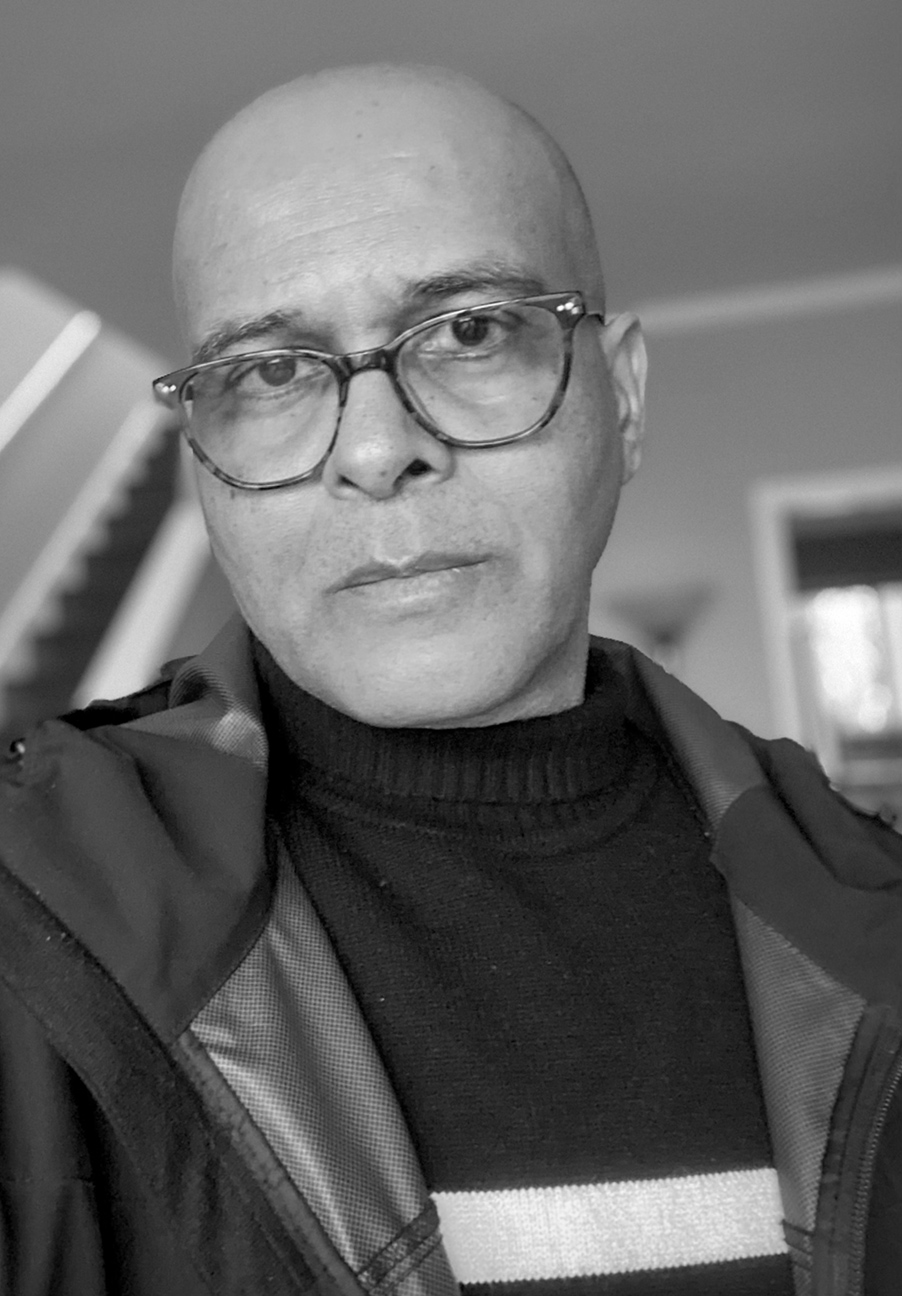
Al-An deSouza is an artist and educator working across photo-media, installation, text, and performance. deSouza is Professor of Photography and former department Chair of Art Practice at University of California, Berkeley. Their artworks have been shown extensively in the US and internationally, including at Tate Britain, London; the Phillips Collection, Washington, DC; Pompidou Centre, Paris, and the National Museum of Modern and Contemporary Art, Seoul. deSouza’s two recent books: How Art Can Be Thought (Duke University Press, 2018), examines art pedagogy and critique, and how some of the most common terms used to discuss art may be adapted to new artistic and social challenges; Ark of Martyrs (Sming Sming Books, 2020), is a polyphonic, dysphoric rewriting of Joseph Conrad’s infamous Heart of Darkness. deSouza is represented by Talwar Gallery, New York and New Delhi.
Exhibition archive: https://www.talwargallery.com/artists/al-an-desouza#tab:slideshow
Essay archive: https://berkeley.academia.edu/AlAndeSouza
Recent books:
Ark of Martyrs: An Autobiography of V, 2020 (Sming Sming Books)
How Art Can Be Thought: A Handbook for Change, 2018 (Duke Uni. Press)
Jaana Erkkilä-Hill
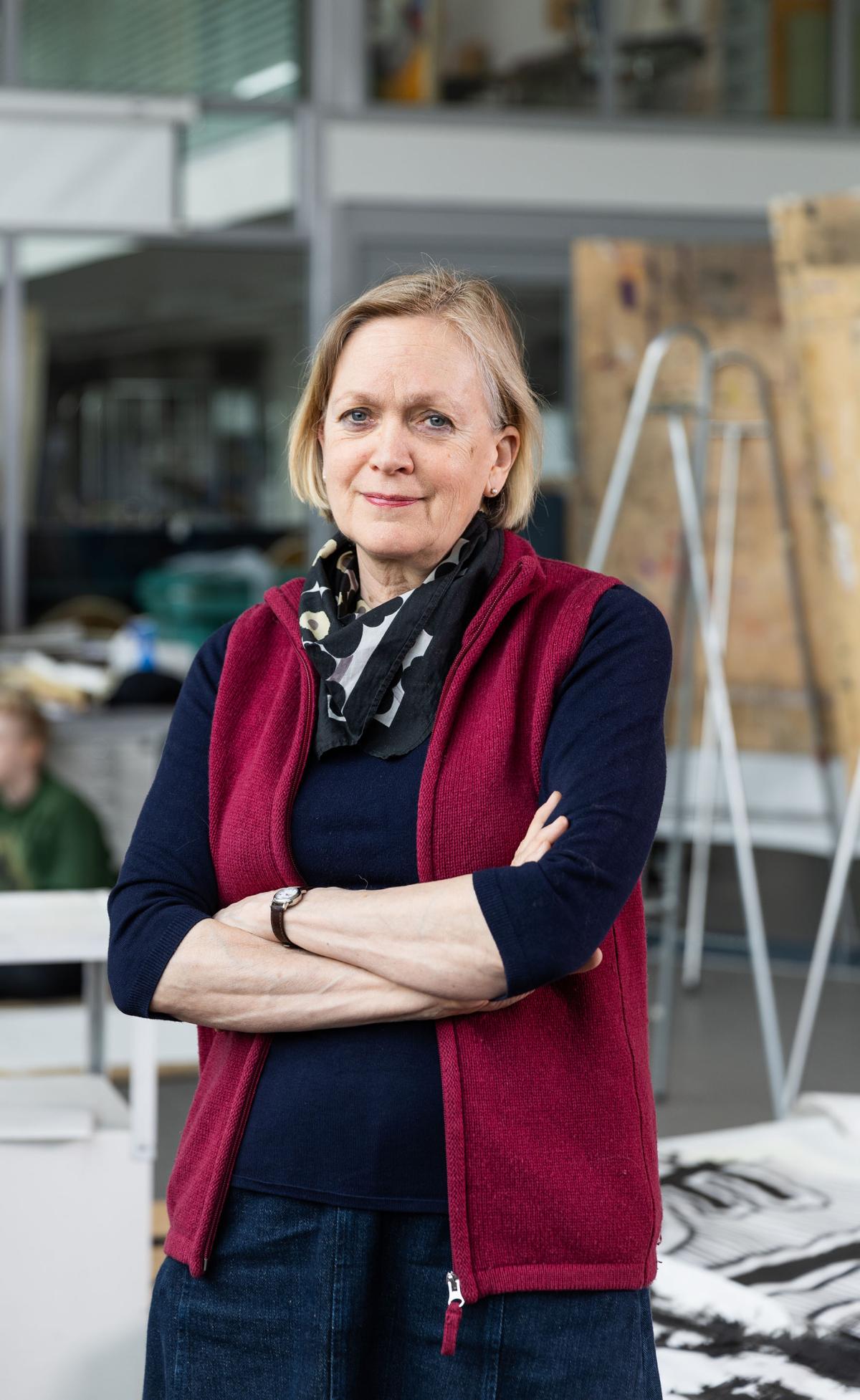
Jaana Erkkilä-Hill is a visual artist, researcher and professor of visual arts at the University of Lapland. Her more than thirty years of artistic work consists of works realized with different methods of printmaking. Woodcuts and linocuts are central to Erkkilä’s work, and the knowledge of the hand, the feel of the material are important elements for her during the working process. As a printmaker, Erkkilä has never been the creator of large series of prints but has focused on finding the possibilities of visual language in her works. To achieve the final result, even one successful print out of numerous experiments is enough.
In her visual search for the invisible Jaana Erkkilä combines the everyday and the sacred, the visible and the invisible world. Although the motifs of the works move along the lines of spirituality and nature mysticism, the central theme is also color. The layering of different levels is emphasized by the covering and revealing nature of the colors and shapes cut on wood and lino blocks and then printed on paper or fabric. The images are created from several color layers that can be seen through each other, and the atmosphere is created from the interaction of colors alongside the presenting subject, a process that combines the skills of the hand, the observations of the eye and, at the bottom of all the infinity, years of experience and stable judgment.
Erkkilä has been teaching visual arts since her student years. In recent years, she has focused her research activities especially on artist pedagogy. She investigates how artists who are actively engaged in their own artistic work teach art, and how the experiential knowledge related to the teacher’s own artistic work is transferred by the students to their own growth platform.
Isabel Galleymore
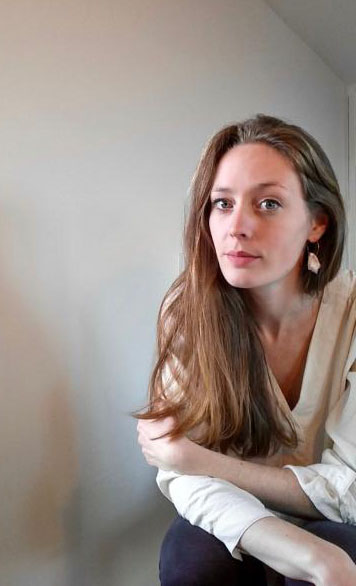
Isabel Galleymore is a British poet and scholar specializing in environmental literature. Her debut poetry collection, Significant Other, won the John Pollard Foundation International Poetry Prize in 2020, and her second collection, Baby Schema, was longlisted for the Laurel Ecopoetry Prize in 2024. Her poems have featured in the New York Review of Books, the London Review of Books and the Times Literary Supplement. She is also the author of Teaching Environmental Writing: Ecocritical Pedagogy and Poetics and has published widely on ecopoetics, ecofeminism, cute studies, and theories of humour. In 2022–23, Isabel was a Walter Jackson Bate Fellow at Harvard University’s Radcliffe Institute for Advanced Study, and in 2023–24 she was awarded a Fellowship from the Arts and Humanities Research Council (UKRI) for her project ‘Cuteness in Contemporary Environmental Culture: Developing Ecopoetic Practice’. She is currently Associate Professor in Creative Writing at the University of Birmingham.
Heidi Westerlund, Tuulikki Laes and Guadalupe López-Íñiguez
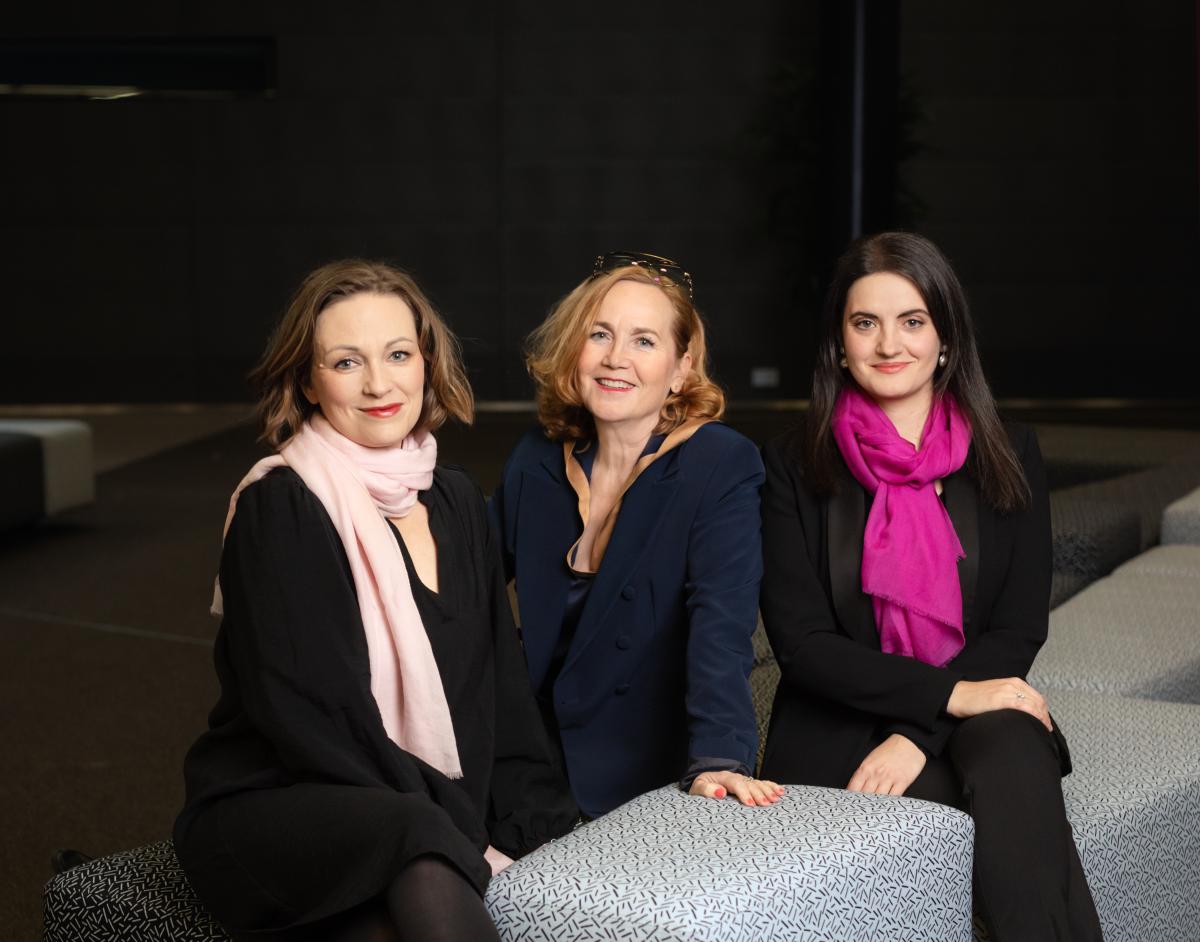
Dr. Heidi Westerlund is a professor at the Sibelius Academy of the University of the Arts Helsinki, Finland, and Adjunct Professor at Monash University, Australia. Her research has contributed to topics such as higher arts education, music professionalism, systems thinking, cultural diversity, and democracy in music education. She has been continuously developing a collaborative doctoral program and postdoctoral community at the Sibelius Academy, and has led several Research Council of Finland -funded research projects, of which the ongoing project is the “Transition Pathways Towards Gender Inclusion in the Changing Musical Landscapes of Nepal” (2023–2026).
Dr. Tuulikki Laes is a university researcher at the University of the Arts Helsinki with a doctoral degree in music education. She holds a title of Docent (Musicology) at the Faculty of Arts at the University of Helsinki. Currently, she is appointed as the Academy Research Fellow by the Research Council of Finland (2023–2027). She has conducted several research projects focusing on democracy, inclusion, activism, social justice, policy, and systems thinking within higher music education and socially engaged music practices. She is co-chair of the ISME Commission for Policy: Culture, Education and Media and editor-in-chief of the Finnish Journal of Music Education.
Dr. Guadalupe López-Íñiguez is a Spanish musician and university researcher at the Sibelius Academy, University of the Arts Helsinki. She holds a PhD in psychology and a master’s degree in cello performance. She is Honorary Senior Fellow (Music Psychology) at the University of Melbourne and Docent (Music Education) at the Sibelius Academy. Since 2009, she has led funded research projects on topics including constructivism and conceptual change, giftedness and talent, employability and careers, wellbeing, performance optimization, and theories of emotion and motivation. She has published widely and holds leadership roles in multiple organizations.
Conference fees and registration
General registration will open on 2 June and close on 21 August 2026. All conference fees include participation in all sessions and lunches between 27–29 August 2026.
Unfortunately, we cannot refund paid registration fees.
- Conference fee for participants and presenters: 200€
- Concession fee (students with valid student ID): 120€
Note that we don’t offer free admittance to Uniarts Helsinki faculty, staff, or students.
If you have a group presentation each member must register and pay separately.
The conference committee appreciates the inclusivity of artists, artist pedagogues, and researchers from different contexts and with different approaches in its evaluation. The conference also promotes accessibility by offering a limited quota of free registrations for participants on the basis of specific needs. In the submission form, you can indicate your interest being included in this quota in a separate section (max. 150 words). Unfortunately, we cannot pay any travel or accommodation costs.
Practical information
Venue
- Uniarts Helsinki’s Sörnäinen campus, comprises two buildings: the Kookos building and the Mylly (“The Mill”) building.
Accommodation
Discounted rates are available for attendees at:
- Scandic Hotels‘ reservations can be easily made through the following link: BOOK WITH SCANDIC
- Hobo Hotel (Kluuvikatu 4, Helsinki): For accommodation we offer your event guests the booking code EVENTSHELSINKI, which participants can use to get a 20% discount on the daily flexible rate including breakfast when booking through our website. The promotional code is valid 26.-29.8.2026for all room categories, as long as rooms are available. Reservations with the booking code can be made on the website
www.hobohotel.fi www.hobohotel.fi(opens in new window) The cancellation of room booking made with the discount code is free of charge if done by three (3) days prior to arrival.
More accommodation options:
Transport
- From Helsinki-Vantaa Airport, the most efficient way to reach the city centre is by commuter train (I or P lines), arriving at Helsinki Central Station in ~30 minutes. Tickets for ABC zones are available via the HSL mobile app or you can also pay by the debit/credit card. Just select the zones and tap your debit/credit card on the reader. The ticket will be stored on your card, and you are ready to board.
- Taxis cost ~40€ and take 20–30 minutes.
- Helsinki’s public transport includes buses, metro, commuter trains, city bikes, and ferries. Download the HSL app for route planning, real-time updates, and ticket purchases. Read more: HSL
- The Suomenlinna ferry operates year-round between Market Square and Suomenlinna Fortress.
Additional information
- Check the weather forecast via the Finnish Meteorological Institute.
- Currency: Euro (EUR); major credit cards widely accepted.
- ATMs (e.g. OTTO) and currency exchange (e.g. Forex, Tavex) are readily available.
- Emergency number: 112 (police, ambulance, fire).
- Official languages: Finnish and Swedish; bilingual signage is standard.
- Pharmacies are marked with the sign “Apteekki”.
- Tap water is safe to drink.
- Time zone: Eastern European Time (EET), GMT +2.
- Free public Wi-Fi is available; Eduroam access for academic visitors.
- Helsinki Tourist Information is located at Aleksanterinkatu 24.
Safer spaces for all
We encourage academic discussion but also ask everyone to keep their comments constructive and respectful, which contributes to a positive, encouraging and safer atmosphere at Uniarts Helsinki.
Spaces available and accessibility
We have reserved Studio 1, Studio 2, Theatre Hall, Auditorium 1 and Rehearsal Rooms 525 and 531 for the conference:
- Auditorium 1: the auditorium has 107 ascending seats.
- Rehearsal Room 525: 296 m2, wooden floor.
- Rehearsal Room 531: 126 m2, wooden floor.
- Equipment list of the studios.
Uniarts Helsinki guidelines on sustainability
While the conference can only host a limited number of presentations, the conference committee appreciates inclusivity in its evaluation of the proposals. Please indicate your accessibility needs in the submission form. However, do note that due to planned renovations in the Kookos building of the Sörnäinen campus in 2026, although we aim to make all the topical contents of the conference accessible, we cannot guarantee full access to all spaces on campus. The presenters who need accessible spaces will be allocated one.
Call for presentations
The conference welcomes contributions from researchers, professional artists, and artist pedagogues across the fields of the arts. We seek contributions in the form of posters and provocations, paper presentations, panels, lecture-demonstrations, workshares, and workshops critically engaging in artist pedagogy and artistic thinking and their timely opportunities for educating the next generation of artists.
The presentation formats we support include:
- Posters and provocations: 5 minutes poster or provocation presentation followed by discussion.
- Paper presentations: 30 minutes, 15 minutes for presentation and 15 minutes for discussion.
- Lecture-demonstrations, workshops, and workshares: 60 minutes, including 15 minutes for discussion.
- Panels: 60 minutes, including 15 minutes for discussion.
Please select the appropriate category for your research and specify the proposed format requirements in the proposal submission form.
In planning your presentation proposal, please be mindful of the conference theme and that there is limited technical support available. Indoor spaces have basic AV (screen and sound). We do not offer light or sound design for your presentation or any production services. Do also consider that there is very limited time for the technical set up during the programme breaks. Please let us know in your proposal submission what your technical wishes are, so that we can allocate our resources in the best way possible. We may also contact you before making our final decision.
How to submit a proposal
Presentations can be submitted by individuals or groups. If you have a group presentation, please submit only one application form.
Those interested should send a 300-word abstract and a short (max 150-word) biography of each participating contributor (in case of a joint submission). Please note that in case your proposal is accepted, we will use the abstract submitted at this point in the online book of abstracts of the conference. The abstract should outline the title of the presentation, the name (s) of the contributor (s) and a summary of the planned presentation. In the submission form you should also indicate the format and time frame, and your wishes for the space and equipment for the presentation by 1 December 2025 at 23:59 (EET, Europe-Helsinki, UTC+2) through the electronic submission service.
You will get a confirmation email after your submission with a link that allows you to edit your proposal until the deadline. Please remember to save your confirmation email!
Acceptance notice
Applicants will be informed of their acceptance by email by 8 March 2026.
Accepted presenters are asked to confirm their participation by 23 March 2026 (EET, Europe-Helsinki, UTC +2).
Conference committee
- Leena Rouhiainen
- Magnus Quaife
- Aino-Kaisa Koistinen
- Pilvi Porkola
- Timothy Smith
- Riitta Pasanen-Willberg (Practical Manager)
- Johanna Rauhaniemi (Conference Coordinator)
Contact for the conference
If you have any inquiries about the location, theme, or accessibility of the conference, please do not hesitate to email us at artistped2026@uniarts.fi
Vision statement
Among its many functions, art has a significant societal role in promoting new insights, a sense of community, and well-being. We believe that artists are societal change-makers and that nurturing their constructive growth in educational settings requires special attention. We are therefore interested in how artist pedagogies and artistic thinking can help shape our future in ever more uncertain times. As inequality, fragmentation, and polarisation continue to challenge our societies, how is our teaching responding and why?
This conference investigates current approaches to artist pedagogy and explores how artistic thinking both emerges from and influences teaching and education in the arts. It focuses on how pedagogies have changed and evolved in response to shifting concerns. At the same time, it examines what we have held on to and why and asks how artist pedagogy should develop to meet future societal circumstances and challenges.
For the purpose of this conference, artist pedagogy is understood as the practice through which artists teach future generations of artists both in higher education and in other post-secondary settings, as well as the theorization of these practices. Artistic thinking is referred to as the knowing that informs and emerges from processes of creating art. This includes forms of tacit, embodied, practical, situated, reflexive, and reflective sense-making involved in conventional and unconventional approaches to artmaking and teaching art.
The conference Artist Pedagogy and Artistic Thinking: Perspectives and Practices addresses its thematics through a two-day live event at the premises of the Sörnäinen Campus of the University of the Arts Helsinki, Finland. The live event includes two keynote addresses, presentations by conference delegates, and social gatherings. The online post-conference day happens a week after and is meant for retrospective reactions and reflections. The conference will offer a lively opportunity for exchange and feedback allowing participants to envision new approaches in and future opportunities for artist pedagogy in contextually diverse and cross-artistic educational settings.
Keynotes speakers
Al-An deSouza
Al-An deSouza is an artist and educator working across photo-media, installation, text, and performance. deSouza is Professor of Photography and former department Chair of Art Practice at University of California, Berkeley. Their artworks have been shown extensively in the US and internationally, including at Tate Britain, London; the Phillips Collection, Washington, DC; Pompidou Centre, Paris, and the National Museum of Modern and Contemporary Art, Seoul. deSouza’s two recent books: How Art Can Be Thought (Duke University Press, 2018), examines art pedagogy and critique, and how some of the most common terms used to discuss art may be adapted to new artistic and social challenges; Ark of Martyrs (Sming Sming Books, 2020), is a polyphonic, dysphoric rewriting of Joseph Conrad’s infamous Heart of Darkness. deSouza is represented by Talwar Gallery, New York and New Delhi.
Exhibition archive: https://www.talwargallery.com/artists/al-an-desouza#tab:slideshow
Essay archive: https://berkeley.academia.edu/AlAndeSouza
Recent books:
Ark of Martyrs: An Autobiography of V, 2020 (Sming Sming Books)
How Art Can Be Thought: A Handbook for Change, 2018 (Duke Uni. Press)
Jaana Erkkilä-Hill
Jaana Erkkilä-Hill is a visual artist, researcher and professor of visual arts at the University of Lapland. Her more than thirty years of artistic work consists of works realized with different methods of printmaking. Woodcuts and linocuts are central to Erkkilä’s work, and the knowledge of the hand, the feel of the material are important elements for her during the working process. As a printmaker, Erkkilä has never been the creator of large series of prints but has focused on finding the possibilities of visual language in her works. To achieve the final result, even one successful print out of numerous experiments is enough.
In her visual search for the invisible Jaana Erkkilä combines the everyday and the sacred, the visible and the invisible world. Although the motifs of the works move along the lines of spirituality and nature mysticism, the central theme is also color. The layering of different levels is emphasized by the covering and revealing nature of the colors and shapes cut on wood and lino blocks and then printed on paper or fabric. The images are created from several color layers that can be seen through each other, and the atmosphere is created from the interaction of colors alongside the presenting subject, a process that combines the skills of the hand, the observations of the eye and, at the bottom of all the infinity, years of experience and stable judgment.
Erkkilä has been teaching visual arts since her student years. In recent years, she has focused her research activities especially on artist pedagogy. She investigates how artists who are actively engaged in their own artistic work teach art, and how the experiential knowledge related to the teacher’s own artistic work is transferred by the students to their own growth platform.
Isabel Galleymore
Isabel Galleymore is a British poet and scholar specializing in environmental literature. Her debut poetry collection, Significant Other, won the John Pollard Foundation International Poetry Prize in 2020, and her second collection, Baby Schema, was longlisted for the Laurel Ecopoetry Prize in 2024. Her poems have featured in the New York Review of Books, the London Review of Books and the Times Literary Supplement. She is also the author of Teaching Environmental Writing: Ecocritical Pedagogy and Poetics and has published widely on ecopoetics, ecofeminism, cute studies, and theories of humour. In 2022–23, Isabel was a Walter Jackson Bate Fellow at Harvard University’s Radcliffe Institute for Advanced Study, and in 2023–24 she was awarded a Fellowship from the Arts and Humanities Research Council (UKRI) for her project ‘Cuteness in Contemporary Environmental Culture: Developing Ecopoetic Practice’. She is currently Associate Professor in Creative Writing at the University of Birmingham.
Heidi Westerlund, Tuulikki Laes and Guadalupe López-Íñiguez
Dr. Heidi Westerlund is a professor at the Sibelius Academy of the University of the Arts Helsinki, Finland, and Adjunct Professor at Monash University, Australia. Her research has contributed to topics such as higher arts education, music professionalism, systems thinking, cultural diversity, and democracy in music education. She has been continuously developing a collaborative doctoral program and postdoctoral community at the Sibelius Academy, and has led several Research Council of Finland -funded research projects, of which the ongoing project is the “Transition Pathways Towards Gender Inclusion in the Changing Musical Landscapes of Nepal” (2023–2026).
Dr. Tuulikki Laes is a university researcher at the University of the Arts Helsinki with a doctoral degree in music education. She holds a title of Docent (Musicology) at the Faculty of Arts at the University of Helsinki. Currently, she is appointed as the Academy Research Fellow by the Research Council of Finland (2023–2027). She has conducted several research projects focusing on democracy, inclusion, activism, social justice, policy, and systems thinking within higher music education and socially engaged music practices. She is co-chair of the ISME Commission for Policy: Culture, Education and Media and editor-in-chief of the Finnish Journal of Music Education.
Dr. Guadalupe López-Íñiguez is a Spanish musician and university researcher at the Sibelius Academy, University of the Arts Helsinki. She holds a PhD in psychology and a master’s degree in cello performance. She is Honorary Senior Fellow (Music Psychology) at the University of Melbourne and Docent (Music Education) at the Sibelius Academy. Since 2009, she has led funded research projects on topics including constructivism and conceptual change, giftedness and talent, employability and careers, wellbeing, performance optimization, and theories of emotion and motivation. She has published widely and holds leadership roles in multiple organizations.
Conference fees and registration
General registration will open on 2 June and close on 21 August 2026. All conference fees include participation in all sessions and lunches between 27–29 August 2026.
Unfortunately, we cannot refund paid registration fees.
- Conference fee for participants and presenters: 200€
- Concession fee (students with valid student ID): 120€
Note that we don’t offer free admittance to Uniarts Helsinki faculty, staff, or students.
If you have a group presentation each member must register and pay separately.
The conference committee appreciates the inclusivity of artists, artist pedagogues, and researchers from different contexts and with different approaches in its evaluation. The conference also promotes accessibility by offering a limited quota of free registrations for participants on the basis of specific needs. In the submission form, you can indicate your interest being included in this quota in a separate section (max. 150 words). Unfortunately, we cannot pay any travel or accommodation costs.
Practical information
Venue
- Uniarts Helsinki’s Sörnäinen campus, comprises two buildings: the Kookos building and the Mylly (“The Mill”) building.
Accommodation
Discounted rates are available for attendees at:
- Scandic Hotels‘ reservations can be easily made through the following link: BOOK WITH SCANDIC
- Hobo Hotel (Kluuvikatu 4, Helsinki): For accommodation we offer your event guests the booking code EVENTSHELSINKI, which participants can use to get a 20% discount on the daily flexible rate including breakfast when booking through our website. The promotional code is valid 26.-29.8.2026for all room categories, as long as rooms are available. Reservations with the booking code can be made on the website
www.hobohotel.fi www.hobohotel.fi(opens in new window) The cancellation of room booking made with the discount code is free of charge if done by three (3) days prior to arrival.
More accommodation options:
Transport
- From Helsinki-Vantaa Airport, the most efficient way to reach the city centre is by commuter train (I or P lines), arriving at Helsinki Central Station in ~30 minutes. Tickets for ABC zones are available via the HSL mobile app or you can also pay by the debit/credit card. Just select the zones and tap your debit/credit card on the reader. The ticket will be stored on your card, and you are ready to board.
- Taxis cost ~40€ and take 20–30 minutes.
- Helsinki’s public transport includes buses, metro, commuter trains, city bikes, and ferries. Download the HSL app for route planning, real-time updates, and ticket purchases. Read more: HSL
- The Suomenlinna ferry operates year-round between Market Square and Suomenlinna Fortress.
Additional information
- Check the weather forecast via the Finnish Meteorological Institute.
- Currency: Euro (EUR); major credit cards widely accepted.
- ATMs (e.g. OTTO) and currency exchange (e.g. Forex, Tavex) are readily available.
- Emergency number: 112 (police, ambulance, fire).
- Official languages: Finnish and Swedish; bilingual signage is standard.
- Pharmacies are marked with the sign “Apteekki”.
- Tap water is safe to drink.
- Time zone: Eastern European Time (EET), GMT +2.
- Free public Wi-Fi is available; Eduroam access for academic visitors.
- Helsinki Tourist Information is located at Aleksanterinkatu 24.
Safer spaces for all
We encourage academic discussion but also ask everyone to keep their comments constructive and respectful, which contributes to a positive, encouraging and safer atmosphere at Uniarts Helsinki.
Spaces available and accessibility
We have reserved Studio 1, Studio 2, Theatre Hall, Auditorium 1 and Rehearsal Rooms 525 and 531 for the conference:
- Auditorium 1: the auditorium has 107 ascending seats.
- Rehearsal Room 525: 296 m2, wooden floor.
- Rehearsal Room 531: 126 m2, wooden floor.
- Equipment list of the studios.
Uniarts Helsinki guidelines on sustainability
While the conference can only host a limited number of presentations, the conference committee appreciates inclusivity in its evaluation of the proposals. Please indicate your accessibility needs in the submission form. However, do note that due to planned renovations in the Kookos building of the Sörnäinen campus in 2026, although we aim to make all the topical contents of the conference accessible, we cannot guarantee full access to all spaces on campus. The presenters who need accessible spaces will be allocated one.
Call for presentations
The conference welcomes contributions from researchers, professional artists, and artist pedagogues across the fields of the arts. We seek contributions in the form of posters and provocations, paper presentations, panels, lecture-demonstrations, workshares, and workshops critically engaging in artist pedagogy and artistic thinking and their timely opportunities for educating the next generation of artists.
The presentation formats we support include:
- Posters and provocations: 5 minutes poster or provocation presentation followed by discussion.
- Paper presentations: 30 minutes, 15 minutes for presentation and 15 minutes for discussion.
- Lecture-demonstrations, workshops, and workshares: 60 minutes, including 15 minutes for discussion.
- Panels: 60 minutes, including 15 minutes for discussion.
Please select the appropriate category for your research and specify the proposed format requirements in the proposal submission form.
In planning your presentation proposal, please be mindful of the conference theme and that there is limited technical support available. Indoor spaces have basic AV (screen and sound). We do not offer light or sound design for your presentation or any production services. Do also consider that there is very limited time for the technical set up during the programme breaks. Please let us know in your proposal submission what your technical wishes are, so that we can allocate our resources in the best way possible. We may also contact you before making our final decision.
How to submit a proposal
Presentations can be submitted by individuals or groups. If you have a group presentation, please submit only one application form.
Those interested should send a 300-word abstract and a short (max 150-word) biography of each participating contributor (in case of a joint submission). Please note that in case your proposal is accepted, we will use the abstract submitted at this point in the online book of abstracts of the conference. The abstract should outline the title of the presentation, the name (s) of the contributor (s) and a summary of the planned presentation. In the submission form you should also indicate the format and time frame, and your wishes for the space and equipment for the presentation by 1 December 2025 at 23:59 (EET, Europe-Helsinki, UTC+2) through the electronic submission service.
You will get a confirmation email after your submission with a link that allows you to edit your proposal until the deadline. Please remember to save your confirmation email!
Acceptance notice
Applicants will be informed of their acceptance by email by 8 March 2026.
Accepted presenters are asked to confirm their participation by 23 March 2026 (EET, Europe-Helsinki, UTC +2).
Conference committee
- Leena Rouhiainen
- Magnus Quaife
- Aino-Kaisa Koistinen
- Pilvi Porkola
- Timothy Smith
- Riitta Pasanen-Willberg (Practical Manager)
- Johanna Rauhaniemi (Conference Coordinator)
Contact for the conference
If you have any inquiries about the location, theme, or accessibility of the conference, please do not hesitate to email us at artistped2026@uniarts.fi