


Anastasiia Lapteva
About the Artist
Anastasiia Lapteva (b. 2002) is an artist working with installations, hand-crafted textiles and written stories. Her encounters with people and nature, and the observations that arise from them, often form the starting point of Anastasiia’s works, which explore communication and understanding. Water and hand-woven nets recur throughout her practice as metaphors for connection and as vessels in which to preserve knowledge.
More information
Exhibitions
Kuvan Kevät 2026
15.5.-14.6.2026
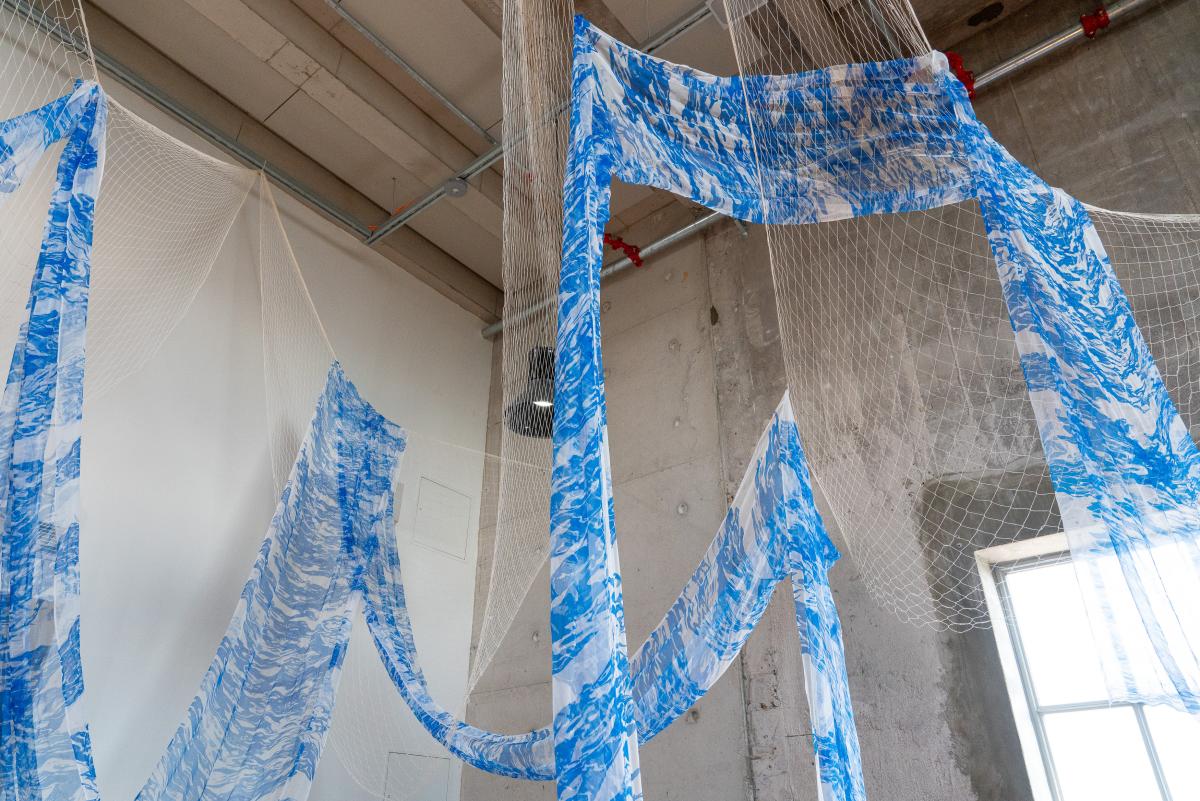
I work with translucent fabric, water patterns and hand-woven nets that I have created in different environments and often amid conversations. I am drawn to the idea that information from the surroundings is stored in fabrics and water and can only be interpreted through intuition rather than systematised human language. Textiles were early information technologies, where knowledge was preserved and passed down generations through symbols, colours, patterns and knots. In a similar way, I see water as a more-than-human archive that has existed long before us and will remain after us. In my work, I explore how context, memories and encounters can be transmitted through texture and materiality.
BFA Exhibition 2024
About the artwork
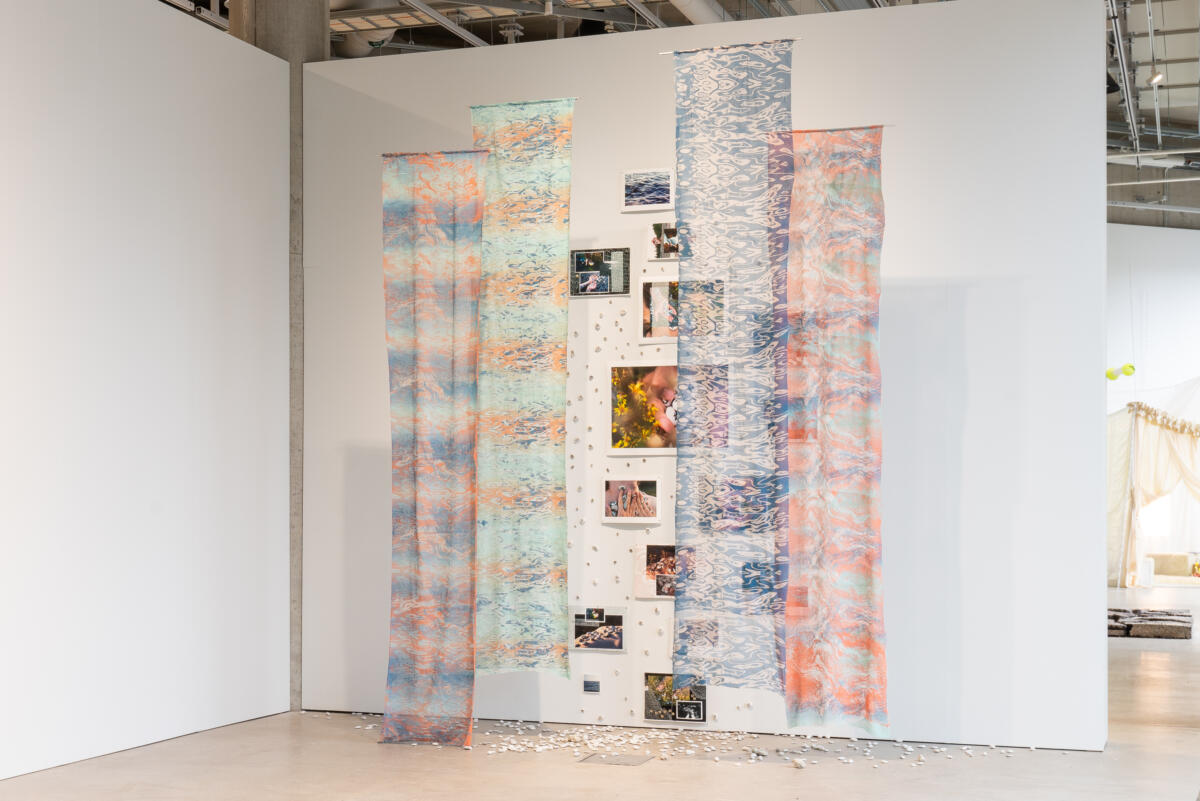
The installation consists of fabrics, collages, and small stones with symbols. Through the work, I explore the connection between language, water, and the human body. I reflect on the experience of learning a new language, gathering new words and symbols, and relating them to the environment. In the work, I draw connections between gathering artefacts, like stones and flowers, from nature and gathering meanings in a new language. Fabrics with water pattern prints are placed at the front, representing the flow of language. Behind them are collages made from photographs and drawings, showing small stones with written made-up symbols. Through these elements I show how language and the environment are connected.