


Creating safer spaces in the arts: how many times does a person come out of the closet?
When we talk about Pride themes, coming out of the closet is often referred to as an individual moment: a milestone, a one-off act of bravery, and after that, a person can check it off the to-do list, so to speak. The idea is appealing from a dramaturgical perspective – there is a before and after, a secret kept and then a truth revealed.
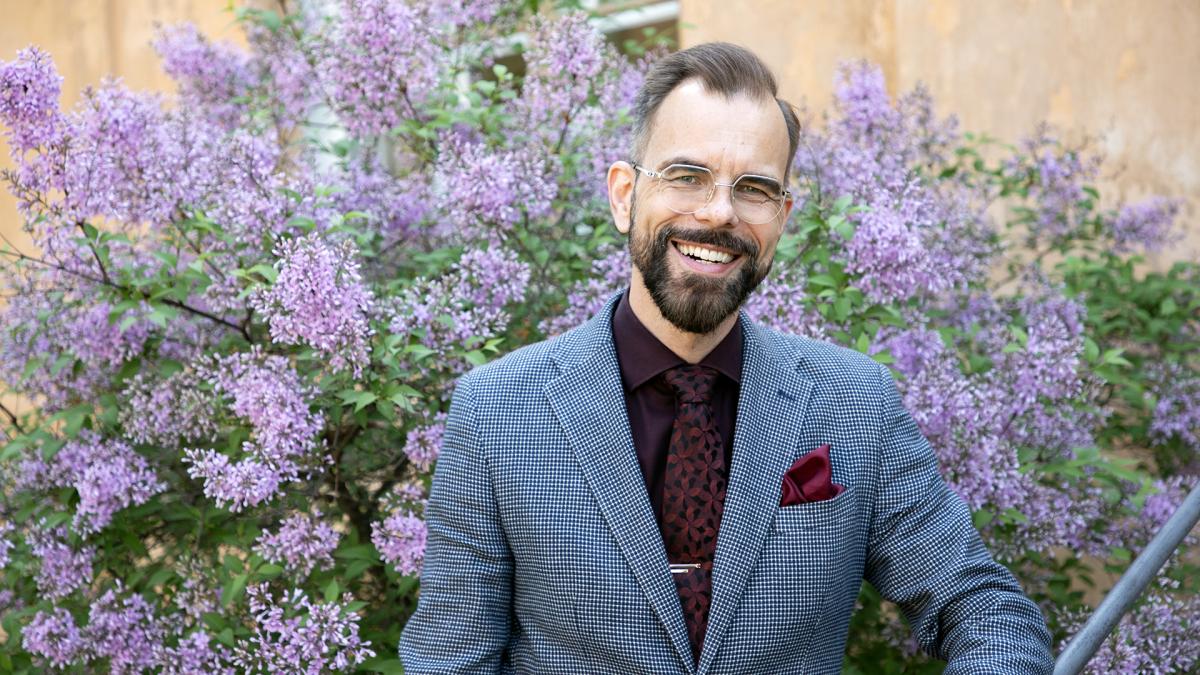
In my experience, the reality is something else entirely.
Coming out of the closet is not a single event but a structure. It’s a recurring situation interwoven in everyday interactions. It happens time and again – when attending a conference and the attendees start chatting about personal instead of professional lives, on nature trails when another dog walker asks something about your life, in casual conversations when the topic shifts to family. In each situation, I make a quick calculation: do I just say it like it is or do I skirt around it? Do I explain or sidestep the truth?
An individual moment is almost meaningless in the grand scheme of things. But when those moments repeat themselves, they shape our experience of the reality. These situations direct our attention, steal our focus and consume our energy.
Pride is especially important to me from this perspective – not as a celebration or an identity extravaganza, but as a reminder that for some of us, everyday life is a continuous negotiation on how visible we make ourselves. To what extent are we allowed to exist without explanations?
In my role as a vice dean for education, it is important to reflect on the kind of community that Uniarts Helsinki is. Do people need to use some of their mental capacity on making themselves understood and accepted?
Studies and making art require dedication, toleration of uncertainty and risk-taking. They require an embodied presence that extends beyond a technical performance, with each individual bringing their own thinking and experience into the process. If some of this capacity is spent on constantly reading social situations, self-regulating or watching one’s mouth, it will have a direct impact on a person’s learning. With this in mind, equity is not just an ethical but an administrative goal. It is a requirement for learning and artistic work.
Because of this, I came to a conclusion that was not self-evident to me from the start but that I now find necessary in my leadership role: I speak out about my reality, which would otherwise remain a quiet assumption. I talk about my life as a gay person the same way the majority talks about theirs. I mention things without framing or explanations. I do so because frequent occurrences are more effective than shouting from the rooftops when it comes to normalising things.
One of the most persistent misjudgements that people make in the public discourse is about this repetition. When a person belonging to a sexual minority shares aspects about their personal life, people interpret it as a statement or pushing a certain agenda. When a straight person does the same thing, it’s considered neutral everyday living. The difference is not what’s being said but who the person saying it is.
We can’t fix this warped view except by taking up space again and again, even when it feels exaggerated. Not because the topic itself is central to each situation, but because it won’t become ordinary unless there’s repetition.
It’s important to put things into scale and acknowledge that we’re not talking about a marginal phenomenon but a significant part of the spectrum of humanity. This analogy may not be perfect, but the proportion is similar to the percentage of left-handed people. Yet unlike sexual minorities, left-handed people don’t constantly need to calculate what to share about themselves and how they dare to be seen. This speaks volumes about the norms in our society: about what we assume by default and what we consider an exception.
Art has a special opportunity in this setting; sometimes it’s rather a responsibility. Art doesn’t only reflect our reality, but it also shapes it. It creates spaces where a way of being becomes possible, recognisable – and finally – commonplace.
In the context of teaching arts subjects, it’s not enough to pay attention to repertoire choices or individual conversations. We need to foster a welcoming organisational culture and avoid making assumptions, avoid using unintentionally non-inclusive language and avoid considering only a certain way of being as neutral. Students often draw quick, unspoken conclusions from their environment. They assess whether they’re in a space where they need to be on their toes or whether they can focus their attention to the reason why they’re at the university in the first place: studies and making art.
Pride is a reminder of the direction we want to be headed towards. Pride is not a one-off weekend of celebrations, but a measure of what everyday life is like on other days. Until people no longer need to constantly assess how much of themselves they feel comfortable sharing, we’re not providing a space where humanity in all its aspects is accepted without question. The goal is not to make different identities disappear but to have them stop standing out from the rest as exceptions.
At Uniarts Helsinki, I hope to contribute to a positive environment where no one’s energy is spent on coming out of the closet and everyone can focus on what’s essential. At our university, what’s essential is thinking, practising and finding one’s voice – things that make a person an artist.
Writer: Markus Utrio, Uniarts Helsinki’s Sibelius Academy’s vice dean for education