


Music Business lecturer Pekka Saarikorpi: Future professionals combine cultural and market-driven expertise
Music business is undergoing a major transformation as digitalisation, artificial intelligence, the media landscape and global market players reshape the industry. The Music Business master’s programme educates professionals to meet the needs of the evolving music sector. The international scope of the programme provides tools for exporting music, artists and creative work, and builds the expertise needed for sustainable businesses in a multi-layered ecosystem, says lecturer Pekka Saarikorpi.
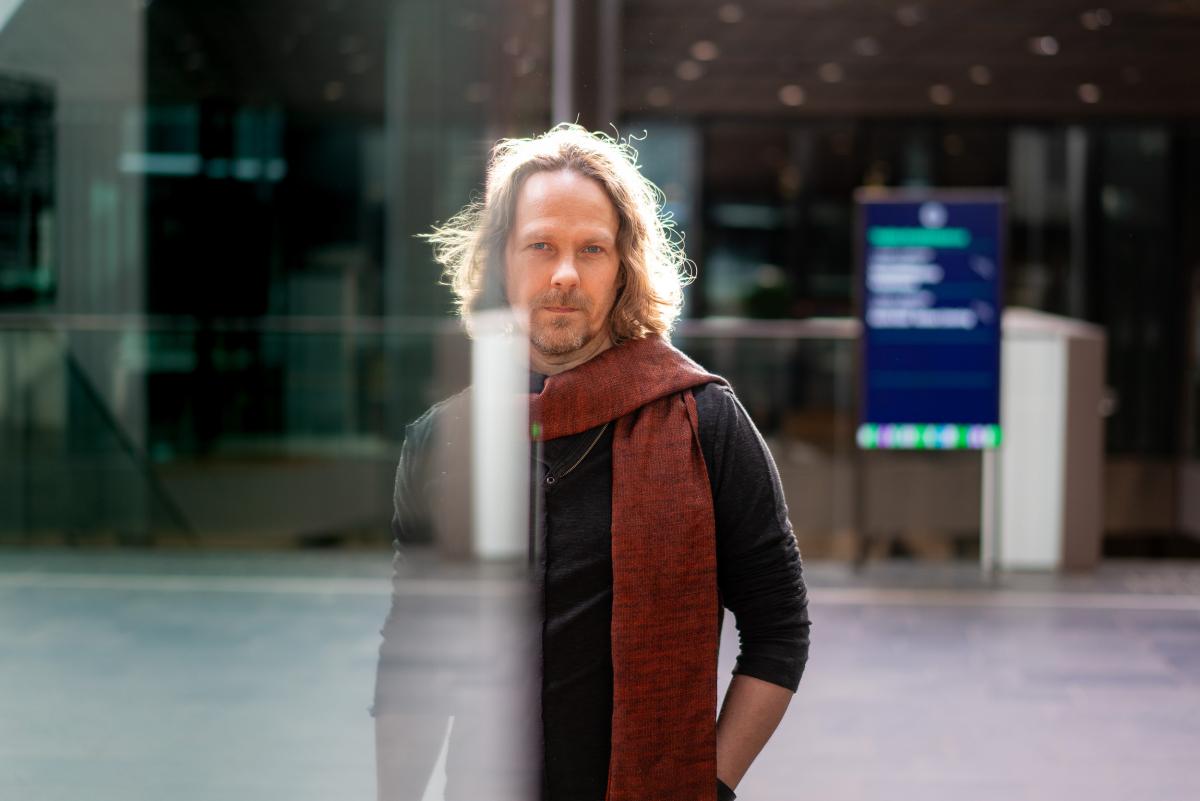
What inspires you in music business right now?
The inspiration comes from my own background. I’m a musician and music educator, and I also have a background in arts management before moving to the academy. The Master’s Programme in Music Business combines different stages and experiences from my professional life, which is why I find it so inspiring to be part of this programme.
The diversity of music and the music sector is another reason. Music is present in our everyday lives on so many levels, more than ever before, and music consumption has changed massively over the last few decades.
Since my academic background is in business and consumer research, I am particularly interested in understanding these changes and their impact on the music sector. This is also somewhat related to my overall interest in better understanding the music ecosystem, and the very different market logics that prevail between the strong third sector and its non-profit organisations and the market-driven sector.
In these turbulent times, I am also keen to understand the different nuances of artivism and the role of art in consumer movements – especially, in relation to musicianship and changing agency. Traditionally, musicianship has been seen as a craftsmanship, emphasising the master-apprentice tradition and embodied skills rather than critical or philosophical thinking.
However, as society and the public discourse become polarised, this same polarisation easily “sticks” to art and artists. Questions about how certain artists or musical works become identified with certain forms of consumer activism and how this affects the music market are extremely interesting. But also, how musicians and music industry practitioners navigate the music market in an increasingly polarised media landscape needs to be thought more carefully than before.
What is music business exactly?
We can identify several different business structures and markets in the music field. There is a publicly or privately funded music sector, the so-called third sector, which includes state[1]subsidised and non-profit institutions. Then we have the independent arts sector, including artists and collectives operating outside state funding structures, or operating in the interstices between different markets. Parallel to these is market-driven logic, with completely different structures based on supply and demand.
The master’s programme in Music Business focuses particularly on economic structures, but at the same time it’s essential to understand the fragmented, complex and often contradictory ecosystem of the music market, where different logics operate in parallel. Exchange can be economic, social and symbolic all at once.
As a researcher, I have researched, for example, independent artist communities in Finland and Iceland. These musicians often emphasise how collectives enable them to operate with limited resources. A significant part of the music sector is based on reciprocal exchange economy: helping each other, doing favours, and building networks that make many careers possible. This grassroots level is often forgotten when we talk about the music business.
When zooming out from these layers, the music business revolves around two main elements: the musical work or composition and the recording. The management of compositions and recordings involves legal and economic issues related to performance and publication, that is, a copyright economy.
What makes the Music Business master’s programme important and timely?
Until now, we haven’t had higher education programme in Finland that prepares students for the music business or structures of the market-driven music sector. This has meant that people have entered the field through highly varied career paths, learning “hands-on” without a strong theoretical foundation.
Sibelius Academy’s Music Business programme is also unique on a European scale. There is nothing quite like it in the EU. Music Business programmes often focus more on artistic content. We purposely focus on what to do when the artistic content already exists. Secondly, we are witnessing a significant structural change in the music industry.
The history of music industry has seen several major turning points over the past hundred years: starting from the technological revolution to mass production, the digital turn and, most recently, AI-powered systems that learn, take agency and revolutionise the revenue models.
From the music business perspective, now is a very timely moment to engage with this systemic change, learn its operating logic and build expertise in it. It is also worth mentioning the third sector and public funding for music. We need more advocates and lobbyists for music at the tables where decisions are made about how the public money is allocated. It is essential.
What are the programme’s main goals?
As I mentioned earlier, expertise in the music industry has largely been based on learning by doing. Now we are facilitating diverse competences that will help future practitioners and academics to navigate the changing music business landscape and revenue logics. Another goal is to strengthen long-term, sustainable careers in a rapidly changing music sector. For me, success should be measured by continuity rather than momentary fame. We therefore need the skills to see longer time horizons, the capability and vision to build long-lasting careers for ourselves and others we work with.
The music business programme also addresses various societal discourses as part of the study modules; to emphasise academic understanding of the relationship between society and art and to foster critical thinking. Traditionally, musicians have not been educated to talk about their art or its deeper meaning, which makes it difficult for them to participate in public discourse on the value of art. Especially now, at a time when cultural field is facing significant cuts, we need the ability to make our voices heard and the meaning visible. This has perhaps been one of the shortcomings of music education. Theatre makers and writers have been active in critically reflecting on society and offering shocks to thought. I have also missed this kind of approach from musicians.
What does the Music Business master’s programme bring to the Sibelius Academy, and how does it strengthen music education in a changing world?
The Sibelius Academy’s master’s programme in Arts Management has long been developing expertise in managerial skills, for example among third-sector actors. The Music Business master’s programme focuses more explicitly on the questions facing the Finnish and international music field, responding to the competence needs of the market-oriented sector.
When we look at artist education, the reality is that artist and music markets are largely international. Orchestral musicians are, of course, also employed in Finnish orchestras. But in many other art music fields, job markets tend to be international. Opportunities in Finland are limited in the independent or market-driven sector, often relying on teaching or individual grants.
When discussing Finnish music export, the focus is often on big, internationally successful rock and pop bands, even though there are relatively few of them in Finland. In contrast, many artists in jazz and folk music have sustainable international careers, are releasing albums on international labels and perform regularly abroad. These markets also have potential and an existing audience, offering opportunities for future growth.
Overall, the Music Business master’s programme provides tools for exporting musical works and artists, given the diversity of the music field. Students obtain useful networks and learn operating models for internationalisation and can thus also contribute to the careers of musicians graduating from the Sibelius Academy.
Who is the Music Business master’s programme for?
The first intake included students from very different backgrounds: artists, musicians, producers, entrepreneurs, and experts already working in music industry organisations. The group enriches each other, and learning also takes place between the students themselves. Overall, it’s important for the Finnish music sector to have both professionals who want to work in Finland and those who bring knowledge of Finnish artists to international organisations. For example, international students can build networks that connect them to Finland and later support the international growth of the Finnish music market.
What do the studies include?
Students gain a broad understanding of the music industry ecosystem: its actors, various roles, structures, and how music production, publishing, performance, and distribution are interconnected. Also, cultural policy, creative cities, and the systemic structures that shape the music sector are discussed.
A central part of the studies is to familiarise students with copyrights and the copyright economy – from the rights associated with compositions and recordings to legal disputes shaping the future of the industry, such as questions related to training and using AI.
Understanding copyright issues helps students grasp the way creative work is valued now and in the future, and how sustainable business practices can be built.
The studies also include global market analysis, marketing, branding, music export, as well as entrepreneurship and leadership skills, all essential for navigating an increasingly international and diverse music sector.
We also take a broader look at societal issues and cultural values: the environments we work in and why the music field looks the way it does.
Obviously, academic skills such as critical reading, writing, and research-based thinking are extremely important. They help students reflect on their own work in relation to the music field and consider how to be relevant in this time and as part of the community.
What skills does the programme provide for working life?
The programme provides students with the skills to work broadly as entrepreneurs and experts across the music industry and the creative sector. Graduates find roles in record labels, agencies, music publishers and live event management, as well as in orchestras, associations and other third-sector actors.
The academic orientation also supports careers in research, and there is a huge need for music business research today as the field is changing rapidly.
I also hope that some graduates pursue careers in public administration and cultural policy.
The music sector needs experts who understand the structures and dynamics of the music industry and can influence cultural decision-making.
What role does the collaboration with Music Finland and the University of Agder play in the curriculum?
Music Finland is deeply involved in the programme. They organise and curate two major course modules on global music markets and music export. They have extensive data resources, as they conduct research and reporting on Finnish music and export. Students get to see how market analysis is built when exporting music abroad and what perspectives need to be considered.
Daniel Nordgård, a professor at the University of Agder, is teaching one of our courses and has been acting as a mentor for the programme. We are also striving to create a closer student[1]centred collaboration between the two universities. For example, seven music business students participated in a music industry workshop at the University of Agder last fall. The programme also engages in research collaboration with the University of Agder, which opens up new avenues for student projects.
How do you see the future of the Finnish music business?
I’m optimistic. The challenges are similar to those elsewhere: the rise of AI, shrinking public funding and the music and entertainment industry being controlled by a few media giants. But the high quality of Finnish education gives us a strong foundation for developing expertise and long-term continuity.
Finland is a small language area, but domestic music consumption is strong. We are proud of our own music and cultural identity, which also creates opportunities for the international market. The strength of our local scene and grassroots culture are essential foundations for global success.