


Art historian Mikhel Proulx seeks to preserve endangered media art
Canadian researcher Mikhel Proulx is interested in the intersections of art and technology, as well as how technology has enabled the emergence of alternative artist communities. He was drawn to Helsinki by an environment that emphasizes experimental and interdisciplinary approaches.
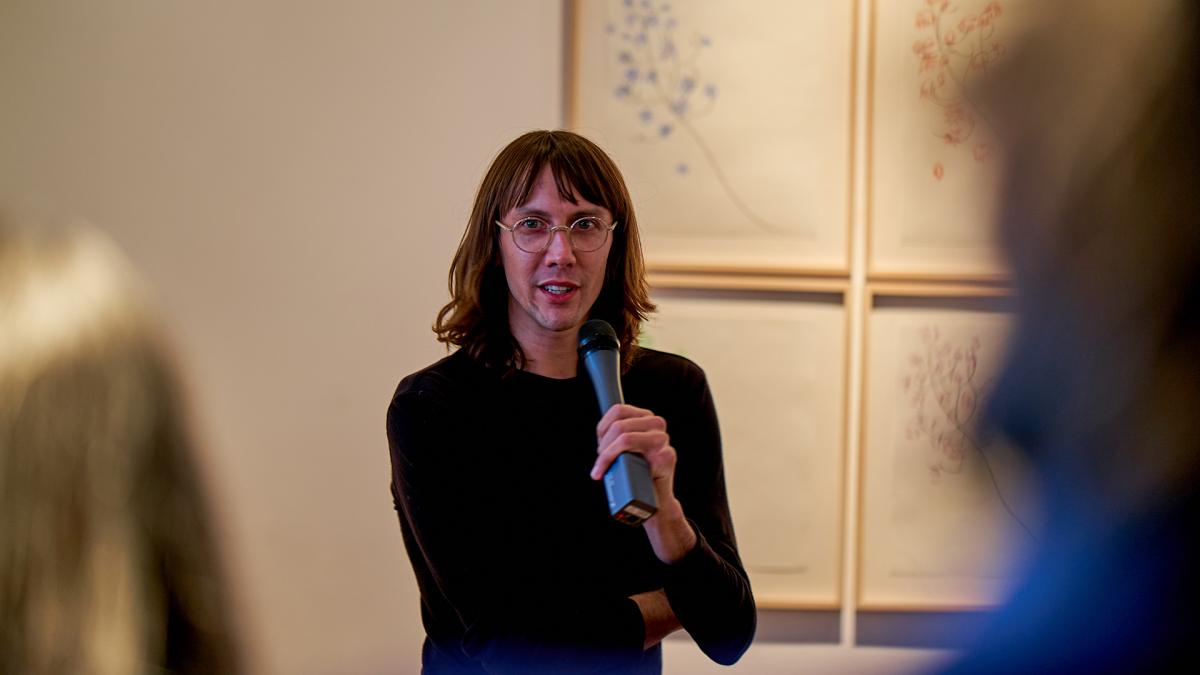
“My work focuses on how complex artworks made over the past fifty years—often tied to outdated or unstable technologies—can be restored, reinterpreted, and reactivated through a combination of technical and curatorial approaches,” the Canadian art historian Mikhel Proulx says.
Proulx began working in April as a postdoctoral researcher at the University of the Arts Helsinki’s Academy of Fine Arts. He received his PhD in 2022 from Concordia University in Montréal. His dissertation examined network-based art and participatory practice by Canadian women.
Proulx’s research is grounded in methods of digital humanities. Media art is approached on the terms of its own technical platforms and in close dialogue with artists.
“My research addresses the history, preservation, and reactivation of digital artworks. The key concern is how works endure and transform as technological systems, archival practices, and interpretive contexts change,” Proulx explains.
His work focuses on hybrid and technically complex media forms, including internet-based art, installation and electronic art, and performance practices.
Proulx is particularly interested in media art that is often tied to rapidly obsolete technologies and therefore at risk of disappearing. He was drawn to the Academy of Fine Arts by its strong focus on artistic research, contemporary art theory, and experimental, interdisciplinary approaches.
As technological systems become outdated and file formats unusable, the presentation and documentation of works can become difficult to access or may disappear entirely.
One of the early promises of digital culture was permanence, but reality has proven otherwise.
“The idea that digital media would be eternal and always accessible has not held true—we are constantly encountering data loss and corruption,” he says.
Proulx centers on the technical restoration of artworks and a broader inquiry into what it means to reactivate media art rather than merely preserve it.
Many media artworks have not been exhibited in contemporary contexts due to technical challenges. For Proulx, this is not an obstacle but a central research question.
“It is incredibly rewarding to learn about these often forgotten works and share them again with audiences,” he says.
Rediscovering works—sometimes for the first time in decades—opens new perspectives on the history of art and technology. At the same time, it offers models for future communities and ways of existing in digital culture.
Alternative spaces
Proulx is especially fascinated by media art’s ability to create communities and new social forms. According to him, artists have used technology to build connections for decades.
“Works often create temporary and experimental communities. They show how social relations can be built through technology,” the researcher says.
In today’s networked culture, Proulx also examines past practices: how communities have been built and experienced in different eras.
He is particularly interested in marginalised art communities, such as queer and Indigenous artists, who have operated outside the mainstream and developed their own forms of communication and connection.
“Artists have often used media to create alternative spaces for connection,” Proulx says.
He refers to how technology enables temporary and experimental communities as well as intentional forms of social relations, particularly in marginalised and non-mainstream art contexts.
Proulx’s current research adopts a circumpolar and comparative framework, with particular attention to media art histories across Canada and Finland. His research traces how artists have responded to network culture through practices grounded in exchange, collaboration, and mobility.
“Media art has always been shaped by transnational movement—of artists, ideas, and technologies. By comparing these practices across northern contexts, we can better understand how shared technological and cultural conditions give rise to distinct artistic responses,” he explains.
Text: Susanna Bono