


Doctoral Programme in Music
Doctoral students can choose between three specialisation areas: Arts Study Programme, Research Study Programme and Applied Study Programme.
Why study here?
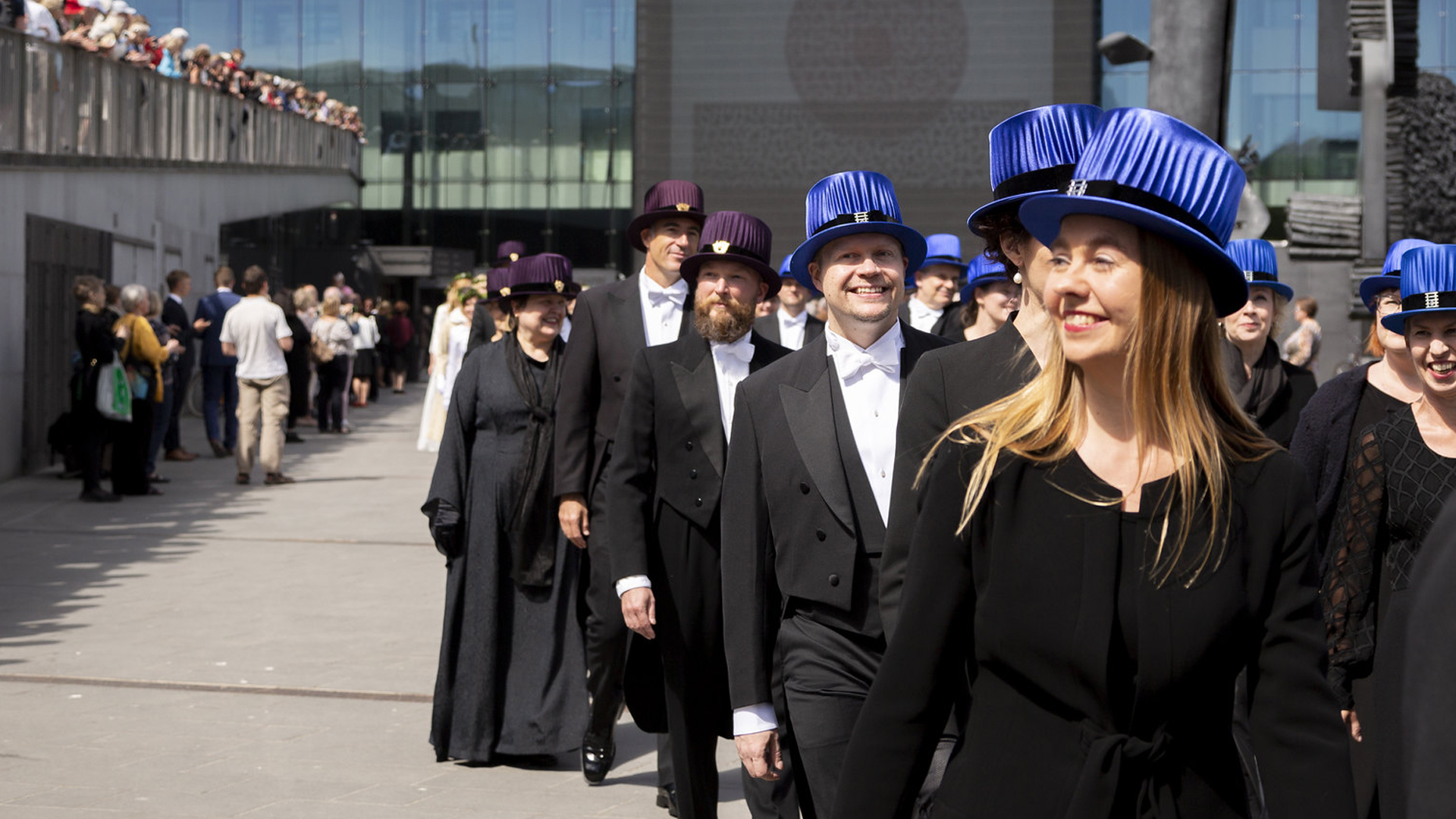
Our graduates are experts who are capable of high-level creative and critical work and who operate in demanding art, research, development and educational positions independently and in collaboration with others. Doctors of Music also act as social influencers for an ethically sustainable future.
About the studies
Doctorates can be completed in fields such as classical music, church music, global music, music history, music theory, composition, folk music, jazz, music technology, arts management, or music education.
Doctoral education takes place in the Sibelius Academy doctoral programme and research centre.
Doctoral studies provide the competence for a wide variety of artistic careers, as well as for teaching, research and development tasks and for various sectors of societal activity. Our doctoral alumni may hold positions such as research project director, academy research fellow, researcher, artist, regional artist, musician, conductor, opera coach/collaborative pianist, singer, composer, professor, university lecturer, lecturer, teacher, rector and expert.
Doctoral students can choose between three specialisation areas: Arts Study Programme, Research Study Programme and Applied Study Programme.
- In the Arts Study Programme, the primary focus of the studies is on independent and thematically coherent artistic and research work combined with supplementary studies.
- In the Research Study Programme, the primary focus of studies is on scientific research and supplementary studies that strengthen research competence.
- In the Applied Study Programme, the primary focus is on becoming a specialist through carrying out a development project that builds the specialist knowledge and skills in a particular topic within the music field and the development work related to this topic. An applied study programme degree may be either research-orientated or artistic.
The overall scope of a doctoral degree is 240 credits, corresponding to four years of full-time study. It consists of a demonstration of proficiency worth 165 credits and supplementary studies worth 75 credits. The overall scope of a licenciate degree is 150 credits. It consists of a demonstration of proficiency worth 75 credits and supplementary studies worth 75 credits.
Under the new curriculum, which will enter into force on 1 August 2027, the Doctor of Music degree will consist of the doctoral thesis (200 ECTS credits) and postgraduate studies (40 ECTS credits).
Arts Study Programme
In the Arts Study Programme, the doctoral researcher’s primary focus is to carry out independent and thematically coherent artistic and research work and complete supplementary doctoral studies, leading to a doctoral thesis.
The specific objectives of the Arts Study Programme are to help the doctoral researcher acquire
- the ability to achieve artistically high-level and visionary expression,
- the ability to achieve conceptually clear production of information,
- the ability to produce new knowledge through methods of art and research,
- the ability to engage in constructive interaction in the arts community, in academic communities and in society at large.
In the Arts Study Programme, the doctoral thesis consists of two to three components, of which at least one is a peer-reviewed article or a written monograph, while other components are pre-examined artistic components. In addition, the doctoral thesis must include a written overview summarising the project as a whole, authored independently by the doctoral researcher.
The artistic components may be concerts, compositions, artistic productions, liturgies, recordings, online materials or videos, for example. All artistic components are recorded. The doctoral programme is responsible for recording the artistic component.
The written summary is a separate report that includes the objectives, framework, purposes of the artistic components and the article, and their interconnections within the doctoral thesis as a whole, as well as the results and a discussion of the significance of the findings. An alternative to a peer-reviewed article and a written summary is a monograph to be submitted for pre-examination, which also incorporates the elements normally included in the summary. A peer-reviewed article and a written summary, or an equivalent monograph, together with the artistic components, form a research-based whole. Written components may be multimedia. Doctoral studies included in the degree support the doctoral thesis and its process, as well as the doctoral researcher’s artistic, research-related and other development. The doctoral studies are agreed with the coordinating supervisor so that they fulfil the intended learning outcomes set for the degree.
Research Study Programme
In the Research Study Programme, the doctoral researcher’s primary focus is to carry out academic research and to carry out supplementary doctoral studies that strengthen their research competence. In the Research Study Programme, the doctoral thesis takes the form of a doctoral dissertation, which is examined by an opponent or opponents in a public examination.
The specific objectives of the Research Study Programme are to help the doctoral researcher acquire
- the ability to produce high-quality information,
- the ability to interact in academic communities and beyond
- the ability to integrate into the international research community, as well as
- the ability to strengthen the status of academic research.
For the Research Study Programme, the dissertation is a coherent presentation containing new research knowledge which is based on the doctoral researcher’s own independent research in a field of research represented at the Sibelius Academy. The dissertation can be accepted as either a monograph or an article-based dissertation.
A monograph-form doctoral dissertation is a single-language work written solely by the doctoral researcher and published as a single, coherent work.
An article-based doctoral dissertation consists of two to three articles exploring the same set of research questions, which have been published or accepted for publication in a peer-reviewed academic publication series. The doctoral researcher must be the principal author of the articles, and their independent contribution must be demonstrable. The doctoral researcher must provide a written account of their contribution to any co-authored publications when submitting the doctoral thesis for pre-examination. The number of articles depends on the nature of the research project, the substantive significance of the articles and the amount of work required to prepare them. An article-based doctoral thesis also includes a summary written independently by the doctoral researcher, presenting the objectives, research problem, methodology and results of the research project. The doctoral studies included in the degree support the doctoral thesis and the thesis process as well as the doctoral researcher’s research-related, artistic or other development. The doctoral studies are agreed with the coordinating supervisor so that they fulfil the intended learning outcomes set for the degree.
Applied Study Programme
The aim of the Applied Study Programme is to develop music-related practices, operating models, methods, computer programs, innovations, applications, tools or other comparable outputs that can be shared with others. Development is carried out using research-based and/or artistic research methods, and the object of development is tested as part of the doctoral thesis. The starting point for development is usually the doctoral researcher’s own experience and interests, as well as the needs of the changing environments in the music sector. The degree may be either research-oriented or artistic.
The doctoral researcher aims to acquire
- a combination of high-level research-related, methodological, pedagogical, artistic or technical competencies,
- the ability to develop high-level new methods, competencies, materials and tools,
- the ability to collect, produce, critically evaluate and apply knowledge,
- the ability to collaborate with national and international stakeholders both within their own field and across disciplines, and
- the ability to communicate the results of their work to different audiences.
The substantive core of the degree is the development object, consisting of new and tested materials, methods, applications and practices. The development work, together with its testing and assessment, is described in the written component. In the Applied Study Programme, the written component for a research-oriented degree is referred to as a doctoral dissertation.
A doctoral thesis completed in the Applied Study Programme consists of:
- the development object and the outputs of the development work, which may include, for example:
- a model or method, computer program, website, score material, teaching material, research article, critical edition or transcription (for an artistic and a research-oriented degree) or
- a concert, recording, lecture recital or comparable output (for an artistic degree)
- a written description of the theoretical foundations, context and stages of the development work, as well as the testing and evaluation of the development object.
The doctoral studies included in the degree support the doctoral thesis, the thesis process and skills in applying and developing knowledge as well as the doctoral researcher’s research-related, artistic or other development. The doctoral studies are agreed with the coordinating supervisor so that they fulfil the intended learning outcomes set for the degree.
Funding of doctoral studies
Doctoral studies at Uniarts Helsinki can be completed either as a full-time or as a part-time student. The university offers a certain number of salaried doctoral researcher positions, and there may be some research projects that employ doctoral researchers. Open paid positions are advertised through the University of the Arts Helsinki’s open vacancies. Many students fund their studies through grants, their own work or other sources of income. Applicants need a realistic plan on how to fund their studies and research or artistic work.
Uniarts Helsinki doesn’t charge tuition fees from doctoral researchers, and completing a degree is free of charge. However, as a rule, the university is not responsible for the costs of an individual doctoral thesis and does not automatically provide funding for carrying out research or artistic work.
Doctoral researchers are personally responsible for their living and housing costs. The general cost of living in the Helsinki metropolitan area is relatively high by international standards, so applicants should ensure that they have sufficient financial resources to support themselves throughout the planned duration of their studies.
Applicants should also consider the possible costs of their prospective research or artistic activities. These may include costs related to materials, equipment, software, data acquisition, exhibitions, performances, productions, travel, recording and documentation services or other expenses related to carrying out the project.
Funding from foundations
Grants are a central source of funding for many doctoral researchers. Various foundations provide support for artistic and scientific research in Finland and abroad. Applicants are encouraged to look into funding opportunities already before starting their studies and continue being aware of their options during their studies.
More information on receiving funding from foundations is available here:
Grant-funded doctoral researchers should note that a grant doesn’t form an employment relationship with Uniarts Helsinki. Therefore, rights, services and benefits related to an employment contract do not apply to grant-funded researchers.
Before starting studies, international applicants should make sure that they have sufficient funding that covers their living expenses and possible study-related costs in Finland. A realistic funding plan supports the smooth progress of studies and enables sustained focus on long-term research and artistic work.
We recommend that you check whether your home country offers funding for completing a doctoral degree abroad.
Other funding
Doctoral studies may be completed alongside artistic or other professional work or by relying on other personal funding. In some cases, doctoral studies may entitle the student to receive student financial aid. Up-to-date information on financial aid for doctoral students is available on the Kela website.
Usually, part-time doctoral studies require a commitment of several years and careful planning, time management and budgeting. If you are pursuing your degree alongside work, you should assess in advance how much time you can dedicate to your studies and to your research or artistic practice, as well as what opportunities you have to arrange more intensive periods of work through study leave, grants or other forms of funding.
We ask for our applicants to compile a realistic plan on both their livelihood and the resources needed for their doctoral thesis already before embarking on doctoral studies.
Teachers
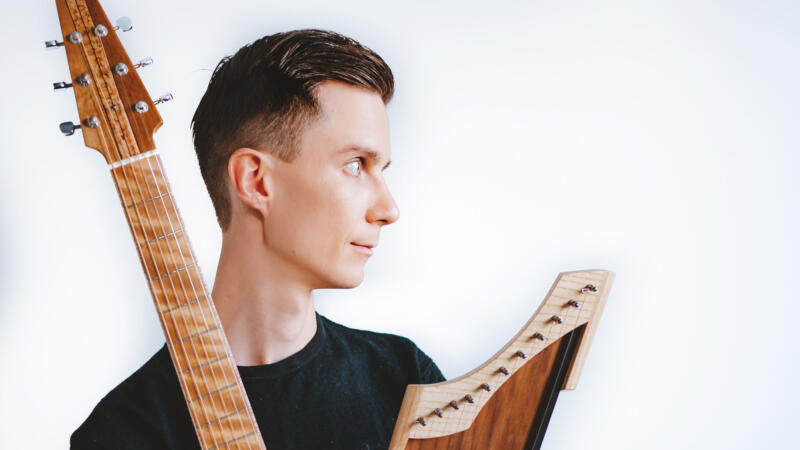
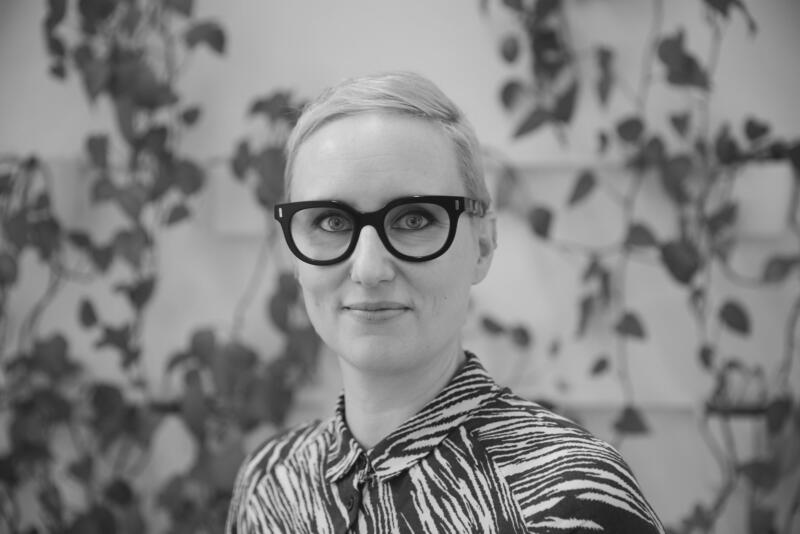
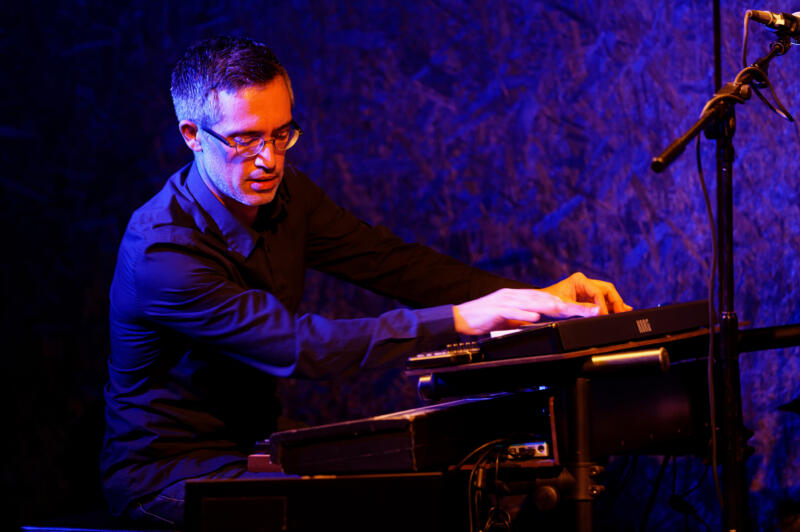
Our teachers are some of the best experts in their respective fields. In addition to the permanent teaching staff, the programme welcomes international top professionals as guests on a regular basis.
Explore student life
Target degree and length of study
Doctor of Music
You can apply to
Doctoral Programme in Music
Application period
Next admission in January 2027.
Degree language
English, Finnish, Swedish
Read more about our language skill requirements
Tuition fee
There are no tuition fees in the doctoral programme.
Unit
Sibelius Academy
Ask about applying
Why study here?
Our graduates are experts who are capable of high-level creative and critical work and who operate in demanding art, research, development and educational positions independently and in collaboration with others. Doctors of Music also act as social influencers for an ethically sustainable future.
About the studies
Doctorates can be completed in fields such as classical music, church music, global music, music history, music theory, composition, folk music, jazz, music technology, arts management, or music education.
Doctoral education takes place in the Sibelius Academy doctoral programme and research centre.
Doctoral studies provide the competence for a wide variety of artistic careers, as well as for teaching, research and development tasks and for various sectors of societal activity. Our doctoral alumni may hold positions such as research project director, academy research fellow, researcher, artist, regional artist, musician, conductor, opera coach/collaborative pianist, singer, composer, professor, university lecturer, lecturer, teacher, rector and expert.
Doctoral students can choose between three specialisation areas: Arts Study Programme, Research Study Programme and Applied Study Programme.
- In the Arts Study Programme, the primary focus of the studies is on independent and thematically coherent artistic and research work combined with supplementary studies.
- In the Research Study Programme, the primary focus of studies is on scientific research and supplementary studies that strengthen research competence.
- In the Applied Study Programme, the primary focus is on becoming a specialist through carrying out a development project that builds the specialist knowledge and skills in a particular topic within the music field and the development work related to this topic. An applied study programme degree may be either research-orientated or artistic.
The overall scope of a doctoral degree is 240 credits, corresponding to four years of full-time study. It consists of a demonstration of proficiency worth 165 credits and supplementary studies worth 75 credits. The overall scope of a licenciate degree is 150 credits. It consists of a demonstration of proficiency worth 75 credits and supplementary studies worth 75 credits.
Under the new curriculum, which will enter into force on 1 August 2027, the Doctor of Music degree will consist of the doctoral thesis (200 ECTS credits) and postgraduate studies (40 ECTS credits).
Arts Study Programme
In the Arts Study Programme, the doctoral researcher’s primary focus is to carry out independent and thematically coherent artistic and research work and complete supplementary doctoral studies, leading to a doctoral thesis.
The specific objectives of the Arts Study Programme are to help the doctoral researcher acquire
- the ability to achieve artistically high-level and visionary expression,
- the ability to achieve conceptually clear production of information,
- the ability to produce new knowledge through methods of art and research,
- the ability to engage in constructive interaction in the arts community, in academic communities and in society at large.
In the Arts Study Programme, the doctoral thesis consists of two to three components, of which at least one is a peer-reviewed article or a written monograph, while other components are pre-examined artistic components. In addition, the doctoral thesis must include a written overview summarising the project as a whole, authored independently by the doctoral researcher.
The artistic components may be concerts, compositions, artistic productions, liturgies, recordings, online materials or videos, for example. All artistic components are recorded. The doctoral programme is responsible for recording the artistic component.
The written summary is a separate report that includes the objectives, framework, purposes of the artistic components and the article, and their interconnections within the doctoral thesis as a whole, as well as the results and a discussion of the significance of the findings. An alternative to a peer-reviewed article and a written summary is a monograph to be submitted for pre-examination, which also incorporates the elements normally included in the summary. A peer-reviewed article and a written summary, or an equivalent monograph, together with the artistic components, form a research-based whole. Written components may be multimedia. Doctoral studies included in the degree support the doctoral thesis and its process, as well as the doctoral researcher’s artistic, research-related and other development. The doctoral studies are agreed with the coordinating supervisor so that they fulfil the intended learning outcomes set for the degree.
Research Study Programme
In the Research Study Programme, the doctoral researcher’s primary focus is to carry out academic research and to carry out supplementary doctoral studies that strengthen their research competence. In the Research Study Programme, the doctoral thesis takes the form of a doctoral dissertation, which is examined by an opponent or opponents in a public examination.
The specific objectives of the Research Study Programme are to help the doctoral researcher acquire
- the ability to produce high-quality information,
- the ability to interact in academic communities and beyond
- the ability to integrate into the international research community, as well as
- the ability to strengthen the status of academic research.
For the Research Study Programme, the dissertation is a coherent presentation containing new research knowledge which is based on the doctoral researcher’s own independent research in a field of research represented at the Sibelius Academy. The dissertation can be accepted as either a monograph or an article-based dissertation.
A monograph-form doctoral dissertation is a single-language work written solely by the doctoral researcher and published as a single, coherent work.
An article-based doctoral dissertation consists of two to three articles exploring the same set of research questions, which have been published or accepted for publication in a peer-reviewed academic publication series. The doctoral researcher must be the principal author of the articles, and their independent contribution must be demonstrable. The doctoral researcher must provide a written account of their contribution to any co-authored publications when submitting the doctoral thesis for pre-examination. The number of articles depends on the nature of the research project, the substantive significance of the articles and the amount of work required to prepare them. An article-based doctoral thesis also includes a summary written independently by the doctoral researcher, presenting the objectives, research problem, methodology and results of the research project. The doctoral studies included in the degree support the doctoral thesis and the thesis process as well as the doctoral researcher’s research-related, artistic or other development. The doctoral studies are agreed with the coordinating supervisor so that they fulfil the intended learning outcomes set for the degree.
Applied Study Programme
The aim of the Applied Study Programme is to develop music-related practices, operating models, methods, computer programs, innovations, applications, tools or other comparable outputs that can be shared with others. Development is carried out using research-based and/or artistic research methods, and the object of development is tested as part of the doctoral thesis. The starting point for development is usually the doctoral researcher’s own experience and interests, as well as the needs of the changing environments in the music sector. The degree may be either research-oriented or artistic.
The doctoral researcher aims to acquire
- a combination of high-level research-related, methodological, pedagogical, artistic or technical competencies,
- the ability to develop high-level new methods, competencies, materials and tools,
- the ability to collect, produce, critically evaluate and apply knowledge,
- the ability to collaborate with national and international stakeholders both within their own field and across disciplines, and
- the ability to communicate the results of their work to different audiences.
The substantive core of the degree is the development object, consisting of new and tested materials, methods, applications and practices. The development work, together with its testing and assessment, is described in the written component. In the Applied Study Programme, the written component for a research-oriented degree is referred to as a doctoral dissertation.
A doctoral thesis completed in the Applied Study Programme consists of:
- the development object and the outputs of the development work, which may include, for example:
- a model or method, computer program, website, score material, teaching material, research article, critical edition or transcription (for an artistic and a research-oriented degree) or
- a concert, recording, lecture recital or comparable output (for an artistic degree)
- a written description of the theoretical foundations, context and stages of the development work, as well as the testing and evaluation of the development object.
The doctoral studies included in the degree support the doctoral thesis, the thesis process and skills in applying and developing knowledge as well as the doctoral researcher’s research-related, artistic or other development. The doctoral studies are agreed with the coordinating supervisor so that they fulfil the intended learning outcomes set for the degree.
Funding of doctoral studies
Doctoral studies at Uniarts Helsinki can be completed either as a full-time or as a part-time student. The university offers a certain number of salaried doctoral researcher positions, and there may be some research projects that employ doctoral researchers. Open paid positions are advertised through the University of the Arts Helsinki’s open vacancies. Many students fund their studies through grants, their own work or other sources of income. Applicants need a realistic plan on how to fund their studies and research or artistic work.
Uniarts Helsinki doesn’t charge tuition fees from doctoral researchers, and completing a degree is free of charge. However, as a rule, the university is not responsible for the costs of an individual doctoral thesis and does not automatically provide funding for carrying out research or artistic work.
Doctoral researchers are personally responsible for their living and housing costs. The general cost of living in the Helsinki metropolitan area is relatively high by international standards, so applicants should ensure that they have sufficient financial resources to support themselves throughout the planned duration of their studies.
Applicants should also consider the possible costs of their prospective research or artistic activities. These may include costs related to materials, equipment, software, data acquisition, exhibitions, performances, productions, travel, recording and documentation services or other expenses related to carrying out the project.
Funding from foundations
Grants are a central source of funding for many doctoral researchers. Various foundations provide support for artistic and scientific research in Finland and abroad. Applicants are encouraged to look into funding opportunities already before starting their studies and continue being aware of their options during their studies.
More information on receiving funding from foundations is available here:
Grant-funded doctoral researchers should note that a grant doesn’t form an employment relationship with Uniarts Helsinki. Therefore, rights, services and benefits related to an employment contract do not apply to grant-funded researchers.
Before starting studies, international applicants should make sure that they have sufficient funding that covers their living expenses and possible study-related costs in Finland. A realistic funding plan supports the smooth progress of studies and enables sustained focus on long-term research and artistic work.
We recommend that you check whether your home country offers funding for completing a doctoral degree abroad.
Other funding
Doctoral studies may be completed alongside artistic or other professional work or by relying on other personal funding. In some cases, doctoral studies may entitle the student to receive student financial aid. Up-to-date information on financial aid for doctoral students is available on the Kela website.
Usually, part-time doctoral studies require a commitment of several years and careful planning, time management and budgeting. If you are pursuing your degree alongside work, you should assess in advance how much time you can dedicate to your studies and to your research or artistic practice, as well as what opportunities you have to arrange more intensive periods of work through study leave, grants or other forms of funding.
We ask for our applicants to compile a realistic plan on both their livelihood and the resources needed for their doctoral thesis already before embarking on doctoral studies.
Teachers
Our teachers are some of the best experts in their respective fields. In addition to the permanent teaching staff, the programme welcomes international top professionals as guests on a regular basis.