


Uniarts Helsinki shaping the future of European music education – the IN.TUNE alliance sets its sights on 2030
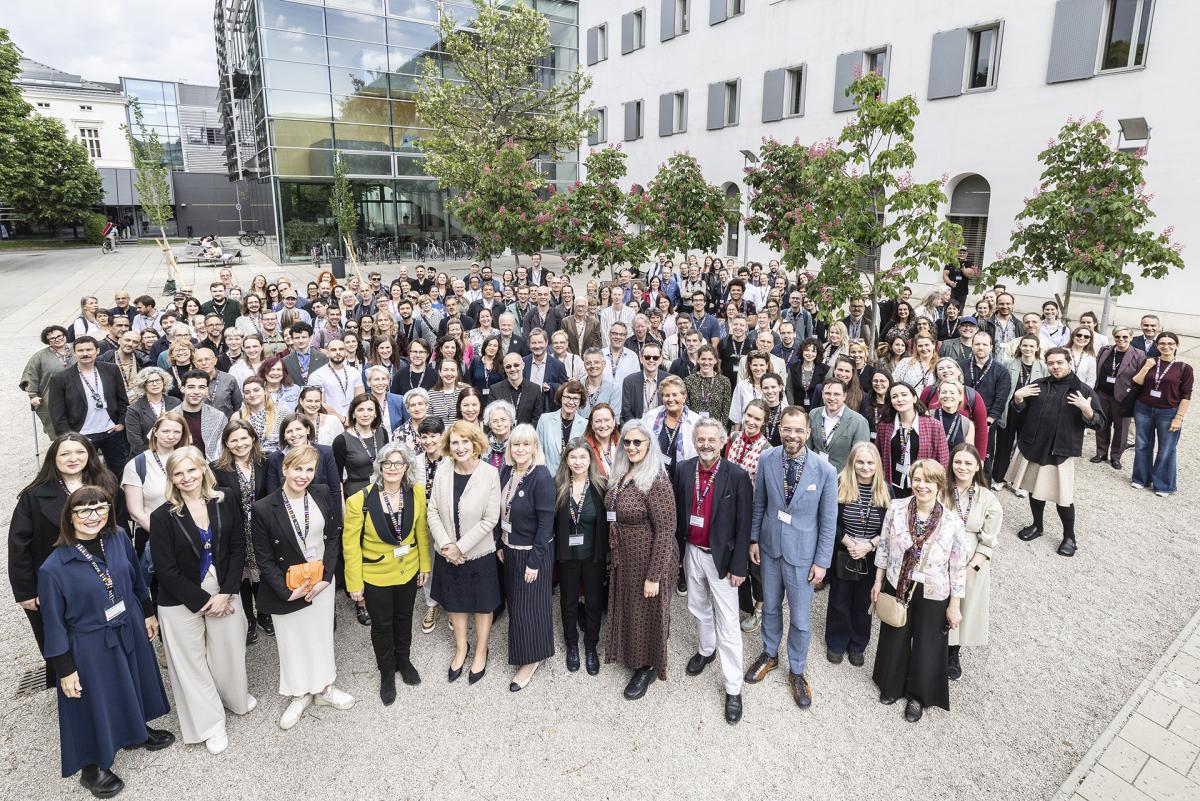
Around two hundred teachers, students and support staff from the IN.TUNE university alliance—comprising eight European higher education institutions—gathered in Vienna in May for their annual meeting. Discussions and strategic vision work reaffirmed a shared direction towards closer, more impactful and more student-centred collaboration.
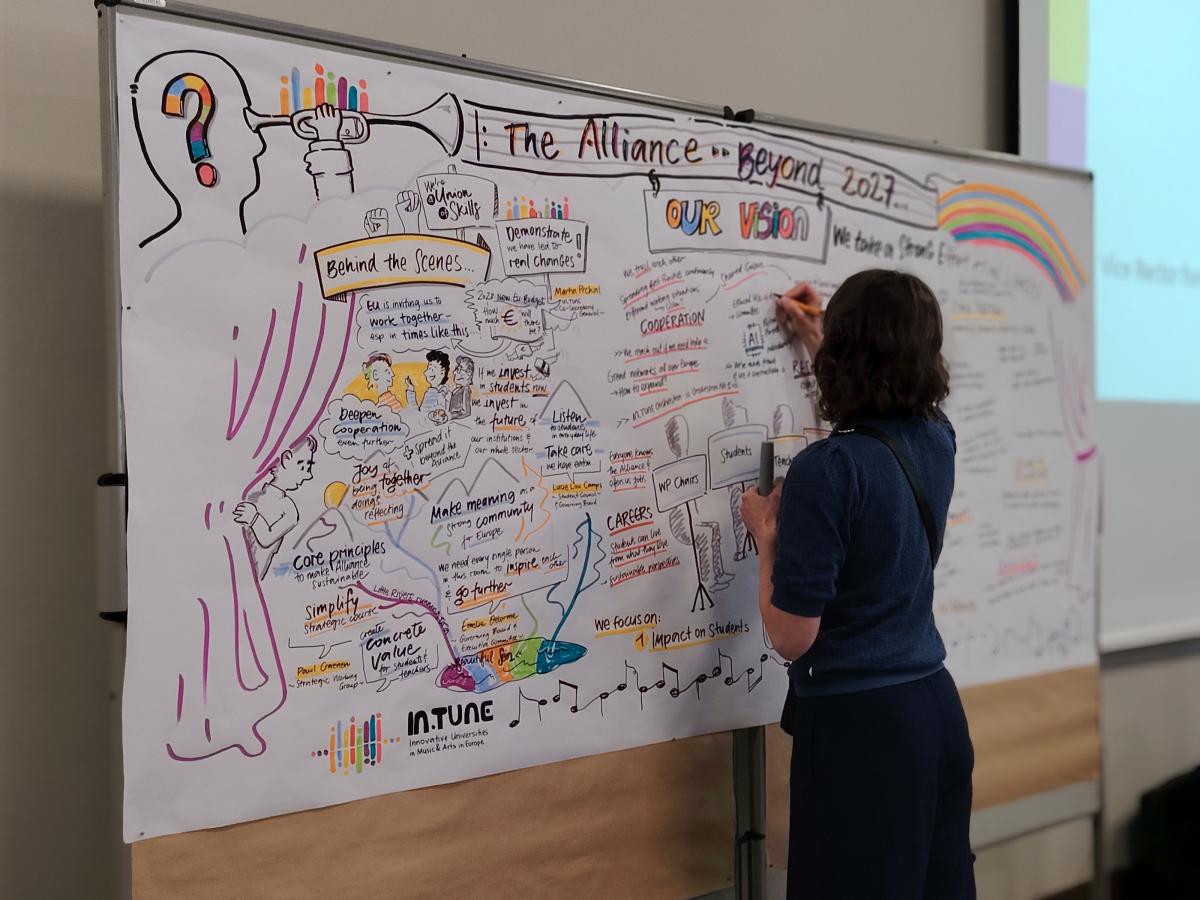
IN.TUNE is the first European university alliance focused specifically on the arts and music, making it a significant actor on a European scale. The collaboration develops joint study programmes, enhances mobility, and creates new forms of cooperation across teaching, research, and societal engagement.
“For students, this genuinely opens up new pathways for building their expertise internationally. At the same time, teaching is evolving and improving for example through real-time online learning opportunities as we develop it together with European colleagues,” says Markus Utrio, Vice Dean in charge of education at the Sibelius Academy.
Over the past year, Uniarts Helsinki has already been able to offer international courses and projects, mobility opportunities, and joint funding applications through IN.TUNE. Interest has been wide-ranging: dozens of new joint educational initiatives have been proposed, and participation continues to grow.
Towards a permanent European network by 2030
In Vienna, discussions focused strongly on the alliance’s future. Current EU funding runs until 2027, but the ambitions extend further: to establish a permanent and deeply interconnected European structure.
The shared vision reaches to 2030. Achieving it will require breaking down silos between universities and countries, improving the visibility of information and opportunities, developing new solutions driven by students’ needs, and systematically measuring impact. The aim is for collaboration to become a natural and permanent part of everyday higher education.
“This alliance is no longer a standalone project, but a concrete way of renewing music education and, in the future, a strong cultural and education policy influencer in Europe. We have already seen how collaboration is bringing an international dimension into the everyday learning and teaching at Uniarts Helsinki,” says Kaisa Rönkkö, Dean of the Sibelius Academy.
Students at the heart of development
One of the key messages from Vienna was clear: the student experience must be listened to more closely. The alliance already has a student council, and students are involved in joint projects, but development work is still at an early stage.
Students’ experiences for example of mobility, joint studies, and the smoothness of everyday academic life are seen as decisive measures of success.
“When building a shared European learning environment, the student experience is the most important indicator. It must guide everything we do at every level,” Rönkkö emphasises.
Collaboration also carries cultural policy responsibility
Discussions at the summit highlighted the role of art and music in a time marked by uncertainty and rapid change. Within the IN.TUNE alliance, there is a strong desire to view cooperation also as a broader cultural policy force in Europe.
The alliance seeks to strengthen the position of the arts and music in society and to bring them more visibly into public discourse. This also means defending shared values. In Vienna, the alliance’s governing board expressed strong support for the University of Arts in Belgrade in a situation where academic freedom is under pressure. The shared message is clear: European cooperation is built on trust, academic freedom and shared values and defending them is everyone’s responsibility.
Read the statement on the IN.TUNE website
Joint efforts transforming everyday life
The IN.TUNE alliance has reached a stage where it is moving increasingly from vision to practice. As mobility grows, joint studies become established, and new forms of collaboration develop, change is beginning to be reflected concretely in the everyday lives of students and teachers.
“We are building together an ecosystem in which European cooperation is not an add-on, but the foundation. It has the potential to permanently transform the way we educate future musicians,” Utrio concludes.