

Choreography student: I will miss the skilled and inspiring community around me
Multidisciplinary artist and choreography student Ellen Skjølstrup enjoys the university’s creatively stimulating environment.
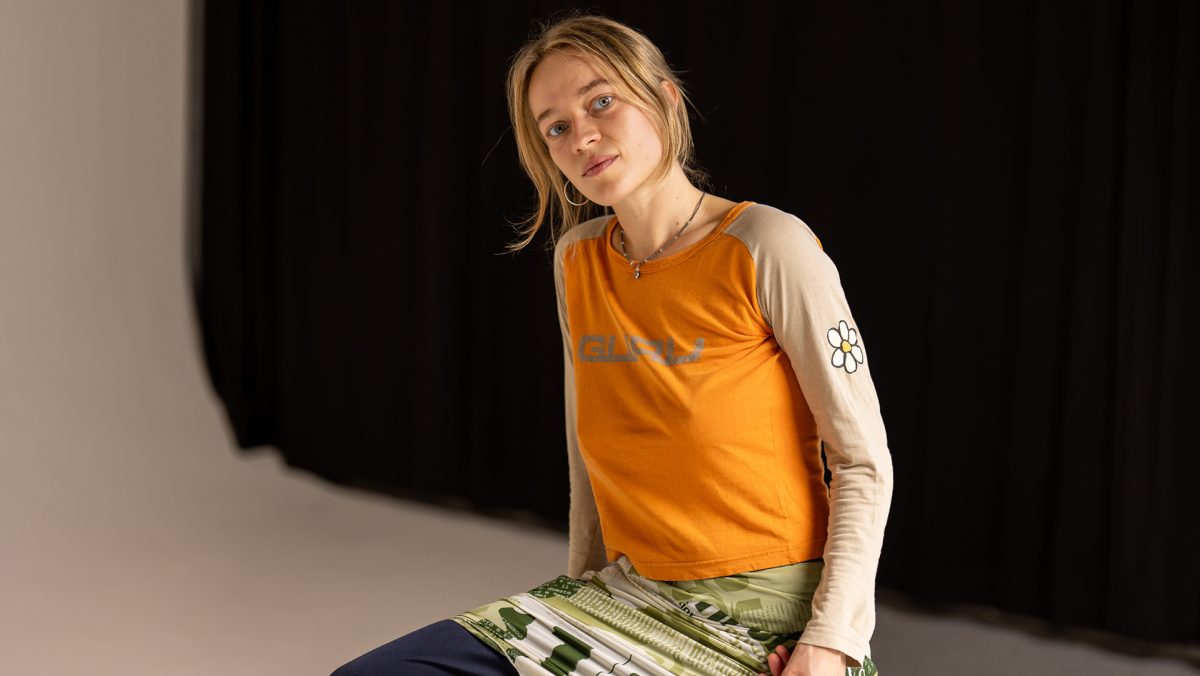
Who are you, and how did you know you wanted to study at Uniarts Helsinki?
I am a Danish choreographer, performer and actress, who creates multidisciplinary work. I came to Helsinki directly from my BA studies in acting, at the late Norwegian Theatre Academy. There I was always encouraged to work in a multidisciplinary and experimental way – to really challenge my own understanding of what theatre and performance can be.
As dance has been part of my life from childhood years and onwards, this encouragement towards multidisciplinary work created a desire in me to explore choreography. It felt, rather simply put, like the solution to my constant sense of missing dance when I was doing theatre, and missing theatre when I was doing dance.
So, I applied to the Master’s programme in choreography at Uniarts Helsinki, because I wanted to learn how to intertwine dance, performance and theatre by using choreographic, compositional tools, and to help me create more complex multidisciplinary pieces.
What do you remember most about the application process or the entrance examinations?
I remember walking out of the studio after the entrance exams, completely bubbling with this feverish joy… A joy of having been seen and taken seriously by this bunch of people who were so incredibly knowledgeable and passionate about choreography. I remember feeling like a new room within myself was opening and expanding, and it had been opened through meeting these people, who were so skillfully able to challenge, inspire and think alongside me when it came to choreography.
What is the best part of studying?
It is having the privilege to devote this much time to art and meaning making. To be able to deepen my understanding and articulation of my methods and artistic practice – to explore and critically ponder how it might resonate with others, the professional field and society at large. I’m pretty sure I will miss having such a big community around me, who’re all ready to discuss, do and think with you. It is a very stimulating environment to be in, and it’ll be crucial to find ways to maintain that diversity of stimuli after graduation.
What has been the most challenging in your studies?
Arriving straight from the theatre and performance world, I struggled more in the beginning to understand the jargon and basic choreographic thinking. The common understanding of it being a body moving in time and space, often accompanied by the word “potentiality”, almost seemed like sci-fi to me. There was a lot to catch up on, and it was a wonderfully humbling experience at times. It sparked passion, friction and inspiration, which contributed to a more expanded understanding of how to intertwine methods, skills and language of the worlds of dance, choreography and theatre.
What have been the most memorable experiences during your studies?
It was a thrilling experience to partake in the course “Artistic Collaboration Project” (ACO) during the second semester, where we choreography students got to lead and facilitate a larger group of other students – dancers, a dramaturg, a sound, costume, set and light designer. Getting to work with this many resources and people was such a valuable and generous way of getting to test our skills, methods and artistic thinking concerning larger scale choreographic work. Ultimately, it was just a great chance to get to know students from different departments, and, dare I say, I definitely found collaborators for future projects there.
What do you hope to do after graduation?
I hope to bring my upcoming thesis work to Copenhagen after graduation and show it there. Otherwise, I look forward to reconnecting with old friends and collaborators, to create work and perform across the Nordic countries, while continuing to deepen and develop my artistic practice. I hope to continue to live with a passion for art and meaning making, by committing to a sustainable practice of negotiating artistic and personal integrity, time, expectations and ambitions. Lastly, I hope to find many new collaborators and audiences to connect with through fun, meaningful, chaotic and transformative experiences – in life and in art.
What are your dreams?
I dream of contributing (even in the smallest scale), to the line of brave intersectional feminists, who have spent their lives fighting for change. I hope to continue expanding that room within myself which began to open up during the entrance exams, and use it to openly ponder all the relations, situations and spaces that demand close examination, attention and liberation. I dream and aim to offer a body of work in the years to come, where multiple voices can be heard, felt and sensed through complexity, crisis and sincerity.
Imagine a future without art. Describe that world.
In 2025, I graduated from the late Norwegian Theatre Academy, before it was brutally shut down due to budget cuts at Østfold University College. It was a place that safeguarded diversity in voices, a place that dared to challenge tradition and taught me to dare to think differently. It taught me to practice the art of resilience, care and protest. To continue to fight for art and justice – even when they take away an education that should otherwise hold the very promise of a future with art. Despite the precarious times we live in, I still want to insist on hope as a possibility.
So no, I won’t imagine a future without art, because I don’t believe in one. I think we will always find ways to create art. I think we need it as an essential, alternative way of exploring our own humanness. A place that requires us to risk real presence in flesh and blood, to practice stepping into the unknown together, allowing us to shed our protective layers and become undone, vulnerable and justopen enough to imagine the world; slightly differently.