


Idiorrhythmic Imaginaries research exhibition
How can we imagine future in a time that seems determined by various crises? And what will be the role of artistic research in this? The exhibition in Kuva/Tila gallery 5–21 December is part of the sixth Research Pavilion.
Introduction
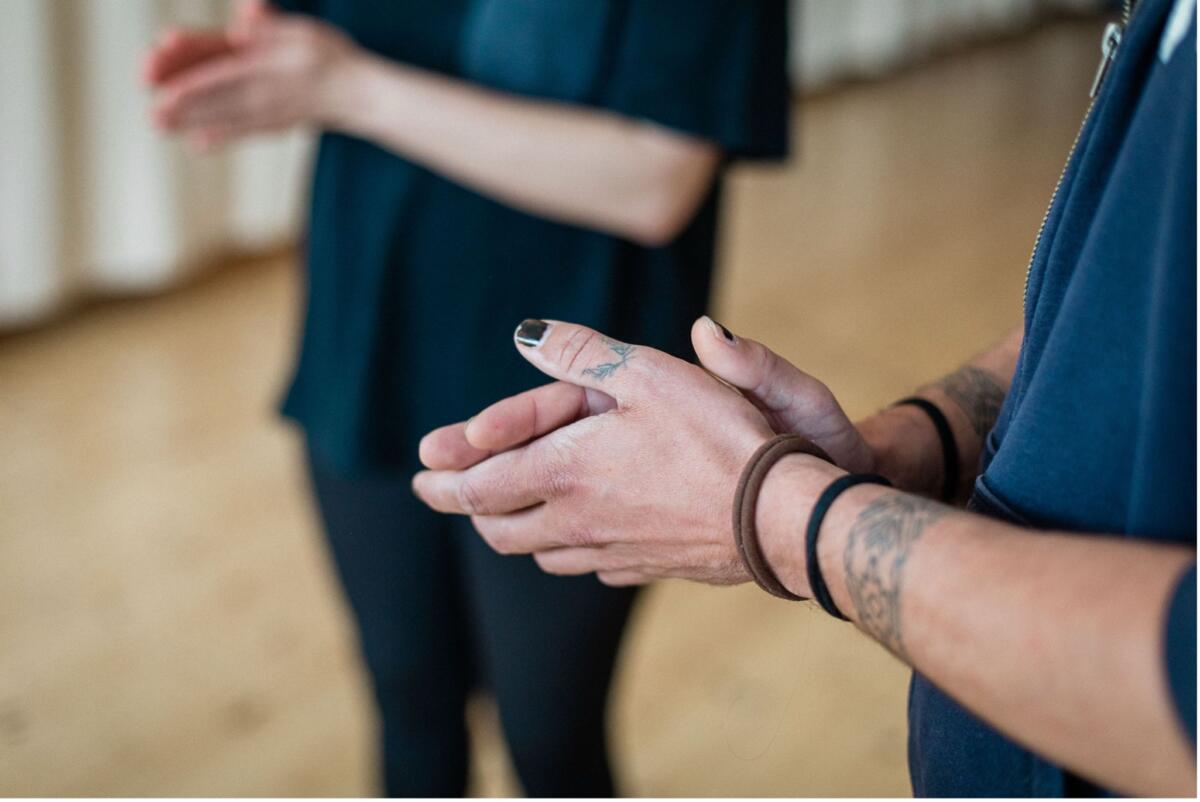
What will the future look like? How can we imagine future in a time that seems determined by various crises? And what will be the role of artistic research in this? Nowadays it turns out to be difficult to provide a meaningful answer to that kind of problem statements. It seems that such a thing as a future, or imagining another world, or speculating about it, has been completely taken away from us. At this point, as Boris Groys recently stated in Philosophy of Care, our only hope appears to be that life doesn’t get any worse than it already is.
In such a consolidating era, the desire emerges to rethink ideas that were formulated and imagined in times when the possibility of positive and progressive change was still self-evident. Roland Barthes’ text, How to Live Together, written in the rather optimistic 1970s, contains a series of inspiring ideas and propositions. Barthes attributes possibilities to what he describes as “idiorrhythmic practices”: a productive form of living together where one recognizes and respects the individual rhythms of the other; the possibility of a community in which everyone would follow their own rhythms, i.e. their “idiorrhythms,” instead of being subjected to a common regulation of life that they could not choose nor oppose. These practices, Barthes noticed, made it possible to find the right balance between life for oneself and life for the others.
With How to Live Together Barthes intended to open up space and time to reflect, to fantasize, to create simulations, before the process of imagination is disrupted by compelling demands for choices and priorities. Now, fifty years later, the question is: what is the value and significance of idiorrhythmic imagination in a world that, because of increased divisions and tensions, emphatically calls for clear positions on various planetary urgencies? But also: how can the current practice of artistic research provide an impetus for a necessary reassessment of this concept?
Curatorial project
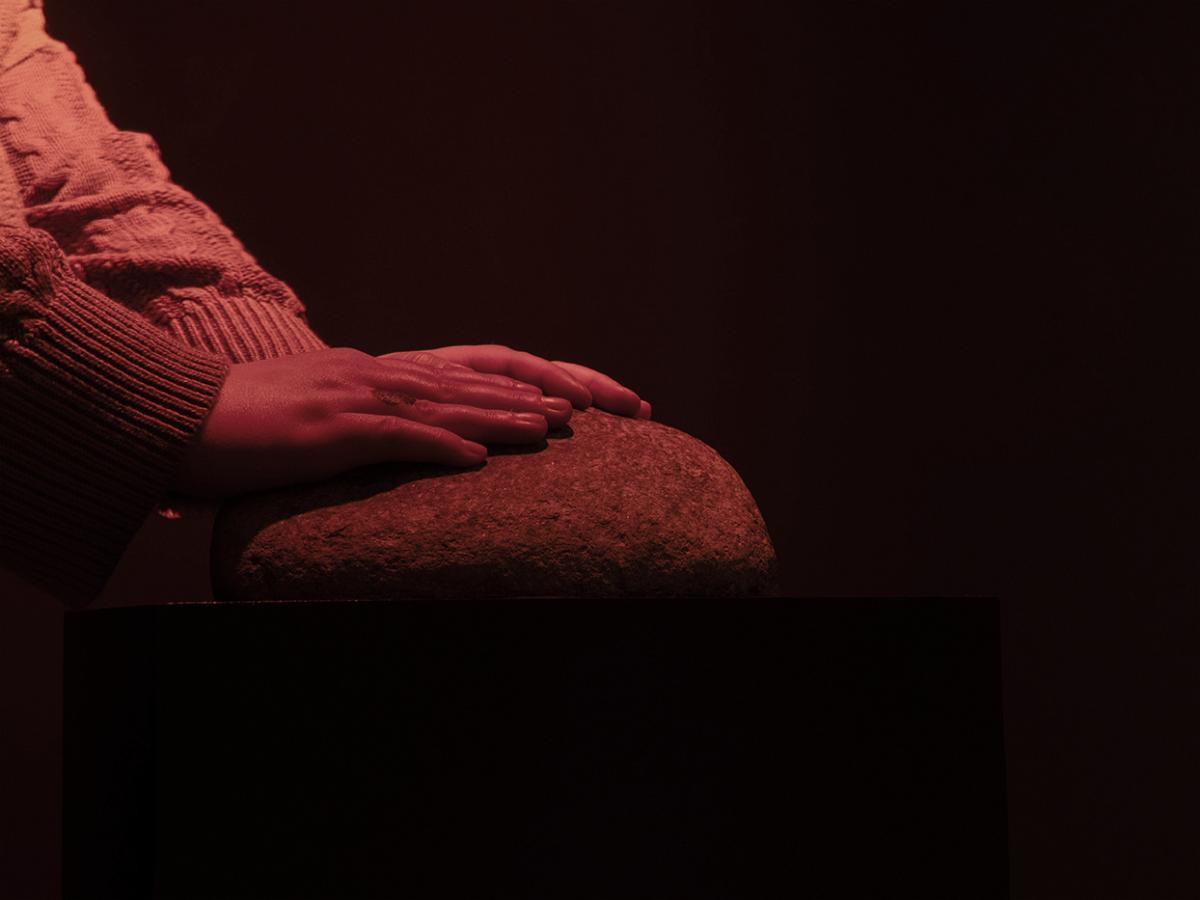
It is these questions that form the starting point of a curatorial project in the context of the 6th Research Pavilion. This project, entitled Idiorrhythmic Imaginaries, invited (individual/collective) research projects which not only depart from the practice of individual, idiorrhythmic perspectives, but that also clearly situate a resonance with our society and/or planet from a topical post-utopian consciousness. And with that, the utopian dimension of Barthes’ imagination makes way for a contemporary perspective that can aptly be described as that of the imaginary. The concept of the imaginary has been coined by a coeval of Roland Barthes, the Greek philosopher Cornelius Castoriadis. Castoriadis introduced the imaginary as the symbolic dimension through which human beings create their ways of living together and the intersubjective ways of seeing and representing their collective lifeworld.
The term ‘imaginary’
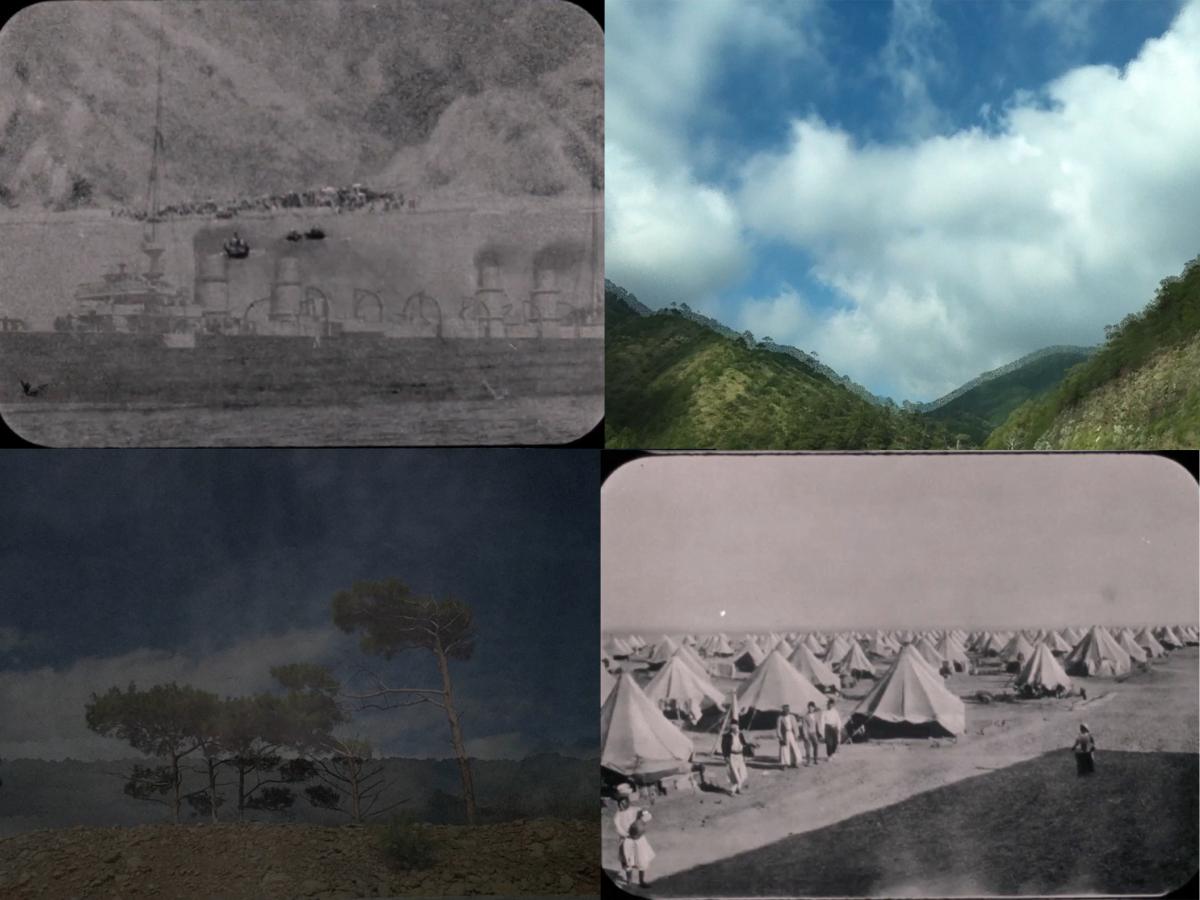
The term imaginary here does not refer to the unreal or false, but rather to the role of projective imagining as a real force exercising itself in the world through framing conceivable practices of communication, organization, mobilization, and cohesion. In this way, the imaginary manifests itself as a mode of reality-building. It addresses the ways in which operations within the space of imagination – such as the construction of social collectivity and a re-mapping of the ontology of the lifeworld by radically challenging divisions – are part of the conditions of possibility for different imaginative modalities of pluriversal world-making. It is these conditions that enable artistic research to develop a projective framework (of discourses, images, ideas) that delimits the sense of possibility and thereby effectuate forms of radical imagination that relate to urgent planetary phenomena, such as extractivism, climate change, displacement/migration, austerity, economic dispossession, neo-colonialism, and social polarization.
The exhibition
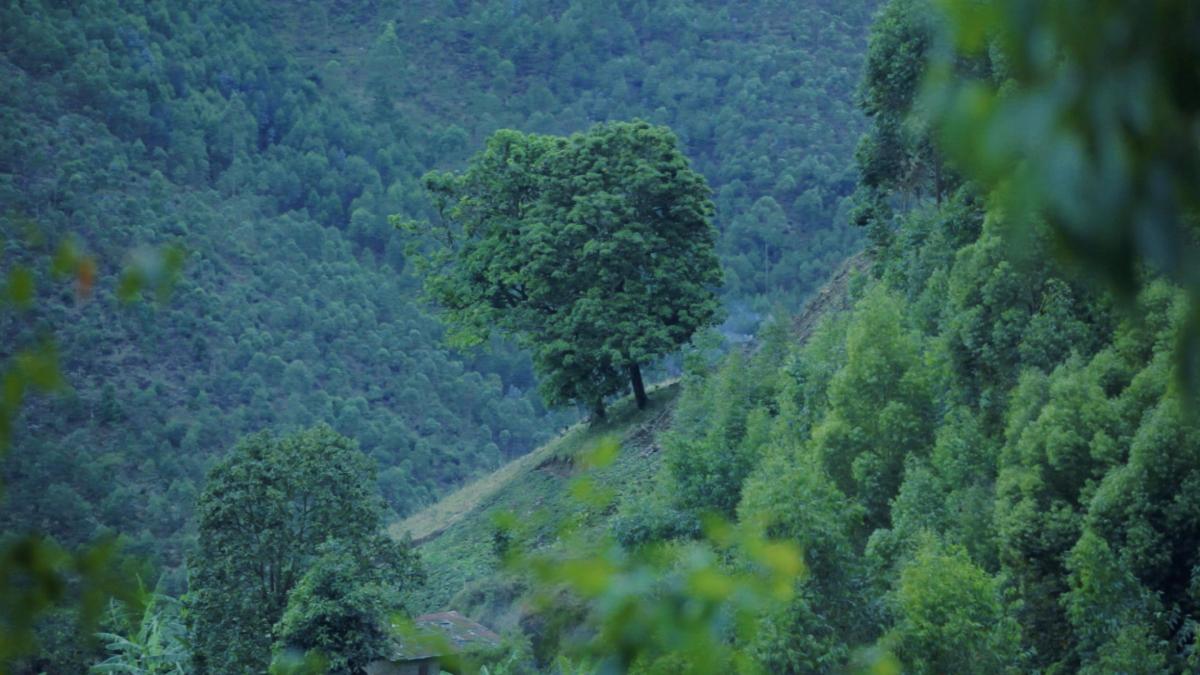
To further investigate these topical perspectives, Idiorrhythmic Imaginaries presents itself as a platform for knowledge in the making. Experimental modes of curating (performance, discursive events, other rituals of gathering, new modes of delivery and display) are sought that understand the exhibition as a potential mode of inquiry in itself: a research process that negotiates and articulates the assumption of a possible resonance between idiorrhythms and imaginaries in the hybrid environment of an exhibition and an event space.
Exhibition opening
Exhibition opening on Thursday 4 December 2025, from 5–7 pm at Kuva/Tila.
The opening programme includes talks by the exhibition’s working group, as well as performances related to the works by Kristiina Koskinen and by Jaime Belmonte & Paola Fernanda.
Jaime Belmonte and Paola Fernanda: Aquatic Universes
Aquatic Universes is a collaboration between composer Jaime Belmonte, visual artist and experimental filmmaker Paola Fernanda and eleven musicians from the Global Music Department of the Sibelius Academy. The aim of the collaboration is to research the liminal spaces of composition and installation art, creating a transdisciplinary work that questions the traditional boundaries between artistic methodologies and disciplinary paradigms. Drawing upon the exploration of personal relationships with bodies of water, the group constructs a collective imaginary that depicts a multifocal conception of what is water. The collaborative process, guided by the ontological turn as a method of artistic research, involves a constant sharing of stories and experiences that shape images, sounds and live interventions. The result is an idiorrhythmic constellation of the aquatic universes that each one of the participants carries within them.
Musicians for Aquatic Universes
- Daniel Alattrash
- Geneviève Andersen
- João Luis
- Linda Ilves
- Livia Schweizer
- Aizhan Sultan
- Juho Tuomainen
- Kata Vuoristo
- Melisa Yıldırım
- Mehrnoosh Zolfaghari
Event Schedule for Aquatic Universes
- 4.12. at 18 (Exhibition opening)
- 7.12. at 13.30
- 9.12. at 17
- 11.12. at 13.30
All performances at Kuva/Tila.
Kristiina Koskinen: Becoming a Forest
The dance performance by Elina Valtonen (dancer) and Favela Vera Ortiz (choreographer) is a part of Kristiina Koskinen’s short film Definition of Forest (2024) in the exhibition. It takes a material stance on one of the film’s research questions: how to bring the idea of human–forest entanglements into audiovisual narration.
Event Schedule for Becoming a Forest
- 4.12. at 17 (Exhibition opening)
- 11.12. at 14
- 20.12. at 17
All performances at Kuva/Tila.
Heidi Hänninen: Mapping Kontula Art School
Welcome to Kontula! Through the street art tours on the site in suburb Kontula and documentations in Research catalogue one can have a look inside to KAS! Kontula Art School’s socially engaged public art practice. “Kaupunki on meidän koti” (“City is our home”), the last artistic part of the artistic research by community artist-researcher Heidi Hänninen, includes paintings from 36 KAS community members, both adults and juniors, implemented for the renovated metrostation in Kontula. In my study (street) art practice is the method of working and collecting research material (socially engaged art making practice and ready artworks in the public environment) but it is also an intervention for the (social) change.
Please sign in to the tours via email: johanna.laszlo@uniarts.fi
Event Schedule for Mapping Kontula Art School
- 11.12. at 17.00-20, Art walk: Outdoor lecture. Starts at Kuva/Tila, continues to Kontula. In English.
- 15.12. at 13-15, KAS street art tour. Starts at Kontula metro station. In English.
- 17.12. at 13-15, KAS street art tour. Starts at Kontula metro station. In Finnish.
- 20.12. at 13-15, KAS street art tour. Starts at Kontula metro station. In Finnish.
The street art tours take place in the suburb of Kontula.
Noora Karjalainen, Ursa Minor Ensemble, The Disobedient Rhythm
Throughout history, countless attempts have been made to fix, cure, or integrate deaf people into the ways of the hearing world. What if deaf bodies and lives were seen as already whole, valuable, and complete? Doctoral researcher Noora Karjalainen, a member of Ursa Minor Ensemble, explores with the group how deafness shapes unique rhythms of sensing, knowing, and being, and how these ways of being enact the making of the world. In The Disobedient Rhythm, they bring these reflections to life, performing a score from their research project The Disobedient Gene. The exhibition space displays research in progress, which will be continuously updated throughout the exhibition.
Event Schedule for The Disobedient Gene
- 5.12. at 17
- 12.12. at 13
- 13.12. at 15
- 16.12. at 17
All performances at Kuva/Tila.
Working group
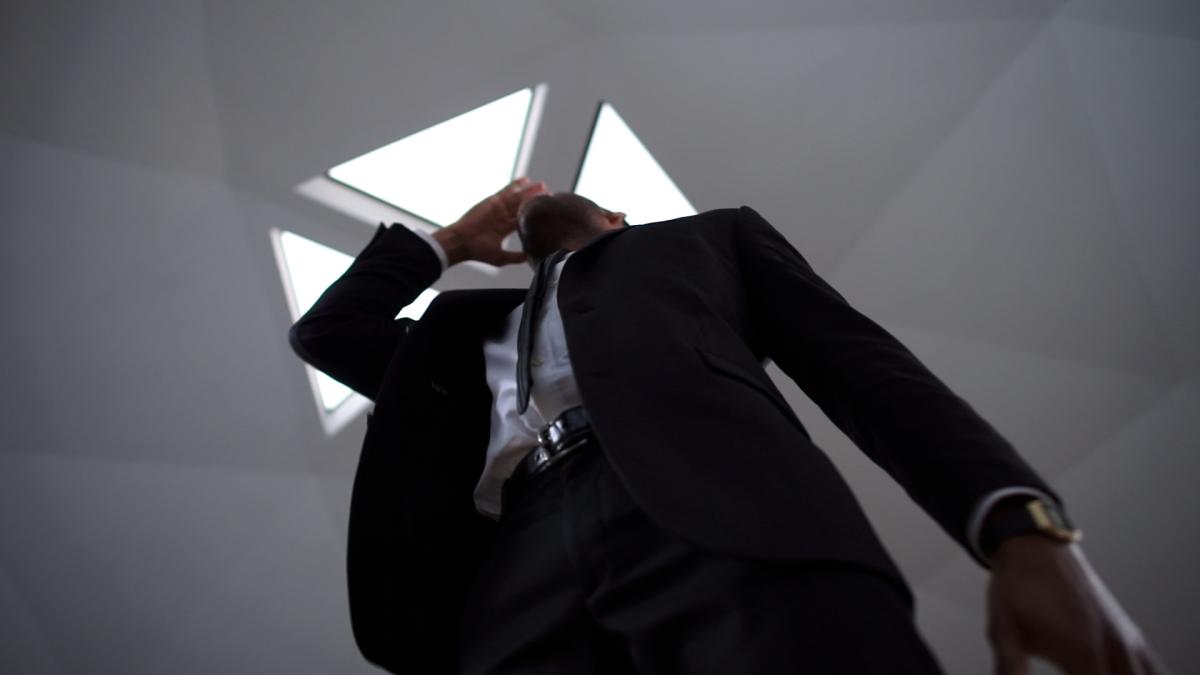
Concept: Henk Slager (Visiting Professor at Uniarts Helsinki)
with:
- Amanda Beech (Resident keynote)
- Jaime Belmonte & Paola Fernanda (Uniarts Helsinki)
- Sophie Durand (Vilnius Academy of Arts)
- Kerry Guinan (Valand Academy Gothenburg)
- Heidi Hänninen (Uniarts Helsinki)
- Marleena Huuhka (Tampere University)
- Joanna Kalm (Estonian Academy of Arts)
- Noora Karjalainen (Uniarts Helsinki)
- Kristiina Koskinen (University of Lapland)
- Veli Lehtovaara (Uniarts Helsinki)
- Christian Nyampeta (Resident keynote)
- Dominik Schlienger (Uniarts Helsinki)
- Kerstin Schroedinger & Angela Melitopoulos (Uniarts Helsinki)
- Whyte & Zettergren: Rut Karin Zettergren & Orlando Whyte (Uniarts Helsinki)
Background: Doctoral research seminar
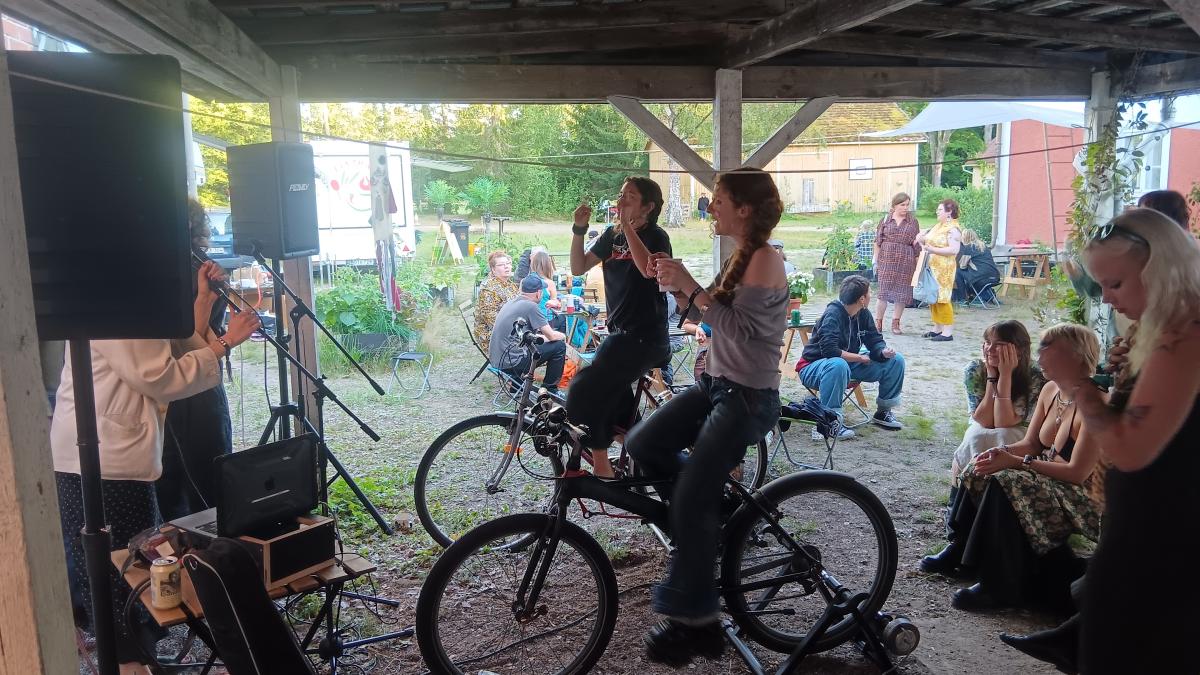
In preparation for the research exhibition Idiorrhythmic Imaginaries, visiting professor Henk Slager organized a two-semester seminar program that further explored and discussed the proposed theme. In the first semester (September – December 2024), the proposals of the Uniarts Helsinki participants (doctoral and postdoctoral researchers) were discussed, and, in line with Roland Barthes’ proposition How to Live Together, relevant texts and practices relating to the two oscillating core concepts of this research project (idiorrhythms, imaginaries) were analysed. The question was also raised about the specificity of a research exhibition. How does a research exhibition differ from other exhibitions presenting contemporary visual art? A key feature is the collective responsibility for the development of the project in the form of discussions and peer-to-peer sharing of plans and insights as took place during this seminar. Moreover, these are discussions in which there is a constant oscillation between an analysis of world making (the epistemological promise) and the techniques of the exhibition (the operational register).
During the second semester, participants (doctoral and postdoctoral researchers) from institutional collaboration partners (Estonian Academy of Arts, Valand Academy Gothenburg, University of Lapland, Tampere University, Vilnius Academy of Arts) were added to the research programme. After another introduction, further discussions—also inspired by the constructive input of the keynote residents—continued on a further articulation of the curatorial narrative and the concretization of the presentation plan (discussed and tested on location in Kuva/Tila in June 2025). This resulted in a preliminary exhibition plan (December 4-20), the concept for a series of performative presentations, and a two-day discursive programme for the Kuva Research Days (December 11-12).

KuvA Research Days 2025
Get to know the parallel event: Kuva Research days 2025
Praxis Publication
Imagining Otherwise: Critical Interviews with the participating artists (PDF)
Contact information for the exhibition
The exhibition has been produced in cooperation with Helsinki International Artist Programme HIAP.

Introduction
What will the future look like? How can we imagine future in a time that seems determined by various crises? And what will be the role of artistic research in this? Nowadays it turns out to be difficult to provide a meaningful answer to that kind of problem statements. It seems that such a thing as a future, or imagining another world, or speculating about it, has been completely taken away from us. At this point, as Boris Groys recently stated in Philosophy of Care, our only hope appears to be that life doesn’t get any worse than it already is.
In such a consolidating era, the desire emerges to rethink ideas that were formulated and imagined in times when the possibility of positive and progressive change was still self-evident. Roland Barthes’ text, How to Live Together, written in the rather optimistic 1970s, contains a series of inspiring ideas and propositions. Barthes attributes possibilities to what he describes as “idiorrhythmic practices”: a productive form of living together where one recognizes and respects the individual rhythms of the other; the possibility of a community in which everyone would follow their own rhythms, i.e. their “idiorrhythms,” instead of being subjected to a common regulation of life that they could not choose nor oppose. These practices, Barthes noticed, made it possible to find the right balance between life for oneself and life for the others.
With How to Live Together Barthes intended to open up space and time to reflect, to fantasize, to create simulations, before the process of imagination is disrupted by compelling demands for choices and priorities. Now, fifty years later, the question is: what is the value and significance of idiorrhythmic imagination in a world that, because of increased divisions and tensions, emphatically calls for clear positions on various planetary urgencies? But also: how can the current practice of artistic research provide an impetus for a necessary reassessment of this concept?
Curatorial project
It is these questions that form the starting point of a curatorial project in the context of the 6th Research Pavilion. This project, entitled Idiorrhythmic Imaginaries, invited (individual/collective) research projects which not only depart from the practice of individual, idiorrhythmic perspectives, but that also clearly situate a resonance with our society and/or planet from a topical post-utopian consciousness. And with that, the utopian dimension of Barthes’ imagination makes way for a contemporary perspective that can aptly be described as that of the imaginary. The concept of the imaginary has been coined by a coeval of Roland Barthes, the Greek philosopher Cornelius Castoriadis. Castoriadis introduced the imaginary as the symbolic dimension through which human beings create their ways of living together and the intersubjective ways of seeing and representing their collective lifeworld.
The term ‘imaginary’
The term imaginary here does not refer to the unreal or false, but rather to the role of projective imagining as a real force exercising itself in the world through framing conceivable practices of communication, organization, mobilization, and cohesion. In this way, the imaginary manifests itself as a mode of reality-building. It addresses the ways in which operations within the space of imagination – such as the construction of social collectivity and a re-mapping of the ontology of the lifeworld by radically challenging divisions – are part of the conditions of possibility for different imaginative modalities of pluriversal world-making. It is these conditions that enable artistic research to develop a projective framework (of discourses, images, ideas) that delimits the sense of possibility and thereby effectuate forms of radical imagination that relate to urgent planetary phenomena, such as extractivism, climate change, displacement/migration, austerity, economic dispossession, neo-colonialism, and social polarization.
The exhibition
To further investigate these topical perspectives, Idiorrhythmic Imaginaries presents itself as a platform for knowledge in the making. Experimental modes of curating (performance, discursive events, other rituals of gathering, new modes of delivery and display) are sought that understand the exhibition as a potential mode of inquiry in itself: a research process that negotiates and articulates the assumption of a possible resonance between idiorrhythms and imaginaries in the hybrid environment of an exhibition and an event space.
Exhibition opening
Exhibition opening on Thursday 4 December 2025, from 5–7 pm at Kuva/Tila.
The opening programme includes talks by the exhibition’s working group, as well as performances related to the works by Kristiina Koskinen and by Jaime Belmonte & Paola Fernanda.
Jaime Belmonte and Paola Fernanda: Aquatic Universes
Aquatic Universes is a collaboration between composer Jaime Belmonte, visual artist and experimental filmmaker Paola Fernanda and eleven musicians from the Global Music Department of the Sibelius Academy. The aim of the collaboration is to research the liminal spaces of composition and installation art, creating a transdisciplinary work that questions the traditional boundaries between artistic methodologies and disciplinary paradigms. Drawing upon the exploration of personal relationships with bodies of water, the group constructs a collective imaginary that depicts a multifocal conception of what is water. The collaborative process, guided by the ontological turn as a method of artistic research, involves a constant sharing of stories and experiences that shape images, sounds and live interventions. The result is an idiorrhythmic constellation of the aquatic universes that each one of the participants carries within them.
Musicians for Aquatic Universes
- Daniel Alattrash
- Geneviève Andersen
- João Luis
- Linda Ilves
- Livia Schweizer
- Aizhan Sultan
- Juho Tuomainen
- Kata Vuoristo
- Melisa Yıldırım
- Mehrnoosh Zolfaghari
Event Schedule for Aquatic Universes
- 4.12. at 18 (Exhibition opening)
- 7.12. at 13.30
- 9.12. at 17
- 11.12. at 13.30
All performances at Kuva/Tila.
Kristiina Koskinen: Becoming a Forest
The dance performance by Elina Valtonen (dancer) and Favela Vera Ortiz (choreographer) is a part of Kristiina Koskinen’s short film Definition of Forest (2024) in the exhibition. It takes a material stance on one of the film’s research questions: how to bring the idea of human–forest entanglements into audiovisual narration.
Event Schedule for Becoming a Forest
- 4.12. at 17 (Exhibition opening)
- 11.12. at 14
- 20.12. at 17
All performances at Kuva/Tila.
Heidi Hänninen: Mapping Kontula Art School
Welcome to Kontula! Through the street art tours on the site in suburb Kontula and documentations in Research catalogue one can have a look inside to KAS! Kontula Art School’s socially engaged public art practice. “Kaupunki on meidän koti” (“City is our home”), the last artistic part of the artistic research by community artist-researcher Heidi Hänninen, includes paintings from 36 KAS community members, both adults and juniors, implemented for the renovated metrostation in Kontula. In my study (street) art practice is the method of working and collecting research material (socially engaged art making practice and ready artworks in the public environment) but it is also an intervention for the (social) change.
Please sign in to the tours via email: johanna.laszlo@uniarts.fi
Event Schedule for Mapping Kontula Art School
- 11.12. at 17.00-20, Art walk: Outdoor lecture. Starts at Kuva/Tila, continues to Kontula. In English.
- 15.12. at 13-15, KAS street art tour. Starts at Kontula metro station. In English.
- 17.12. at 13-15, KAS street art tour. Starts at Kontula metro station. In Finnish.
- 20.12. at 13-15, KAS street art tour. Starts at Kontula metro station. In Finnish.
The street art tours take place in the suburb of Kontula.
Noora Karjalainen, Ursa Minor Ensemble, The Disobedient Rhythm
Throughout history, countless attempts have been made to fix, cure, or integrate deaf people into the ways of the hearing world. What if deaf bodies and lives were seen as already whole, valuable, and complete? Doctoral researcher Noora Karjalainen, a member of Ursa Minor Ensemble, explores with the group how deafness shapes unique rhythms of sensing, knowing, and being, and how these ways of being enact the making of the world. In The Disobedient Rhythm, they bring these reflections to life, performing a score from their research project The Disobedient Gene. The exhibition space displays research in progress, which will be continuously updated throughout the exhibition.
Event Schedule for The Disobedient Gene
- 5.12. at 17
- 12.12. at 13
- 13.12. at 15
- 16.12. at 17
All performances at Kuva/Tila.
Working group
Concept: Henk Slager (Visiting Professor at Uniarts Helsinki)
with:
- Amanda Beech (Resident keynote)
- Jaime Belmonte & Paola Fernanda (Uniarts Helsinki)
- Sophie Durand (Vilnius Academy of Arts)
- Kerry Guinan (Valand Academy Gothenburg)
- Heidi Hänninen (Uniarts Helsinki)
- Marleena Huuhka (Tampere University)
- Joanna Kalm (Estonian Academy of Arts)
- Noora Karjalainen (Uniarts Helsinki)
- Kristiina Koskinen (University of Lapland)
- Veli Lehtovaara (Uniarts Helsinki)
- Christian Nyampeta (Resident keynote)
- Dominik Schlienger (Uniarts Helsinki)
- Kerstin Schroedinger & Angela Melitopoulos (Uniarts Helsinki)
- Whyte & Zettergren: Rut Karin Zettergren & Orlando Whyte (Uniarts Helsinki)
Background: Doctoral research seminar
In preparation for the research exhibition Idiorrhythmic Imaginaries, visiting professor Henk Slager organized a two-semester seminar program that further explored and discussed the proposed theme. In the first semester (September – December 2024), the proposals of the Uniarts Helsinki participants (doctoral and postdoctoral researchers) were discussed, and, in line with Roland Barthes’ proposition How to Live Together, relevant texts and practices relating to the two oscillating core concepts of this research project (idiorrhythms, imaginaries) were analysed. The question was also raised about the specificity of a research exhibition. How does a research exhibition differ from other exhibitions presenting contemporary visual art? A key feature is the collective responsibility for the development of the project in the form of discussions and peer-to-peer sharing of plans and insights as took place during this seminar. Moreover, these are discussions in which there is a constant oscillation between an analysis of world making (the epistemological promise) and the techniques of the exhibition (the operational register).
During the second semester, participants (doctoral and postdoctoral researchers) from institutional collaboration partners (Estonian Academy of Arts, Valand Academy Gothenburg, University of Lapland, Tampere University, Vilnius Academy of Arts) were added to the research programme. After another introduction, further discussions—also inspired by the constructive input of the keynote residents—continued on a further articulation of the curatorial narrative and the concretization of the presentation plan (discussed and tested on location in Kuva/Tila in June 2025). This resulted in a preliminary exhibition plan (December 4-20), the concept for a series of performative presentations, and a two-day discursive programme for the Kuva Research Days (December 11-12).
KuvA Research Days 2025
Get to know the parallel event: Kuva Research days 2025
Praxis Publication
Imagining Otherwise: Critical Interviews with the participating artists (PDF)
Contact information for the exhibition
The exhibition has been produced in cooperation with Helsinki International Artist Programme HIAP.