


How One Becomes Lonely, Vincent Siret’s Bachelor’s degree concert
How One Becomes Lonely?
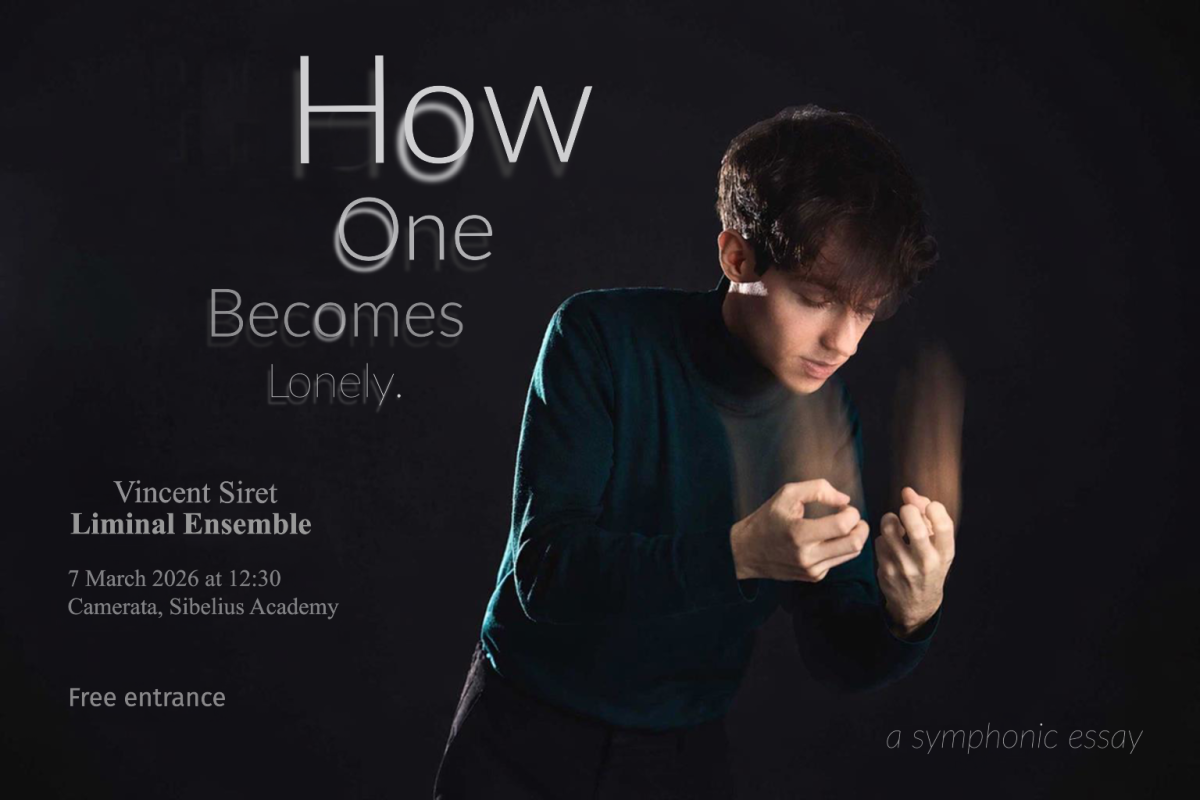
This concert traces a line through the symphonic tradition by putting into dialogue two works notable for their levels of conciseness and unity. From the innovative extravagance of CPE Bach, who is, in many ways, one of the very first geniuses of the symphonic genre, to the concentrated energy of Schönberg, What were the starting points and the challenges to a genre that, at the dawn of the 20th century, seemed close to implosion? In resonance with the concert’s title—borrowed from Schönberg’s own reflections—this performance unfolds as an essay in sound, exploring the solitude and creative doubt that accompany every renewal of tradition.
Sibelius’s presence in this program, discreet, fragmented but yet resonant, offers a subtle perspective on this journey. His music, intertwined between two sound worlds, pays homage both to the Academy allowing this concert to take place, and to the enduring tension between creative impulse and sense of responsibility towards traditions.
Rather than a confrontation of extremes, this program seeks a fluid conversation—a meditation on what it means to compose, to inherit, and to transform. In a single breath, the listener is invited to experience the genre’s evolution not as a series of ruptures, but as a continuous reflection—one that questions its own boundaries and possibilities.
Performers
- Liminal Ensemble
- Conductor : Vincent Siret
Program
- Carl Philipp Emanuel BACH, Symphony in D Major, Wq 183/1
- Arnold SCHÖNBERG, Chamber Symphony No. 1, op. 9
Changes are possible.
Further information: Vincent Siret, vincent.siret@uniarts.fi ja Arturo Alvarado, arturo.alvarado@uniarts.fi
This concert traces a line through the symphonic tradition by putting into dialogue two works notable for their levels of conciseness and unity. From the innovative extravagance of CPE Bach, who is, in many ways, one of the very first geniuses of the symphonic genre, to the concentrated energy of Schönberg, What were the starting points and the challenges to a genre that, at the dawn of the 20th century, seemed close to implosion? In resonance with the concert’s title—borrowed from Schönberg’s own reflections—this performance unfolds as an essay in sound, exploring the solitude and creative doubt that accompany every renewal of tradition.
Sibelius’s presence in this program, discreet, fragmented but yet resonant, offers a subtle perspective on this journey. His music, intertwined between two sound worlds, pays homage both to the Academy allowing this concert to take place, and to the enduring tension between creative impulse and sense of responsibility towards traditions.
Rather than a confrontation of extremes, this program seeks a fluid conversation—a meditation on what it means to compose, to inherit, and to transform. In a single breath, the listener is invited to experience the genre’s evolution not as a series of ruptures, but as a continuous reflection—one that questions its own boundaries and possibilities.
Performers
- Liminal Ensemble
- Conductor : Vincent Siret
Program
- Carl Philipp Emanuel BACH, Symphony in D Major, Wq 183/1
- Arnold SCHÖNBERG, Chamber Symphony No. 1, op. 9
Changes are possible.
Further information: Vincent Siret, vincent.siret@uniarts.fi ja Arturo Alvarado, arturo.alvarado@uniarts.fi