


Spring 2026 performances reflect on our relationship with food, myths and the gaze
The Theatre Academy’s student performances delve into an array of topics, ranging from questions about what we eat, how we are objects of the gaze and how we control our bodies.
Singapore-born Gua Khee Chong studies directing at Uniarts Helsinki’s Theatre Academy. During the past year, she and her working group have asked Helsinki residents – classmates, acquaintances and anyone interested – to share stories about their relationship with food.
The working group compiled the texts into a story and arranged some of the text into songs. The end result is a musical documentary named From Me to You: How Shall We Eat, which will premiere at the Theatre Academy on 23 January.
Chong remarks that the topic for the performance is inspired by her Singaporean background: food played a central role in her childhood home, often sparking heated discussions around it and even acting as a way to show care for another. In Finland, it is more common to regard food as just fuel for the body, which was a culture shock to Chong.
What came up during the discussions when preparing the performance, though, was that many people in Finland would actually like to make food and eat together more often. That is why as part of the performance, the actors will be preparing and offering the audience some soup, and the audience is also welcome to talk about their personal relationship with food.
Panamanian myths and politics of the gaze
Chong is not the only international directing student bringing their thesis project to the stage this spring. Premiering on 6 February and centring around two Latine girls, Kharissa Newbill-Adames has written and directed The Enchanted Girl of Code 24: a Neo-colonial Myth. The piece will be performed in Spanish, English and Finnish.
For her production, Panama-born Newbill-Adames has drawn inspiration from the folklore and neo-colonial tensions of her native country.
Water plays an important role in the staging of the production, which is also part of the thesis projects of scenography student Mira Roivainen and lighting design student Iia Walavaara.
Another early February premiere, Paparazzi, will address the concept of the gaze from both the subject’s and the object’s perspective. The text for the piece is written by dramaturgy and playwriting student Mimmi Ahonen as part of her artistic thesis project.
February is also the month of several premieres by acting students in Swedish. The productions have been prepared by participants on the Fritt Arbete course during their third year of studies. The course is a chance for students to train how to carry out an independent artistic process, first coming up with an idea and ultimately presenting it on stage to the public.
Students take over professional theatre stages
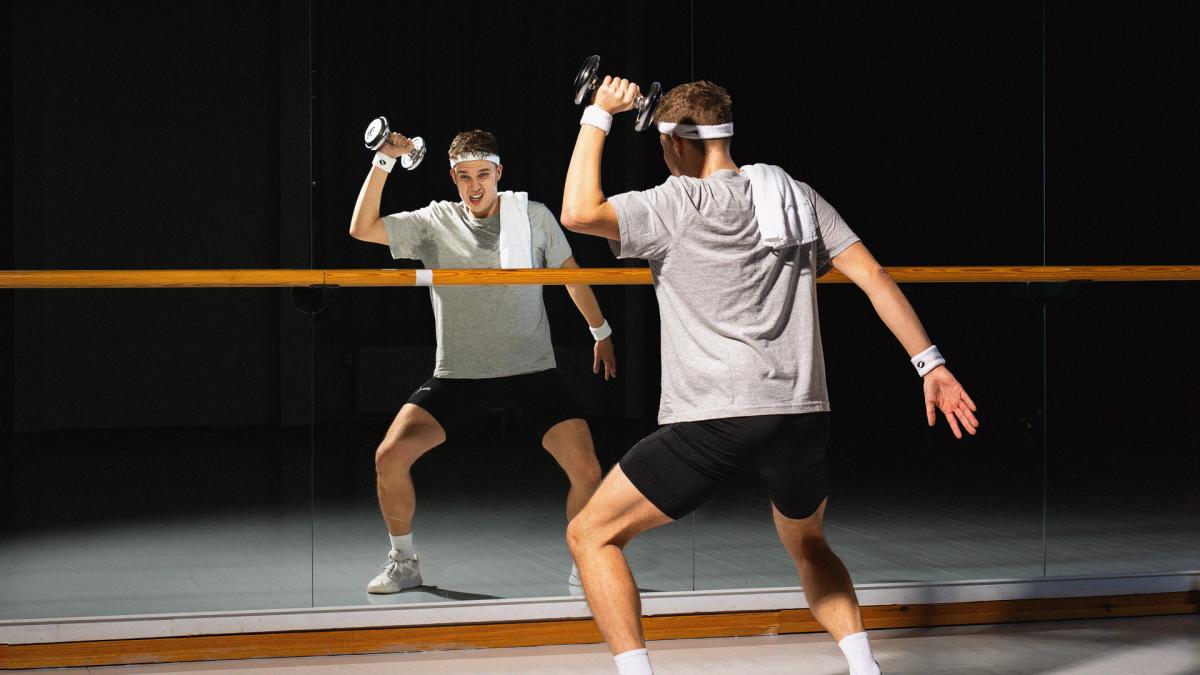
Some of the student performances take place outside of the walls of the Theatre Academy on professional theatre stages: Mitta will explore food, fatphobia, sports and body image with the premiere on 25 February in the Lavaklubi venue at the Finnish National Theatre, directing student Alise Polacenko will direct Chekhov’s Three Sisters (Kolme sisarta) with the premiere on 27 February at Q-Teatteri, and professional director Minna Harjuniemi will bring Sophocles’ tragedy Antigone to the Finnish National Theatre with the help of the academy’s acting students with the premiere on 15 April.
Late spring is an exciting time for the Degree programme in Dramaturgy and Playwriting, as students participating in the Play Factory course write and rehearse short plays so that they are performance-ready after just a few weeks. This year, the resulting collection of new short plays will be presented to audiences on the stage of Ryhmäteatteri.
In April, the audiences will also be treated to four full-length plays created by third-year students during a course named Finnish Premiere.
Browse the list of this spring’s events at the Theatre Academy.