


Doctoral degree: Everyday electronic devices can evoke surprisingly strong emotions
Composer Charles Quevillon has explored in his doctoral research how ordinary electronic devices can become connected to rituals, myths, and meanings that usually go unnoticed.
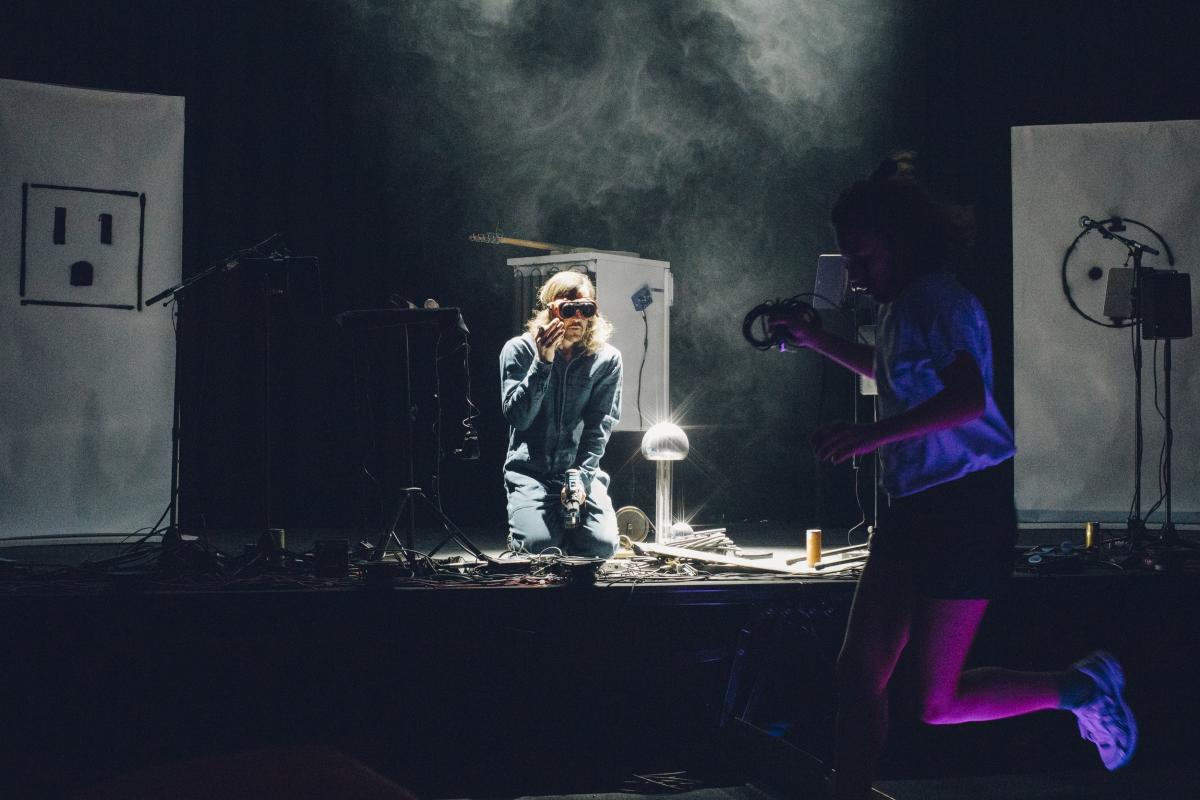
Could a smartphone, speaker, or mini fridge feel somehow “sacred”? In his doctoral research at the Sibelius Academy of the University of the Arts Helsinki, composer Charles Quevillon explores how ordinary electronic devices can become connected to rituals, myths, and special meanings that usually go unnoticed.
The research combines anthropology, religious studies, musicology, and the history of technology with Quevillon’s own artistic practice. He investigates why everyday devices can inspire feelings of reverence, excitement, and even a sense of the sacred. Three works included in the doctorate illustrate this, bringing together music and technology in performative ways.
From movements to meaningful gestures
In his dissertation, Quevillon introduces symbolic sound‑producing gestures. An ordinary playing gesture – such as plucking a guitar string – can turn into a symbol that points to ritual practices. In the work Le Refuge des Cordes, Quevillon performed while suspended from a rope and plucked strings using a feather. The unusual playing technique made a simple gesture appear grand and intentional.
The study also discusses grotesque numinosity: situations in which a moment that feels sacred becomes linked to an everyday or strange object. In Electric Unconscious, a dirty mini fridge functions as a ritual object. When the sound is suddenly interrupted, the audience experiences a moment of suspension that recalls our dependence on electricity and technology.
A loudspeaker like an infant at a baptism
In the chamber opera Loudspeaker Baptism, Quevillon brings the familiar YouTube phenomenon of “unboxing” onto the operatic stage: in the work, a loudspeaker is treated like an infant at a baptism. Quevillon notes that even opening a new device from its packaging resembles a kind of modern ritual. He aims to encourage audiences to reflect on how much material, labour, and effort goes into producing an ordinary electronic device.
Quevillon’s work offers composers and performers methods for using technology as part of ritualistic and symbolic music theatre. The research invites us to look at everyday devices with fresh eyes: they may hold far more meaning than we first assume.
More information
Charles Quevillon
charles.quevillon@uniarts.fi
(yhteydenotot englanniksi)