


Krister Gråhn: Fellow students form an important support network
Read our alum’s interview about his study experience on the Praxis programme.
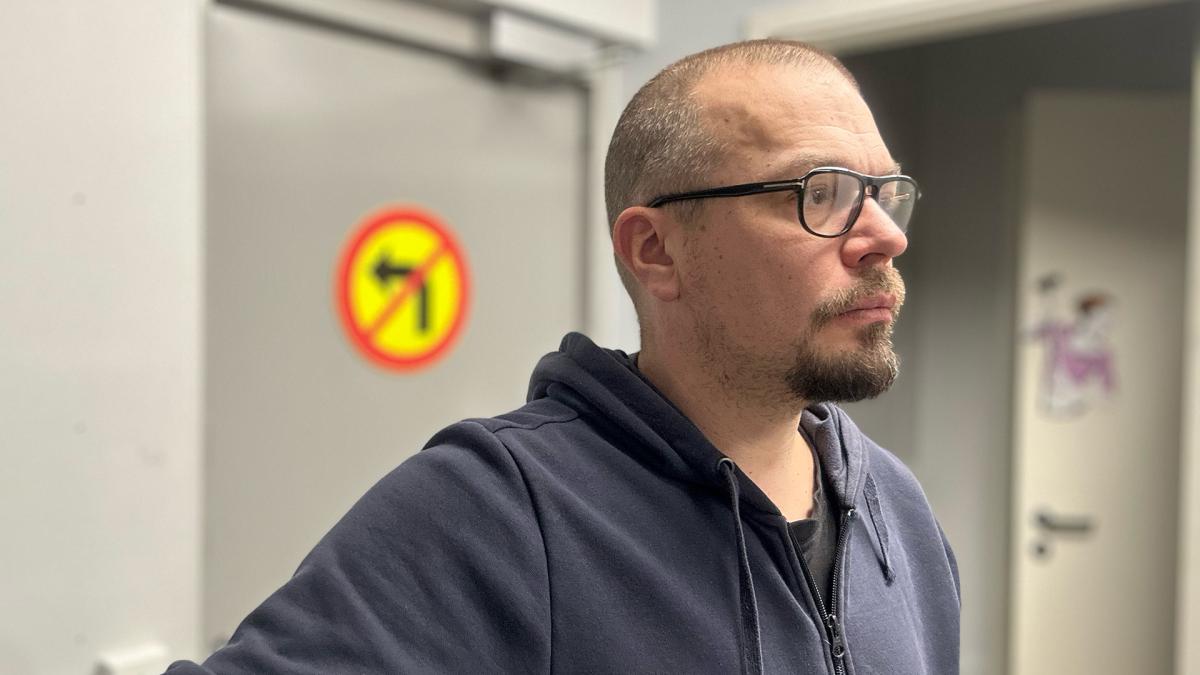
Tell us about yourself and how you came to study on the Praxis programme at Uniarts Helsinki.
I graduated as a visual artist from the sculpting subject area at the Academy of Fine Arts in 2009. Alongside my work as a visual artist, I have also worked in artist-led art associations throughout my career – for example, we ran a gallery and published our own art magazine. Since 2006, I have curated various exhibitions in different contexts, and since 2014, I have also worked in various exhibition productions as a technician. Studying exhibition practices and history of presentation was a natural continuation to my work. Lately and increasingly, my view and interests have turned towards the communalisation and collaborative methods of art, rather than the realisation of personal art objects by myself.
Tell us something you remember about applying to Uniarts Helsinki.
The application process was familiar to me, as I had studied in a master’s programme before. Of course, many things have changed in 15 years, but the main features of the process were the same – I made a written application, in which I explained my reasons for applying and what I thought would be the focus of my studies. Based on this, applicants were invited to an interview. The interview itself was relaxed and pleasant. Curation is largely based on discussion, and, therefore, I suspect that considering group dynamics was one of the criteria of the selection committee.
What has been the best thing about studying?
People – definitely. Although the studies included a lot of historical and theoretical texts and examining, discussing them and relating them to your own previous work through the views of fellow students opened your eyes in a new way. In curatorial studies, fellow students form an important support network. Another essential thing about studying exhibition practices was that we studied at the same university as art students and we were also able to choose courses aimed at visual artists as part of our curatorial studies. The Academy of Fine Arts attracts people who are at different stages of their careers and come from a wide range of areas in the visual arts and from different parts of the world. This creates a kind of a melting pot and broadens understanding of your own position in the field of art.
What has been the most memorable experience during your studies?
The best experiences were offered by the courses. In addition to Praxis’ mandatory courses, I particularly remember the visual artist’s pedagogy course organised by Marika Orenius, Oliver Kochta-Kalleinen’s Infrastructures for collaboration and The Sculpting on a burning planet -lecture series organised by Andy Best. I can say that these courses had a direct impact on my own artistic activity – or, perhaps more specifically, on what kind of impact I would like artistic activity to have. These courses made me seek a broader meaning for art in society.
Have you taken advantage of any international opportunities during your studies?
Not really, if by international opportunities you mean that I would direct my work to the international field. International field is interesting, for example, during my first master’s degree in 2005-2009, we visited Pristina in Kosovo to map out with the local artists how the field of fine arts is created after the war. However, my life situation forces me to work in Finland for now. Also, I feel, that there is so much work to do in the Finnish art field that I would rather sacrifice my limited resources to working and influencing my immediate environment, where I perhaps can have a true possibility and influence to interconnect art and my own surroundings and the environment. Global and glocal questions are still part of my local work.
What are you working on now and in the near future?
My next exhibition opens in the end of January at Kemi Art Museum. Vastaranta – Corresponding shores is part of the Oulu 2026 European Capital of Culture programme and all the artists are members of Oulu Art Association. Currently I’m also working as a member of a team, which is producing the International Contemporary Jewellery triennial in 2027 and 2030. I’m also curating an exhibition with the theme contemporary monument and monumental change for the summer 2027. There are also a few different plans for 2028, but I am not ready or allowed to talk about those. In general, instead of projects, I try to approach different events as processes these days, because art clearly creates a continuum, and all the processes affect each other.