


Indigenous artists come together in Järvenpää to explore equitable forms of intercultural collaboration
The international Third Spaces residency will bring together artists, researchers and students from around the world at Kallio-Kuninkala in Järvenpää from 20 to 30 October.
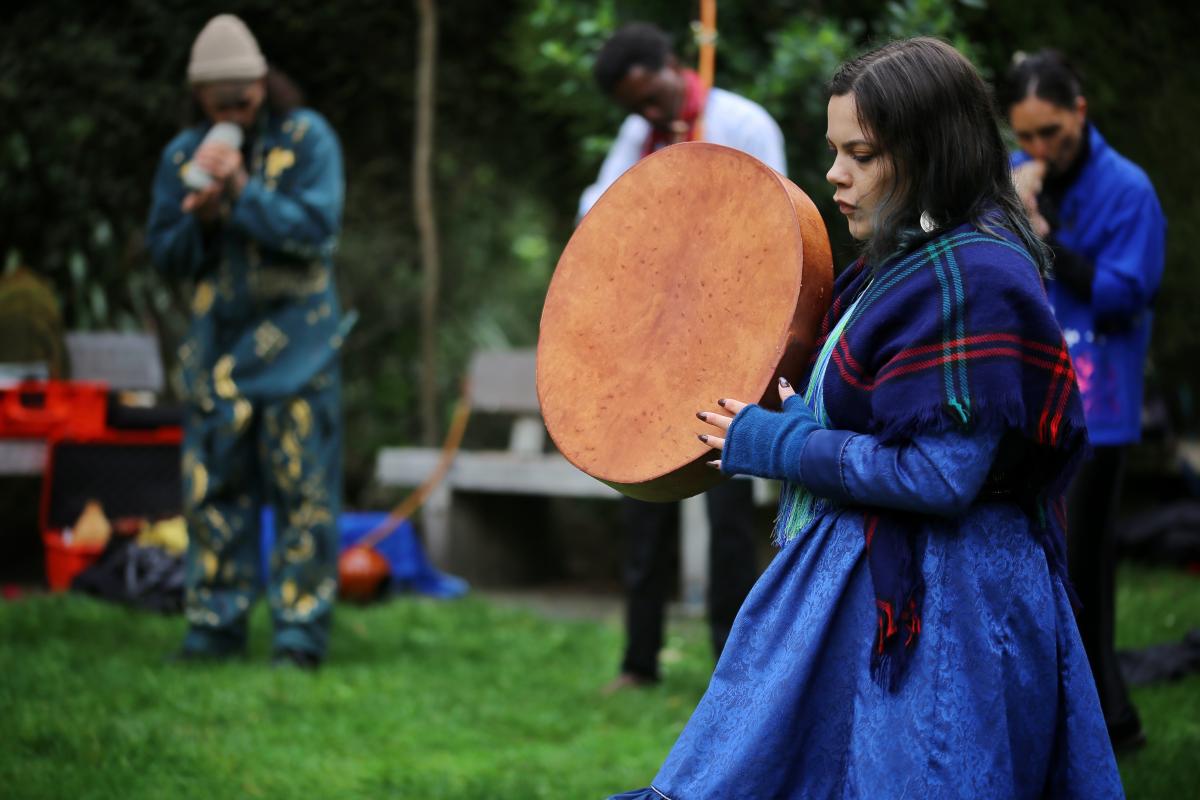
The shared aim is to explore how intercultural artistic collaboration can be grounded in Indigenous knowledge and values, and the ways in which this can deepen intercultural understanding and humility.
At Kallio-Kuninkala, Sámi joik, Māori taonga pūoro, Indigenous Australian Yolngu Wägilak song traditions, and Brazilian, Korean and European musical influences will meet in a unique creative environment. The residency brings together artists and researchers from Aotearoa New Zealand, Australia, Brazil, Finland, Italy, Korea, and Sápmi.
The outcomes of the collaboration will be shared on Friday 30 October at the Indigenous Voices: Third Spaces Collective concert as part of the Etnosoi! Festival in Helsinki. Rather than a conventional Western concert hall experience, the project creates a space for encounter—where different approaches to sound, music, and relationship can coexist, interact, and merge in a shared third space.
The Third Spaces Collective, which forms the core artistic group of the residency, seeks to develop new models of intercultural artistic collaboration in which diverse cultural backgrounds and musical approaches can meet, enter into dialogue, and reshape one another in a shared third space. At the heart of the project is the centring of Indigenous knowledge systems and ways of listening and working as the foundation for shared artistic practice.
“We aim to explore what can emerge when artists share a creative third space shaped by Indigenous values, knowledge, and approaches. Through Indigenised and decolonised processes, the collective seeks to develop new, ethical approaches to intercultural collaboration—and to discover the new music that can emerge from this shared third space,” says Nathan Riki Thomson, Professor of Global Music at the Sibelius Academy and lead facilitator of the residency.
At a time of increasing division and polarisation, and in the face of profound social and environmental challenges, artists have a renewed responsibility to engage with the world around them. This project centres Indigenised artistic practices that foster connection across borders, cultures, and boundaries, creating opportunities to listen differently, shift our perspectives, and imagine more interconnected ways of being.
“Personally, having the privilege of collaborating with Indigenous artists has had a profound impact on me, both as a musician and as a person. Above all, these experiences have deepened my understanding of the importance of listening to and having reverence for nature, and of the ways this can transform how we connect with sound and with one another.”, Thomson says.
Building long-term international partnerships
The Järvenpää residency continues a collaboration that began in Aotearoa New Zealand in spring 2026, when participating artists were guided through an Indigenized process led by Māori cultural practitioners, culminating in a sharing of their collaborative artistic work.
The broader aim of the Third Spaces initiative is to co-create ethical guidelines and approaches to intercultural collaboration with Indigenous artists that can be of benefit to others, as well as establish on-going reciprocal collaborations. The residency is not about simply combining musical influences, but crucially about critically examining the foundations of artistic collaboration itself. Whose knowledge is recognised as valuable? Whose voices are heard within a shared creative process? How might different ways of listening, learning, creating and transmitting music enrich and reshape one another?
“We hope to foster a space for ongoing dialogue in which participants can learn from one another, question assumptions, and explore their own artistic practices from new perspectives,” Thomson says.
The Järvenpää residency programme is supported by the Leonora and Yrjö Paloheimo Foundation. Third Spaces is realised as part of the four-year Voice and Justice project funded by the Jane and Aatos Erkko Foundation.