


Finland for international artists – a temporary stop or a lasting home?
Finland wants foreigners who earned a degree in Finland to stay here to pursue a career. What are some of the things that would make them more likely to stay?
Within the past year, there has been a lot of discussion in the media about foreign students and Finland’s ability to keep this talent in the country: how could Finland retain foreign workforce instead of students moving to their home countries or other foreign countries to work after graduation?
Some commenters have raised concerns over foreign university students not learning Finnish because their academic environment is overwhelmingly English-speaking. Graduates are less likely to stay if they lack the local language skills.
The number of international students in Finland has grown, but their employment prospects are shaped by the labour market, language requirements and discriminatory structures.
The situation is good at Uniarts Helsinki, however: many of those who have studied at Uniarts Helsinki stay in Finland and build both their artistic careers and lives here.
We asked three of our former or soon-to-be-graduating students what made them stay in Finland and what should be changed to make staying in the country even more attractive.
Bálint Barcsai: “Audiences would feel more included by a more culturally diverse theatre”
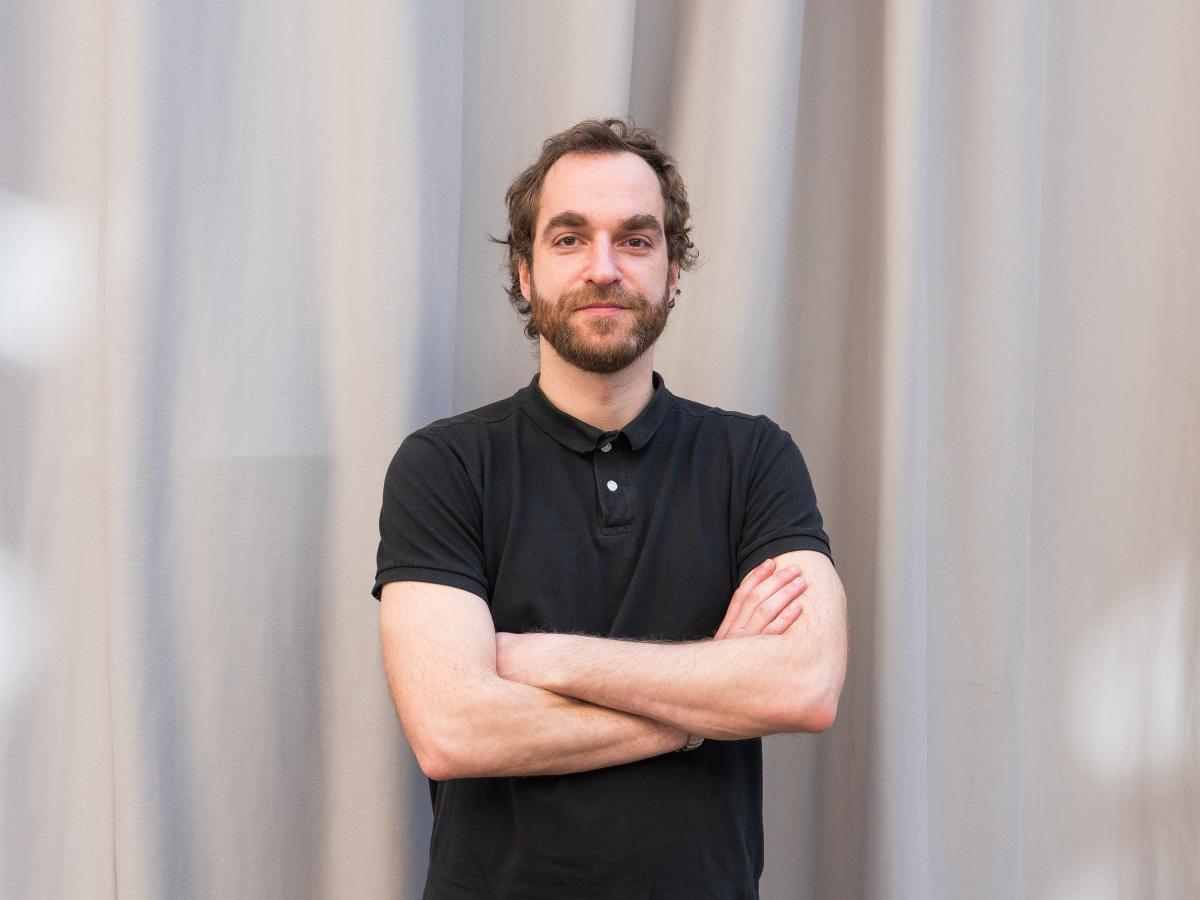
I’ve been living in Finland for two and a half years now, and I still don’t speak Finnish properly. That does get me thinking. Regardless, I would like to stay in Finland and work here, or at least work from here, after graduation.
I’m originally from Hungary. I studied film directing in Budapest and wanted to continue my master’s studies in theatre directing. This wasn’t possible in Hungary without starting a new five-year degree, so I looked into shorter, English-language degree programmes elsewhere in Europe.
When I arrived in Finland for the first time, my first impression of the country wasn’t particularly flattering: the drive from Helsinki Airport didn’t exactly offer beautiful scenery, and I remember thinking how unattractive the buildings looked.
But in Helsinki I found beauty, peace and gentleness that I had not expected.
Studying at Uniarts Helsinki strengthened my experience of how wonderful this place is. The teachers were approachable and the resources offered to the students were extensive. My studies included trips, courses and opportunities that I would not have had anywhere else. Through art, I also made new friends.
In Helsinki I found beauty, peace and gentleness that I had not expected.
But I did immediately realise that the language limits me professionally. Theatre is both a non-verbal and a verbal art form at the same time.
I study and work in English, but hands-on theatre work in Finland usually happens in Finnish. Still, there’s a huge number of people whose first language isn’t Finnish, especially in Helsinki. Who makes theatre for them and where can they make theatre?
People from different cultures should have the opportunity to make new adaptations and works that reflect their own backgrounds. It would probably increase the experience of inclusion in audiences as well.
It’s not only about the job opportunities of those who have come from abroad, but also about how Finnish culture is ready to recognise and validate multiculturalism as part of itself, regardless of the field.
At the moment, I am working on a year-long project at the Finnish National Opera. The place feels natural to me, as opera is primarily an international art form, with languages like Italian, German and French being used in performances. English is a common language used in the organisation anyway.
That said, this is not the case in most Finnish city theatres, where the Finnish language still determines almost all work processes.
The poor accessibility of some services in English doesn’t encourage international students to stay.
For example, this applies to some grant schemes and Kela, the Social Insurance Institution of Finland. Their electronic services are only available in Finnish and Swedish. In my view, English is a language of service and not a threat to the national language. I’m studying Finnish myself because I want to understand my environment.
I think that in Finland, hard work is rewarded in the end. My working group was recently awarded a three-year grant by Kone Foundation, which made me feel deeply grateful and honoured. The finished application was the result of a lot of work. I think Kone Foundation, which also accepts grant applications in English, is a good example of how international applicants are supported in the Finnish context.
Nowadays, I’m rooted in Helsinki and I feel at home here. I like many quintessentially Finnish things, such as the fact that there are saunas everywhere.
One culture shock was to notice how much coffee Finnish people drink. In Hungary, the coffee culture is different: espresso is the standard coffee choice, and people drink coffee in relatively small amounts. In this respect, I have apparently become quite Finnish, as there’s been a sharp upward trend in my coffee consumption while living here.
Only wintertime makes me consider leaving Finland. Five months of biting cold, wind and slush put my resilience to the test. But when spring finally comes, the city seems to open up to me once again.
Anna Estarriola: “Home is a layered concept for me”
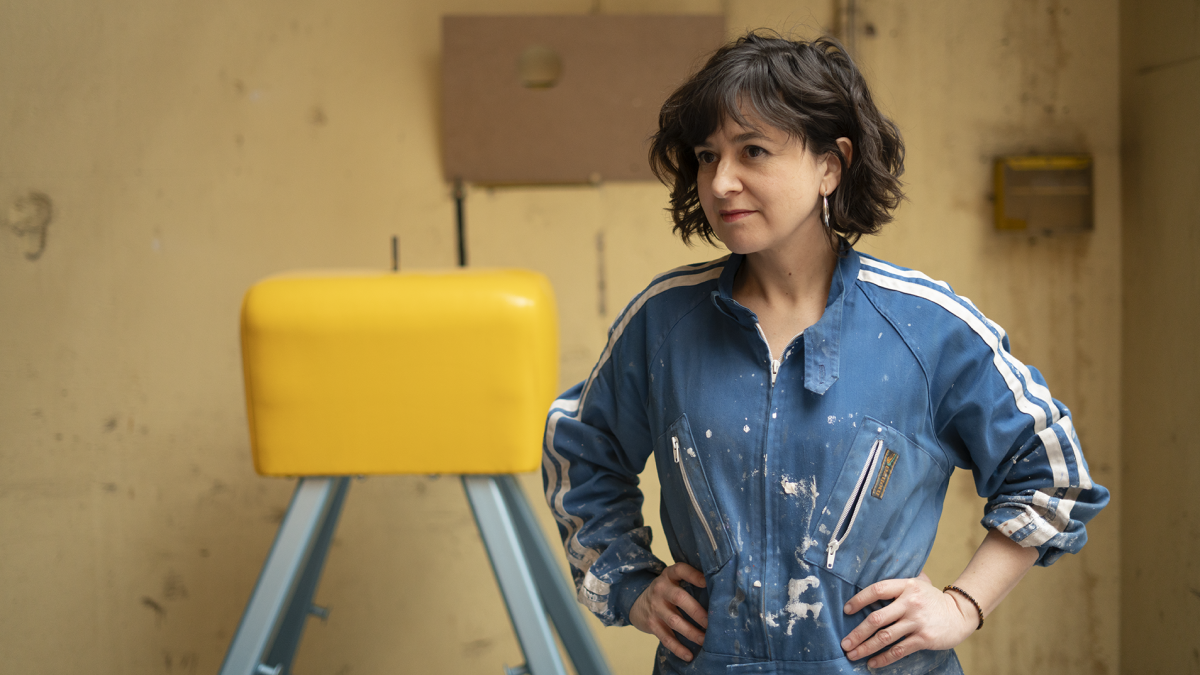
I have lived in Finland over two decades. The people I had the opportunity to interact with during my studies, first as an exchange student at the University of Art and Design Helsinki and later as a master’s student at the Academy of Fine Arts, were very meaningful and had an important impact on my path.
During that time, I also had the chance to participate in several stage productions at the Theatre Academy as a video artist and performer, which enabled collaborations across different fields. These encounters were very inspiring and helped me connect with the wider artistic environment in Finland.
I’m originally from Catalonia, and I was finishing my Bachelor of Fine Arts degree in Barcelona when I decided to go on an exchange. I wanted to experience studying abroad and reflect on different ways of understanding and practising art.
Finland was one of the options I applied for. I still vividly remember the immense feeling of joy when I learned that I had been accepted as a student.
My intention was to spend only one term in Finland, but it soon became clear that I wanted to stay longer. Everything felt new and inspiring. I was excited about the wide range of available courses and the arts scene, which I actively followed and hoped to engage with.
During my exchange period, I met artists who encouraged me to explore the Time and Space department at the Academy of Fine Arts. I also had the chance to meet Seppo Salminen, the head of the department at that time. I told him about my interest in working across different artistic languages. He said that my interests would match well with the curriculum. That brief conversation had a big impact on my life: I felt that what I was trying to explore and develop could find a place and grow.
The most challenging aspects of moving to Finland were the high cost of living and the fear that I would not be able to find enough work to cover the costs, especially since I didn’t receive any student financial aid.
However, the study environment felt open, discursive and experimental. Small group sizes, generous resources and broad, contemporary content encouraged exploration and allowed space to reflect on one’s artistic practice and context.
Having both permanent and visiting teachers made the learning environment very dynamic with a multiplicity of perspectives.
When I graduated, staying in Finland felt natural. I wanted to continue interacting with the Finnish arts scene, knowing it would not be effortless.
It took time before I received any funding or some income for my artistic work. I worked various other jobs alongside my artistic practice.
The study environment felt open, discursive and experimental. Small group sizes, generous resources and broad, contemporary content encouraged exploration and allowed space to reflect on one’s artistic practice and context.
Like anyone, I’ve had moments of uncertainty, but I haven’t considered leaving.
For me, home is a layered concept. Both Catalonia and Finland shape my sense of belonging, and I do not see them as opposites. They coexist and form my identity. I remain open to collaboration in different places, but Finland has become the base from which my work develops.
When considering how Finland could encourage more people to stay, I believe practical clarity could ease the uncertainties that come with settling in a new environment.
To an international artist who is considering coming to Finland, I would say: allow the experience to unfold gradually, respect the process, and at the same time stay proactive. Finland can be a very inspiring place to study and work, from the perspective of both the arts scene and the surrounding environment as a whole.
Matthew Whittall: “We should expand the concept of Finnishness”
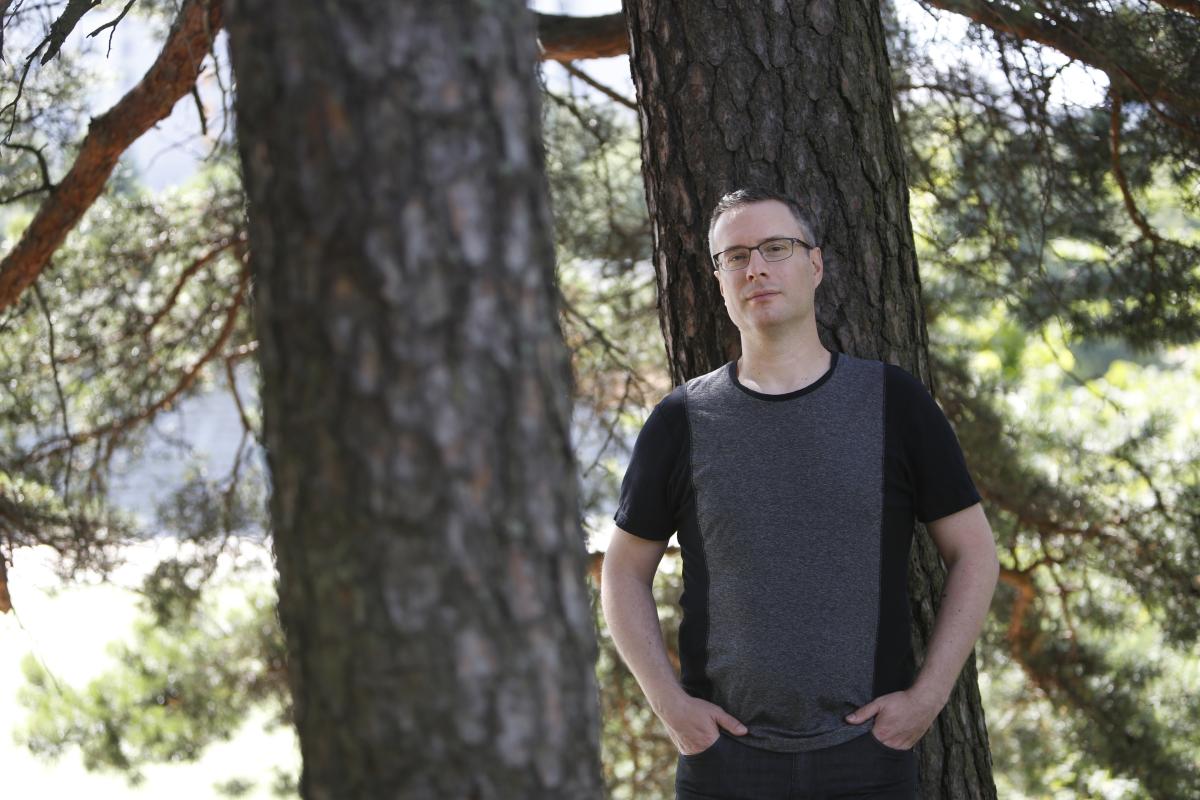
After three years in Finland, I was almost ready to give up. I didn’t earn a living by composing, and finding employment in other jobs had proven to be extremely challenging.
It felt like I didn’t have a purpose and my work didn’t matter. I’m eternally grateful to the then head of department at the Sibelius Academy, Riitta Valkeila, whose offer of an assistantship in 2005 changed the direction of my life and made me stay in Finland.
I’m originally from Canada, but I came to Finland in 2001 from the United States, where I studied composition for six years in total.
The thing was, though, that I was tired of American culture. A friend of mine from the UK suggested studies in Finland, and I came here as an exchange student.
My intention was to spend only a year in Finland, but fate intervened. I met my future spouse and fell in love. After a year, I decided to apply for doctoral studies in composition at the Sibelius Academy, even though I had already found it difficult to integrate socially and find employment in Finland.
In the composition department, we lived in a bubble of two exchange students. No one really seemed to know what to do with us. Back then, we didn’t have clear orientation practices or group teaching with Finnish-speaking students.
Since then, the situation has improved considerably: today, international composition students participate in the academy’s group teaching and gain valuable networking opportunities.
It’s really important to network in a new country. I believe that this applies to all fields. It would be worthwhile to organise more opportunities for this within the framework of studies.
The arts sector is more international and open than many other fields in Finland, but the circles are still small, and every contact can be crucial.
I happened to form this kind of a key connection in 2004. I took part in a composing masterclass, presenting my new, short work.
A violinist of the Helsinki Philharmonic Orchestra, who was involved in the repertoire committee, happened to hear it and stopped me in the corridor to ask if I had orchestral music. I offered a score that I had already composed in the United States. However, it wasn’t until four years later that it ended up in the orchestra’s repertoire.
That was the beginning of my actual career as a composer in Finland.
The arts sector is more international and open than many other fields in Finland, but the circles are still small, and every contact can be crucial.
Nowadays, when an international student asks me how to succeed like me in Finland, it seems impossible to answer. There is no one straight path.
My first years were tough, and there was a lot of financial uncertainty. I liked Finland and Helsinki a lot, and I had made friends. But it was difficult to find work – any work at all. It feels like you can never speak Finnish well enough when you’re from somewhere else. This is definitely one of the main questions: if language becomes a gatekeeper, many international experts will leave.
I have been a Finnish citizen for a decade and have lived here for almost half of my life. I feel that I have been accepted in the arts scene, but in the media I am often referred to as a foreign composer. The same applies to many other artists.
When the Helsinki Chamber Choir and Uusinta Ensemble chamber ensemble won a Grammy in 2024 for the recording of Kaija Saariaho’s choir work Reconnaissance, the media referred to its conductor, Nils Schweckendiek, as a German-born conductor, even though he had lived in Finland for almost 25 years.
This begs the question: when will we be finally acknowledged as part of Finnish society?
It often feels like people with an immigrant background are expected to be especially grateful: that we’re allowed to be here as long as we’re not too critical and don’t question the prevailing structures.
However, international talents are vital for Finland’s future. We should expand the concept of Finnishness, at least in terms of people’s image of what being Finnish is and what language we use when referring to people. Maybe Finland could follow the example of Canada, where new citizens aren’t called “immigrants” but New Canadians.
I still remember when I was referred to as Finnish for the first time in Yle’s Christmas broadcast in 2008, in a same sentence that mentioned Sibelius. I was so moved that it brought tears to my eyes.
Text: Elli Collan